
Posts Tagged “feature”
 The United States just may be the most tolerant nation that has ever existed. As such we deserve quality leadership. Our leaders should be working together to get our fiscal house in order.
People do not have a right to what other people have earned. Our leaders should be instilling the values and work ethics that the founding patriots of this nation built their lives and this nation upon. We have become a nation of welfare handout beggars and moochers. The United States needs a revival. A revival lead by someone who can smile, understand, and respect dissenting views.
We need the warm smile and soft wit of Ronald Regan or John Kennedy. We need a person that can work with all sides of the issues to come to unique solutions. The kind of solutions that Americans are noted for. We need a person that stresses the individuality of the states and of our people. Someone who understands that efficient government should not be a centralized bloated bemoth, but that by moving government closer to the people, you get a better government and better solutions.
We should all be thinking about our country and our place in the future of the world as we approach this election season. It is time we voted with our heads and not our hearts. That is, unless some absolutely hot babe runs for office. …Then all bets are off!
 California strawberries shipments are shifting to Ventura County, while the state’s citrus volume is predicted to be down this season.
While California strawberry shipments got off to a roaring and early start at the beginning of they year, the late season shipments are well below normal as a result. Now the situation finally moving back to increased volume as the season shifts from the Watsonville area in the north to Ventura County in Southern California.
California Citrus Shipments
The estimates for the 2014-15 California citrus shipping season stands at 78 million 40-pound cartons, which would make it the smallest crop since the freeze year of 2008-09. However, California Citrus Mutual thinks the crop is even smaller than the USDA’s estimate, since it does not take into account losses due to the current drought conditions.
“After canvassing a significant number of producers and shippers, CCM believes the crop estimate is high,” CCM President Joel Nelsen said in a recent statement. “We know acreage has been removed from production” due to the drought, but getting figures for a range has been difficult. We know the lack of water has affected fruit size during the growths stages, but surveying 126,000 acres is almost impossible. We also agree there is more fruit on the tree as compared to last year” in terms of the number of pieces of fruit. “However fruit size is a concern. All of this affects the number of cartons ultimately packed.”
Unlike Navels, Mandarins should be up in volume this year because of more acreage in production.
California supplies 85 percent of the nation’s fresh citrus,
Southern California Citrus – grossing $5600 to Atlanta.
 Here’s a round up of loading opportunities from three leading potato shipping states — Idaho, Colorado and Wisconsin.
Idaho Potato Shipments
Most of Idaho’s potatoes are grown and shipped from the eastern part of the state. Loadings got off to a slower start than hoped for this season, but are now picking up. Acreage is believed to be up about 8,000 acres and that has a lot of shippers in other areas of the country gnashing their teeth because prices are in the tank. So there will be no shortage of spuds for hauling this season out of Idaho — unless something major like the late blight virus hits. Idaho, easily is the nation’s largest potato shipper. It is currently moving about 1,700 truckload equivalents per week – and would be shipping even more product, if there was not a shortage of trucks.
Idaho potatoes – grossing about $5800 to New York City; $3200 to Chicago.
Colorado Potato Shipments
In the San Luis Valley of Colorado, there has been an eight percent increase in acreage this season, or about 5,000 acres more by some estimates. The state as a whole has about 60,200 acres of spuds in the ground, of which about 54,200 acres is in the San Luis Valley. Shipments of mostly russets are underway. Colorado is averaging about 300 truckloads of potatoes being shipped a week, but volume is expected to increase.
Colorado potatoes – grossing about $2300 to San Antonio.
Wisconsin Potato Shipments
About 500 truckload equivalents of potatoes are being shipped from Central Wisconsin each week.
Wisconsin potatoes – grossing about $3150 to Atlanta.
 As North American shipments of fruit ranging from mangoes to avocados and blueberries come to a seasonal end, the slack is picked up with similar importedfruit arrivals at various U.S. ports.
South American Mango Imports
The first Brazilian mangos arrived at the Port of Miami September 5, three weeks later than normal to due weather factors during the growing season. Volume should peak in October with decent supplies in November. Ecuador is also late. Initial shipments by boat have just started with the Ataulfos (yellow-skinned mangos). The red fruit will begin shipping around October 15. Following Ecuador, Peru should enter the U.S. market with fruit by early January. Peru should have a good supply of mangos throughout January and well into February.
Chilean Avocado Imports
U.S. importers are estimating about 60 million pounds of avocados will arrive by boat at American ports during the 2014-15 season. Limited amounts of the imported fruit have already arrived as seasons have just wrapped up for California and Peru. The Chilean avocados are joining Mexican product, which is now cranking up. About 70 percent of the Chilean avocados arrive by boat at ports on the West Coast. East Coast ports accept about 25 percent of the fruit, while around five percent comes into the Gulf of Mexico headed to ports in Texas.
Port of Long Beach imported fruit – grossing $5500 to Chicago.
South American Blueberry Imports
Blueberries from Argentina and Peru have recently started arriving at American ports and should continue into January.
About 9,000 tons of “blues” from Argentina came to the United States last season, up from about 7,700 tons a year earlier.
Last season was the first time Peruvian blueberries had been imported to the U.S. The country expects to have about 12,000 acres of blues by 2020, and imports by the U.S. are expected to increase each year for the foreseeable future.
 With the entire world falling apart and America’s global leadership at an all time low, I get a lot of disgusted looks by my friends these days. They just shake their heads as if to say “How did we get into this mess”?
The fact is problems in life don’t just happen all at once. They are consequences of the wrong actions, or the lack thereof over a long period of time. Failure to take proactive actions is an overwhelming cause of many of life’s problems. People find themselves in financial troubles, more often than not, because they ignore the need to live below or within their means over a period of time.
Too often people yield to the emotional temptation of our “Buy now and pay later” society. Our country will soon be facing a financial mountain of debt that no country in history has ever faced and survived. This huge mountain of trillions of dollars will have to be dealt with sooner or later. And dealing with it will send shock waves not only throughout our country, but throughout the world.
Take note, you can already see the subtle signs of problems this debt causes. The huge suffocating tax burdens on the American people will only worsen as the government looks for any way possible to get more money due to the ever increasing interest payments on our national debt. Our country already has the highest corporate tax rates of any country in the world. This is driving businesses to look at relocating outside our nation’s boarders. Recently the “Clown and Chief” said it was ‘unpatriotic” for corporations to relocate to a more business friendly country. I guess he flunked his history courses like he almost flunked out of Harvard.
As I recall, the Patriots were for low taxes and less government involvement in their lives. Didn’t the patriots write the Constitution to limit the powers of the government? When this clown was running for office he said that letting the national debt get so large was “unpatriotic.”
You know, “It’s all that evil George Bush’s fault.” I guess he forgot what he said now that he is the one doing the spending. As a world’s superpower, the United States is obviously in decline. We are viewed today by nations as a paper tiger.
As a result, the old tensions between nations are surfacing. What has made The United States an exceptional nation on the world stage has been missed by the Washington elite. We are not an exceptional nation because we have been the world’s only superpower for the last third of a century. No, we are exceptional because we seldom agree with each other and yet we live together in peace.
Think about it. We have every national, ethnic culture, religious beliefs, racial mix, and economic diversity that exists in the world within our boarders. We have Muslim mosques, Jewish synagogues, Buddhist temples, Christian churches, Hindu shrines, Satanic churches, even atheists, and all within our boarders. Some of them are even across the street from each other. And guess what? We all tolerate and respect each others beliefs.
We all work, live, play ball, and even argue among ourselves. We all disagree, and we all have a constitutional right to disagree. We are, and we will always be a polarized country. But that doesn’t mean that we have to kill each other. It doesn’t mean we can’t learn to respect the other person’s opinions and beliefs.
 By National Mango Board
The National Mango Board (NMB) conducts ongoing consumer research to explore consumer awareness, knowledge about mangos, buying habits, barriers to purchase and many other factors of consumer attitudes relative to mangos. Understanding consumer purchasing behavior is key to increasing mango consumption in the U.S.
In 2013, the NMB conducted an in-depth consumer attitude and usage study to better understand consumer purchasing behaviors. The overall goal was to measure consumer awareness and usage practices as they relate to mangos, and importantly, determine the extent to which shifts have taken place over time. In addition to tracking and updating who mango consumers are, why they buy the fruit, and what might encourage future purchases, the study also investigated health awareness and health perceptions toward mangos. Results highlight that overall, providing more information and education about mangos and keeping them in front of consumers at point-of-sale (POS) and in the media would help increase mango sales. Basic education is most needed by consumers since the research reflects not knowing how to choose and select a “good” mango, as well as what to do with it after purchase.
In 2014, the NMB conducted Qualitative Exploration Research, also known as focus groups, with small groups of mango buyers and non-buyers to provide direction on effective mango messaging. The study included discussions of mango associations, usage, likes and dislikes, and the buying or eating experience and then progressed through a series of messaging statements. The statements covered general, education, nutrition and sustainability messaging. Key findings include the overall positive mango associations with tropical and sweet; with nutrition being one of the strongest messages for consumers. Top interest was paid to “100% of daily Vitamin C in a single cup,” “20 vitamins and minerals” and “100 calories a cup.” Other opportunities for mango messaging include the lack of familiarity, not knowing what to do with a whole mango, and selection and cutting.
“Consumer research is vital to focusing our marketing strategies around the obstacles and opportunities that mangos present to consumers,” stated Megan McKenna, NMB Director of Marketing. “Armed with these findings, the mango industry can move forward with its outreach regarding mango selection, ripening, cutting, and usage since they continue to be the barriers to purchase.
About National Mango Board
The National Mango Board is an agriculture promotion group, which is supported by assessments from both domestic and imported mangos. The board was designed to drive awareness and consumption of fresh mangos in the U.S. The superfruit mango contains 100 calories, an excellent source of vitamins A and C, a good source of fiber and an amazing source of tropical flavor.
Mango availability per capita has increased 53 percent since 2005 to an estimated 2.87 pounds per year in 2013. Mango import volume for 2013 was 935 million pounds.
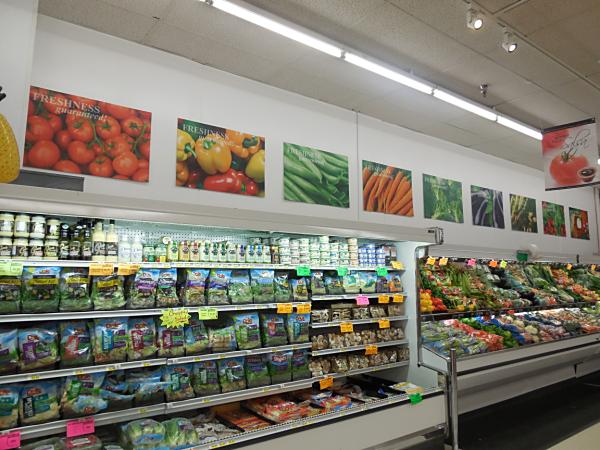 New DOLE SALAD COMPANIONS™, the first line of natural, just-add-lettuce salad solutions providing a total-recipe option in an all-in-one-package, gives consumers everything they need to turn their favorite, freshest greens into an exciting flavorful salad.
Each Salad Companions recipe includes a variety of flavorful toppings – including dried cranberries, crispy apple chips, roasted nuts and other ingredients – with an original, perfectly paired dressing. Consumers simply toss Salad Companions with their favorite greens, head lettuces or premixed salad blends to create a delicious salad in minutes.
Four new DOLE Salad Companions™ will launch in convenient tray packaging in June 2014, with national supermarket distribution expected by October 2014 – and more flavor varieties expected soon.
- DOLE SALAD COMPANIONS™ Apple Walnut Harvest: Crispy apple chips, dried cranberries, walnuts, aged white cheddar cheese and Dole’s own Apple Cider Dijon Vinaigrette dressing. Pairs best with Dole’s popular Spring Mix or similar blends.
- DOLE SALAD COMPANIONS™ Pesto Asiago: Pine nuts, sun-dried tomato croutons, shredded Asiago and Mozzarella cheeses, and Dole’s own Signature Caesar dressing. Pairs best with butter lettuces or mild, sweet greens like Dole’s Butter Bliss blend.
- DOLE SALAD COMPANIONS™ Pecan Honey Dijon: Dried cranberries, roasted pecans sweet cornbread croutons, aged white cheddar and Dole’s own Honey Dijon dressing. Pairs best with Dole’s Field Greens or similar blend.
- DOLE SALAD COMPANIONS™ Signature Caesar: Parmesan, Romano, Asiago and Mozzarella cheeses, toasted garlic croutons and Dole’s own Signature Caesar dressing. Pairs best with Romaine lettuce or a DOLE Salad blend like Hearts of Romaine or Leafy Romaine.
About DOLE Salads
DOLE Salads is one of the world’s largest lines of packaged salads, with 47 unique salad blends and all-natural salad kits. The line is supported by a comprehensive online library of salad and salad-based recipes, serving suggestions and entertaining tips, as well as various consumer-friendly tools like the on-pack DOLE® Salad Guide, Taste and Texture scales, and “Pairs well with” feature, as well as the Dole Salad Circle online community of salad lovers.
Dole Food Co,is one of the world’s largest producers and marketers of high-quality fresh fruit and fresh vegetables, Dole is an industry leader in many of the products it sells, as well as in nutrition education and research.
 Produce loads to Canada should increase in 2015.
It looks like there will be substantially more opportunities for U.S. produce truckers to haul fresh fruits and vegetables across our northern border into Canada.
The USDA has recently published new information indicating Canada looks likely to import far more US fruits and vegetables during the coming year, pushing the value of American exports to Canada to $21.7 billion.
Overall, the value of fresh fruit, vegetables and nuts exported by the US in 2015 could outstrip that of grain and feed for first time in the country’s history, according to new information published by the US Department of Agriculture.
Fresh produce exports including nuts are forecast to generate a record US $37 billion in 2014, the report said, thanks to strong demand and higher prices.
And the sector appears set to buck the prevailing trend as far as US agricultural exports are concerned, with lower prices for corn, wheat and soybeans expected to push down the value of the country’s exports to US $144.5 billion, down US $8 billion or 5.25 per cent from the previous year.
As for imports, the US is expected to spend US $117 billion on agricultural products in 2015, an increase of US $7.5 billion, which the USDA attributed to projected growth in the American economy.
 Georgia fall vegetable shipments are typically more moderate, but steady. In Wisconsin, the potato harvest continues and shipping is under way.
Eggplant shipping got underway from Southern Georgia in mid September. There is normal volume and shipments should continue steady in the weeks ahead.
Georgia grower-shippers are preparing for normal fall seasons with sweet corn and green beans. Corn is expected to start in late September and early October while growers typically begin harvesting beans in early to mid-October.
Meanwhile, Georgia sweet corn should finish shipments in mid-November and make for a seamless transition to Florida production in late November.
South Georgia green bean shipments are expected to get under way in mid-October.
Georgia cabbage shipments are shaping up to be steady, and normal in volume. The first loadings should begin in early to mid November and continue through December.
Wisconsin Potato Shipments
Wisconsin is expecting average volume and shipments this season, similar to a year ago. While loadings are underway from the central part of the state, the harvest will continue until around October 10.
Nationally, there will be plenty of spuds for hauling in the newly started season, which will continue into next summer. Idaho has planted 8,000 additional potato acres this season.
Wisconsin potatoes – grossing about $4100 to Boston.
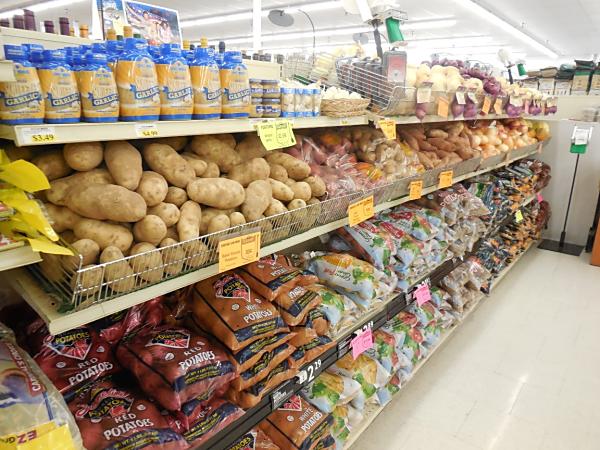 Michigan potato shipments will soon be underway, although fresh spud volume is much smaller than those for processing.
Approximately 70 percent of Michigan’s produce is for chip production. During the 1980s, the industry underwent a transition away from potatoes slated for french fry processors toward providing long-term storage for the potato chip industry.
Michigan supplies almost every potato chip manufacturer east of the Mississippi River 10 months out of the year.
Approximately 20 percent of the state’s potato crop is shipped to the fresh market.
The remainder of the crop is split between processed potato products and seeds for the following year’s crop.
When it comes to the fresh market, Michigan growers tend to tout quality over quantity. Farmers find it difficult to compete with the higher volumes of potatoes coming from states like Idaho. For example, Idaho potato shipments increased by an additional 40,000 acres in 2012. The amount of land Idaho farmers added that year nearly matched the total acreage dedicated to Michigan’s potato crop.
Statewide, Michigan potato shipments have increased 17 percent over the last eight years, up from 1.4 billion pounds in 2004 to approximately 1.6 billion pounds in 2012. Michigan potato production is spread across more than 47,000 acres. About 21 growers are active in West Michigan and more than half of them (12) are located in Montcalm County, northeast of Grand Rapids.
Michigan vegetables – grossing about $2500 to Oklahoma City.