
Author Archive
 Here’s an update on Washington state apple shipments, as well as the new crop of Florida avocados, and Mexican mango imports.
While Florida is pretty darned quiet this time of year when it comes to hauling fresh produce, the new crop of avocados has just started being harvested. Volume will gradually increase throughout the month before hitting stride in early July. Shipments will continue into next March, or perhaps early April. About 1 million bushels will be shipped, similar to the 1.17 million bushels hauled last season.
Mango Shipments
This year’s mango volume has seen shipments of more than 4 million boxes weekly; an 18 percent increase compared to the largest week in 2014,
Volumes are expected to remain steady through the second quarter of 2015. Mexican mango imports are expected to be 3 percent higher than 2013, which was a record-breaking year for Mexican mango imports.
The forecast is for about 36 million boxes of mangos to be imported during this year’s second quarter.
Imported Mexican mangos, melons and vegetables through McAllen, Tx – grossing about $3200 to Chicago.
Washington Apple Shipments
Fruit transporters are dumping millions of pounds of apples across Washington, leaving them to rot under hot sun. State officials call the dumps “historic.” In Pateros, a hillside is covered with rows of Red Delicious apples. Trucks pull up several times a day, unloading thousands of apples on top of sage brush and flowers.
Washington growers produced the highest volume of apples on record, plus labor disputes at Washington ports have left cargo sitting, sometimes for weeks. The Washington State Tree Fruit Association estimates $95 million in lost sales due to apples that could not ship. Growers suffered further deficits from longer storage periods.
The Feds recently helped bail out the industry by purchasing millions of dollars of apples for school lunch programs.
Yakima Valley apples – grossing about $7000 to Miami.
 Produce loads are increasing in California for stone fruit and tomatoes, while grape shipments are now light volume from the Arvin district.
California peach shipments
California peach and nectarine shipments have moved into normal weekly volumes, with peak loadings to start in late June to early July from the San Joaquin Valley. Peach and nectarine shipments should continue into the first or second week of September. There’s also apricot and cherry shipments.
San Joaquin Valley stone fruit shipments – grossing about $7100 to New York City.
Southern California, Baja Tomatoes
Tomato shipments are ramping up out of California and Baja California and include vine ripes, romas and cherry tomatoes. Loadings should continue until about the third week of December. Shipments of mature-greens, vine-ripes and romas from the Live Oak, CA area in the San Joaquin Valley get underway in mid June.
California grape shipments
While grape shipments continue from the Coachella Valley for perhaps another month, very light volume has started from the Arvin District in the Bakersfield area.
Coachella Valley grape and vegetable shipments – grossing about $4600 to Chicago.
Chilean Fruit Imports
A strike by customs officials, which shut down Chile’s Port of Valparaiso May 20, has ended as negotiators reached an agreement. By May 26, customs officials had been removed from the port, and the port was operating again at a “minimal level. The strike ended May 28th. Workers were striking over pay and working conditions.
 Here comes the Roadcheck, the annual inspection blitz. It is a joint effort of the Commercial Vehicle Safety Alliance, Federal Motor Carrier Safety Administration and others, is set to take place starting tomorrow June 2nd and continuing through June 4th.
About 10,000 inspectors from state, local and federal enforcement agencies will perform nearly 70,000 inspections on trucks and buses over the 72-hour period. They will be stationed at 1,500 inspection points around North America.
Cargo securement will be this year’s special emphasis, though inspectors will still be primarily performing the full 37-step Level I inspections — the most thorough inspection — throughout the week.
In early June of 2014, the Roadcheck resulted in a vehicle out-of-service rate of 18.7 percent and a driver out-of-service rate of 4.8 percent. Also last year over 72,000 drivers and vehicles were inspected.
CVSA has on its site resources for owner operators and fleet drivers. Here are 9 top things inspectors look for: brakes, coupling devices, lighting, securement of cargo, steering, suspension, plus tires, wheels, rims and hubs.
 Both South Carolina and North Carolina are expecting normal shipments of vegetables this summer, despite a a cold and wet spring that delayed plantings on some vegetables. Tropical Storm Ana, which made landfall in South Carolina on May 10, drenched fields in both states and further delayed production of some vegetables.
South Carolina Produce Shipments
Up coming shipments on sweet corn, cabbage, squash, greens, cilantro, parsley, beets, leeks and eggplant look favorable. South Carolina squash loadings started in mid-May, while sweet corn shipments should start next week.
WP Rawl, Pelion, S.C., and Clayton Rawl Farms in Lexington, S.C. are two of the state’s largest vegetable shippers.
South Carolina peach shipments continue, while watermelons will be coming on the latter part of June.
North Carolina Produce Shipments
Cabbage shipments will not get underway until the latter part of June, or early July a week or more later than normal.
Cabbage loadings typically have a gap between the start of coastal production near Elizabeth City, N.C., and the mountain region production near Mount Airy, N.C.. However, this season both shipping areas are expected to start at about the same time. One of the state’s largest cabbage shippers is Hollar & Greene Produce Co. Inc. in Boone, N.C.
North Carolina usually begins sweet corn shipments a week later than Georgia. North Carolina expects to start loading about June 1st….Squash shipments have just started, while potatoes should get underway around June 15-20. Potato acreage remains at 17,000 acres and the state plans to ship red, white and yellow potatoes through late July.
Eastern North Carolinas continues to ship sweet potatoes entering the last couple of months of the season.
North Carolina sweet potatoes – grossing about $2500 to New York City.
 Attitudes towards health and wellness as well as meal preparation are among the biggest evolving trends in U.S. consumers’ eating habits, according to new research from Acosta Sales & Marketing.
Nine out of 10 shoppers prefer eating at home, driven by a desire for comfort (61 percent), cost (60 percent) and convenience (59 percent), the firm’s The Evolution of Eating survey revealed.
However, more Americans are turning to ready-to-eat and take-and-bake solutions, including “hybrid homemade meals,” such as a grocery store rotisserie chicken with a salad-in-a-bag and homemade potatoes, rather than cooking from scratch.
About 46 percent said they prepared meals at home over the past year, 48 percent when considering only the Millennial generation, who also reported eating prepared foods from grocery stores at home at a much higher rate than total U.S. diners (27 percent vs. 16 percent, respectively). Millennials also reported enjoying cooking the most compared with their older counterparts.
“The way our society views food has come a long way since the TV dinner heyday of the 1950s. From sharing recipes and photos of food on social media to a widespread fixation on healthy food and fads, we have seen a seismic shift in consumers’ attitudes toward food,” said Colin Stewart, senior vice president, Acosta. “Eating has evolved right along with society, and consumer brands and retailers must consider the dynamics, demands and preferences of today’s modern family to deliver successful food and meal solutions.”
Acosta finds that consumers are becoming even more educated about the connection between diet and wellness, and are taking efforts to transform their shopping and eating behaviors, as America’s health trend shows no signs of slowing down.
In fact, the majority of shoppers (61 percent) ranked reading food labels as very important to their health and wellness concerns when they grocery shop, and more than half reported trying to eat more fruits and vegetables in the past year. And shoppers across all segments reported eating more whole grains and buying foods with fewer preservatives.
The Evolution of Eating report was compiled using research conducted by Acosta, as well as the company’s experience working with the nation’s largest CPG manufacturers and retailers.
 Has anyone ever accused head lettuce of being sexy? Probably not, at least not until now.
The activist group Peta recently set up shop at the corner of famed Sunset Boulevard and Ivar Avenue, handling out free boxes of vegan burgers and hotdogs just before the Memorial Day weekend. Lettuce Ladies set up in Tinseltown at noon on Thursday, May 22, to entice passersby to sample some veggie-centric foods they may not have considered before.
According to an NBC Los Angeles report, the ladies were to bare their bodies and their cause with signs feature produce promotions such as “let vegetarianism grow on you” and “turn over a new leaf, go vegetarian.”
This isn’t the first time PETA has used this approach to push produce. According to the association’s blog, the Lettuce Ladies have been to countries like Australia, the Philippines, and Kenya, as well as having made a stand in full lettuce garb on Capitol Hill and the NFL Draft while serving vegetarian spins on hot dogs and wings.
While the Lettuce Ladies usually are volunteers for PETA’s cause, well-known names and spokespeople for the association like actresses Pamela Anderson and Elizabeth Berkley have also sported lettuce bikinis and gowns for the campaign.
We almost forgot to mention – Salinas Valley lettuce is grossing about $1200 to L.A. (Is that to Hollywood, or the L.A. Produce Market?)
 As we get back in the groove following the long Memorial weekend, here are some of the better produce loading opportunities at various shipping points across America.
Western Produce Shipping Areas
Washington state easily provides the most loading opportunities in the Northwest with apples averaging over 3200 truck loads per week. The Yakima and Wenatchee Valleys also have pears in much smaller volume.
Washington apples – grossing about $5000 to Dallas.
Idaho potato shipments continue as we approach the last few months of the 2014-15 shipping season. About 1300 truck load equivalents are being handled weekly, although rails account for a larger percentage than with most produce items. However, trucks still rule!
Idaho potatoes – grossing about $4700 to New York City.
In California, strawberry shipments remain in heavy volume, with about equal movement coming out of the Watsonville area and the Santa Maria District. Nearly 1200 truck loads per week are being shipped from these two areas…Also, big volume with mixed vegetables continue from the Salinas Valley.
Salinas/Watsonville vegetables and strawberries – grossing about $6300 to Orlando.
At Nogales, AZ, about 2500 truck loads of watermelons are crossing the border from Mexico each week. Mexican grape shipments also are increasing.
Nogales produce – grossing about $2600 to Dallas.
Central Produce Shipping Areas
San Luis Valley potato shipments from Southern Colorado continue on a steady pace averaging about 600 truck loads per week…..Central Wisconsin potato loadings are much lighter heading towards the end of its season.
Colorado potatoes – grossing about $2200 to Chicago.
In South Texas, about 1000 truck loads of Mexican avocados are crossing the border each week at McAllen. There also are a number of tropical fruits and limes crossing in moderate volumes. Texas sweet onion shipments are just about finished for the season.
South Texas produce – grossing about $2600 to Atlanta.
Eastern Produce Shipments
While Florida is headed towards a seasonal end to its spring produce shipping season, more of the focus moves to Georgia. As Florida blueberry shipments rapidly decline, “blues” are gaining in volume from Southern Georgia. The state also has moderate volume with vegetables ranging from cabbage to beans and Vidalia onions.
North Carolina sweet potatoes continue to be shipped in moderate volume, mostly from eastern areas of the state.
 A major shift in the Bakersfield, Kern County potato shipping region has occurred over the past decade as russets have lost favor to red, gold and white potatoes.
In 2004, the acreage for russets in Bakersfield was 4,667 acres, but this year it is down to only 506 acres. The plunge in russet acreage corresponds with the overall drop in acreage in the past 10 years. In 2004, total acreage of all varieties planted in Bakersfield was 10,922; this year it is half of that at 5,398. The 4,000-plus-acre decline in russets represents a vast majority of the difference.
Kern County potato shipments are still an important area for reds, Yukon Golds and even white potatoes, as well as some specialty items such as fingerlings.
The change in shipments refers to the shift from storage potatoes, which fills produce shelves through the winter and early spring, to the first fresh potatoes, which come from California in the spring and are noted for a thinner skin.
This time of the year storage potatoes are starting to look “tired” and retailers are looking for the fresh crop.
Red potatoes are now the number one potato crop grown in Kern County, with about 2,000 acres this season.
The Yukon Gold potato is gaining in popularity and its acreage has increased over the years. The 2015 season total is over 1,500 acres, representing a significant increase in the past decade.
White potatoes have lost some acreage, but at 1,300 acres the crop is still substantial.
Bakersfield fresh potato shipments start in May and continue through June and into early July.
Kern County potatoes and carrots – grossing about $4000 to Dallas
 The U.S. balance of trade for fruits and vegetables is swinging heavily to imports, with avocados and berries seeing huge growth over the past decade, according to the U.S. Department of Agriculture. While this may not help improve the country’s trade deficite, it means increased loading opportunities for produce haulers.
The USDA in its annual report of trade projections, estimates the trade deficit in fresh fruits and vegetables will grow from about $7.6 billion in 2014 to $16.5 billion by 2024.
The total value of fresh fruit and vegetable exports will grow from $7.3 billion in 2014 to $10.7 billion in 2024, while imports will grow even faster, climbing from $14.9 billion in 2014 to $27.2 billion in 2024.
The projections are built on trade trends over the past 10 years.
The last time the U.S. had a trade surplus in fresh fruits and vegetables was 1980, when the margin of exports over imports was $25 million. By 1990, the trade deficit in fresh fruits and vegetables was $530 million, increasing to $1.8 billion by 2000 and $6.2 billion by 2010.
Imports will supply 53 percent of U.S. fruits and nuts by 2024, up from 45 percent in 2014, while the USDA said the share of vegetables from imports will rise from 19 percent in 2014 to 26 percent in 2024.
Lower trade barriers have boosted U.S. exports and imports.
Climbing imports
“Twenty years ago you never would have thought of having citrus (imports) in the summer or grapes in November,” said Mayda Sotomayor, CEO of Seald Sweet International, Vero Beach, Fla. “You just had gaps, and consumers lived with gaps.”
Today, Sotomayor said those gaps are now mostly gone, thanks to new varieties, growing areas and storage technology.
 By the California Walnut Commission
FOLSOM, Calif. — Multiple new research abstracts suggest walnuts may have the potential to positively affect several important health factors. From their impact on colon cancer and certain aspects of cognitive aging, to their positive effect on both gut health and vascular health, the research findings presented at Experimental Biology 2015 (EB) detail our latest understanding of walnuts’ inner workings. Running March 28 through April 1 in Boston, this annual meeting attracted an international audience of over 14,000 leading research scientists and exhibitors.
“These findings help advance the understanding of the many advantages of eating walnuts as part of a healthy diet, and add to the more than 159 published papers over 20 years that have shown how walnuts affect heart health, diabetes, cancer, cognition, fertility and weight management,” said Dennis A. Balint, CEO, California Walnut Commission.
There are numerous possible active ingredients in walnuts that may be contributing factors in providing these health benefits. One component that differentiates walnuts is alpha-linolenic acid (ALA), the plant-based omega-3 fatty acid. Walnuts are the only nut that contain a significant amount of alpha-linolenic acid (ALA) with 2.5 grams per one ounce serving.
While scientific conclusions cannot yet be drawn from the abstracts presented at EB 2015, the following summaries share the latest findings:
- Colon Cancer: For the first time, researchers looked at whether components of walnuts have an effect on colon cancer cells. This cell study1 was conducted by the Department of Nutritional Science and Food Management at the Ewha Womans University in Korea, and showed that walnut extract significantly slowed the survival of the cancer stem cells as well as reduced the stemness of colon cancer stem cells. Given the results, researchers state there is reason to further explore the role of walnut consumption in colon cancer therapies targeting cancer stem cells.
- Gut Health: The gut microbiome is an ecosystem of bacteria that helps our bodies digest and use the food we eat; changes in the gut microbiome are linked to chronic diseases. A recent animal study2 conducted by the Department of Physiology School of Medicine at Louisiana State University Health Sciences Center looked at the effect of walnuts on two major gut bacteria communities. A diet with walnuts (approximately 2 ounce human diet equivalent) significantly altered the ratio of the two communities, therefore suggesting “a new mechanism, changing the gut microbial environment, by which walnuts may exert their beneficial health effects.” As this study was performed on animals, however, findings cannot yet be implied for humans.
- Aging, Brain Health: This animal study3 from the Human Nutrition Research Center on Aging at Tufts University looked at healthy rats, both young and old, and the impact of walnuts – a source of polyunsaturated fatty acids and nutrients such as folate, selenium, magnesium and polyphenols – on mechanisms in critical regions of the brain. Animals were segmented into three groups – one, the control group, who ate no walnuts at all (0%); a second that had 6% of their diet comprised of walnuts; and a third that had 9% of their diet comprised of walnuts (equivalent to one ounce and 1.5 ounces respectively in a human diet). The groups were monitored for ten weeks. According to the researchers, incorporating walnuts into one’s diet may have protective effects on the aging brain. As this study was performed on animals, however, findings cannot yet be implied for humans.
- Vascular Health: Microvascular function refers to the health of our smallest blood vessels, such as capillaries. A study4 from the Departments of Nutrition and Internal Medicine at the University of California, Davis of postmenopausal women with high cholesterol looked at the short-term impact of walnut consumption. The group that ate 40 grams, or 1.5 ounces, of walnuts per day saw improved vascular function. The study concludes this improvement is due to the effects from the walnut-derived fatty acids, alpha-linolenic acid (ALA) and linoleic acid (LA).
Findings like these pave the way for additional research aimed at understanding walnuts’ role in disease prevention and management.
 Here’s an update on Washington state apple shipments, as well as the new crop of Florida avocados, and Mexican mango imports.
While Florida is pretty darned quiet this time of year when it comes to hauling fresh produce, the new crop of avocados has just started being harvested. Volume will gradually increase throughout the month before hitting stride in early July. Shipments will continue into next March, or perhaps early April. About 1 million bushels will be shipped, similar to the 1.17 million bushels hauled last season.
Mango Shipments
This year’s mango volume has seen shipments of more than 4 million boxes weekly; an 18 percent increase compared to the largest week in 2014,
Volumes are expected to remain steady through the second quarter of 2015. Mexican mango imports are expected to be 3 percent higher than 2013, which was a record-breaking year for Mexican mango imports.
The forecast is for about 36 million boxes of mangos to be imported during this year’s second quarter.
Imported Mexican mangos, melons and vegetables through McAllen, Tx – grossing about $3200 to Chicago.
Washington Apple Shipments
Fruit transporters are dumping millions of pounds of apples across Washington, leaving them to rot under hot sun. State officials call the dumps “historic.” In Pateros, a hillside is covered with rows of Red Delicious apples. Trucks pull up several times a day, unloading thousands of apples on top of sage brush and flowers.
Washington growers produced the highest volume of apples on record, plus labor disputes at Washington ports have left cargo sitting, sometimes for weeks. The Washington State Tree Fruit Association estimates $95 million in lost sales due to apples that could not ship. Growers suffered further deficits from longer storage periods.
The Feds recently helped bail out the industry by purchasing millions of dollars of apples for school lunch programs.
Yakima Valley apples – grossing about $7000 to Miami.
 Produce loads are increasing in California for stone fruit and tomatoes, while grape shipments are now light volume from the Arvin district.
California peach shipments
California peach and nectarine shipments have moved into normal weekly volumes, with peak loadings to start in late June to early July from the San Joaquin Valley. Peach and nectarine shipments should continue into the first or second week of September. There’s also apricot and cherry shipments.
San Joaquin Valley stone fruit shipments – grossing about $7100 to New York City.
Southern California, Baja Tomatoes
Tomato shipments are ramping up out of California and Baja California and include vine ripes, romas and cherry tomatoes. Loadings should continue until about the third week of December. Shipments of mature-greens, vine-ripes and romas from the Live Oak, CA area in the San Joaquin Valley get underway in mid June.
California grape shipments
While grape shipments continue from the Coachella Valley for perhaps another month, very light volume has started from the Arvin District in the Bakersfield area.
Coachella Valley grape and vegetable shipments – grossing about $4600 to Chicago.
Chilean Fruit Imports
A strike by customs officials, which shut down Chile’s Port of Valparaiso May 20, has ended as negotiators reached an agreement. By May 26, customs officials had been removed from the port, and the port was operating again at a “minimal level. The strike ended May 28th. Workers were striking over pay and working conditions.
 Here comes the Roadcheck, the annual inspection blitz. It is a joint effort of the Commercial Vehicle Safety Alliance, Federal Motor Carrier Safety Administration and others, is set to take place starting tomorrow June 2nd and continuing through June 4th.
About 10,000 inspectors from state, local and federal enforcement agencies will perform nearly 70,000 inspections on trucks and buses over the 72-hour period. They will be stationed at 1,500 inspection points around North America.
Cargo securement will be this year’s special emphasis, though inspectors will still be primarily performing the full 37-step Level I inspections — the most thorough inspection — throughout the week.
In early June of 2014, the Roadcheck resulted in a vehicle out-of-service rate of 18.7 percent and a driver out-of-service rate of 4.8 percent. Also last year over 72,000 drivers and vehicles were inspected.
CVSA has on its site resources for owner operators and fleet drivers. Here are 9 top things inspectors look for: brakes, coupling devices, lighting, securement of cargo, steering, suspension, plus tires, wheels, rims and hubs.
 Both South Carolina and North Carolina are expecting normal shipments of vegetables this summer, despite a a cold and wet spring that delayed plantings on some vegetables. Tropical Storm Ana, which made landfall in South Carolina on May 10, drenched fields in both states and further delayed production of some vegetables.
South Carolina Produce Shipments
Up coming shipments on sweet corn, cabbage, squash, greens, cilantro, parsley, beets, leeks and eggplant look favorable. South Carolina squash loadings started in mid-May, while sweet corn shipments should start next week.
WP Rawl, Pelion, S.C., and Clayton Rawl Farms in Lexington, S.C. are two of the state’s largest vegetable shippers.
South Carolina peach shipments continue, while watermelons will be coming on the latter part of June.
North Carolina Produce Shipments
Cabbage shipments will not get underway until the latter part of June, or early July a week or more later than normal.
Cabbage loadings typically have a gap between the start of coastal production near Elizabeth City, N.C., and the mountain region production near Mount Airy, N.C.. However, this season both shipping areas are expected to start at about the same time. One of the state’s largest cabbage shippers is Hollar & Greene Produce Co. Inc. in Boone, N.C.
North Carolina usually begins sweet corn shipments a week later than Georgia. North Carolina expects to start loading about June 1st….Squash shipments have just started, while potatoes should get underway around June 15-20. Potato acreage remains at 17,000 acres and the state plans to ship red, white and yellow potatoes through late July.
Eastern North Carolinas continues to ship sweet potatoes entering the last couple of months of the season.
North Carolina sweet potatoes – grossing about $2500 to New York City.
 Attitudes towards health and wellness as well as meal preparation are among the biggest evolving trends in U.S. consumers’ eating habits, according to new research from Acosta Sales & Marketing.
Nine out of 10 shoppers prefer eating at home, driven by a desire for comfort (61 percent), cost (60 percent) and convenience (59 percent), the firm’s The Evolution of Eating survey revealed.
However, more Americans are turning to ready-to-eat and take-and-bake solutions, including “hybrid homemade meals,” such as a grocery store rotisserie chicken with a salad-in-a-bag and homemade potatoes, rather than cooking from scratch.
About 46 percent said they prepared meals at home over the past year, 48 percent when considering only the Millennial generation, who also reported eating prepared foods from grocery stores at home at a much higher rate than total U.S. diners (27 percent vs. 16 percent, respectively). Millennials also reported enjoying cooking the most compared with their older counterparts.
“The way our society views food has come a long way since the TV dinner heyday of the 1950s. From sharing recipes and photos of food on social media to a widespread fixation on healthy food and fads, we have seen a seismic shift in consumers’ attitudes toward food,” said Colin Stewart, senior vice president, Acosta. “Eating has evolved right along with society, and consumer brands and retailers must consider the dynamics, demands and preferences of today’s modern family to deliver successful food and meal solutions.”
Acosta finds that consumers are becoming even more educated about the connection between diet and wellness, and are taking efforts to transform their shopping and eating behaviors, as America’s health trend shows no signs of slowing down.
In fact, the majority of shoppers (61 percent) ranked reading food labels as very important to their health and wellness concerns when they grocery shop, and more than half reported trying to eat more fruits and vegetables in the past year. And shoppers across all segments reported eating more whole grains and buying foods with fewer preservatives.
The Evolution of Eating report was compiled using research conducted by Acosta, as well as the company’s experience working with the nation’s largest CPG manufacturers and retailers.
 Has anyone ever accused head lettuce of being sexy? Probably not, at least not until now.
The activist group Peta recently set up shop at the corner of famed Sunset Boulevard and Ivar Avenue, handling out free boxes of vegan burgers and hotdogs just before the Memorial Day weekend. Lettuce Ladies set up in Tinseltown at noon on Thursday, May 22, to entice passersby to sample some veggie-centric foods they may not have considered before.
According to an NBC Los Angeles report, the ladies were to bare their bodies and their cause with signs feature produce promotions such as “let vegetarianism grow on you” and “turn over a new leaf, go vegetarian.”
This isn’t the first time PETA has used this approach to push produce. According to the association’s blog, the Lettuce Ladies have been to countries like Australia, the Philippines, and Kenya, as well as having made a stand in full lettuce garb on Capitol Hill and the NFL Draft while serving vegetarian spins on hot dogs and wings.
While the Lettuce Ladies usually are volunteers for PETA’s cause, well-known names and spokespeople for the association like actresses Pamela Anderson and Elizabeth Berkley have also sported lettuce bikinis and gowns for the campaign.
We almost forgot to mention – Salinas Valley lettuce is grossing about $1200 to L.A. (Is that to Hollywood, or the L.A. Produce Market?)
 As we get back in the groove following the long Memorial weekend, here are some of the better produce loading opportunities at various shipping points across America.
Western Produce Shipping Areas
Washington state easily provides the most loading opportunities in the Northwest with apples averaging over 3200 truck loads per week. The Yakima and Wenatchee Valleys also have pears in much smaller volume.
Washington apples – grossing about $5000 to Dallas.
Idaho potato shipments continue as we approach the last few months of the 2014-15 shipping season. About 1300 truck load equivalents are being handled weekly, although rails account for a larger percentage than with most produce items. However, trucks still rule!
Idaho potatoes – grossing about $4700 to New York City.
In California, strawberry shipments remain in heavy volume, with about equal movement coming out of the Watsonville area and the Santa Maria District. Nearly 1200 truck loads per week are being shipped from these two areas…Also, big volume with mixed vegetables continue from the Salinas Valley.
Salinas/Watsonville vegetables and strawberries – grossing about $6300 to Orlando.
At Nogales, AZ, about 2500 truck loads of watermelons are crossing the border from Mexico each week. Mexican grape shipments also are increasing.
Nogales produce – grossing about $2600 to Dallas.
Central Produce Shipping Areas
San Luis Valley potato shipments from Southern Colorado continue on a steady pace averaging about 600 truck loads per week…..Central Wisconsin potato loadings are much lighter heading towards the end of its season.
Colorado potatoes – grossing about $2200 to Chicago.
In South Texas, about 1000 truck loads of Mexican avocados are crossing the border each week at McAllen. There also are a number of tropical fruits and limes crossing in moderate volumes. Texas sweet onion shipments are just about finished for the season.
South Texas produce – grossing about $2600 to Atlanta.
Eastern Produce Shipments
While Florida is headed towards a seasonal end to its spring produce shipping season, more of the focus moves to Georgia. As Florida blueberry shipments rapidly decline, “blues” are gaining in volume from Southern Georgia. The state also has moderate volume with vegetables ranging from cabbage to beans and Vidalia onions.
North Carolina sweet potatoes continue to be shipped in moderate volume, mostly from eastern areas of the state.
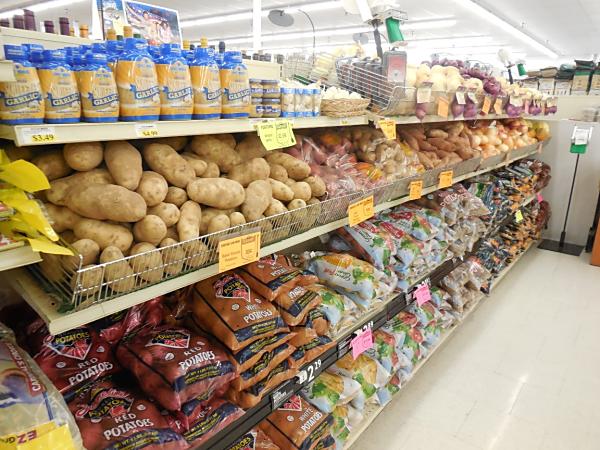 A major shift in the Bakersfield, Kern County potato shipping region has occurred over the past decade as russets have lost favor to red, gold and white potatoes.
In 2004, the acreage for russets in Bakersfield was 4,667 acres, but this year it is down to only 506 acres. The plunge in russet acreage corresponds with the overall drop in acreage in the past 10 years. In 2004, total acreage of all varieties planted in Bakersfield was 10,922; this year it is half of that at 5,398. The 4,000-plus-acre decline in russets represents a vast majority of the difference.
Kern County potato shipments are still an important area for reds, Yukon Golds and even white potatoes, as well as some specialty items such as fingerlings.
The change in shipments refers to the shift from storage potatoes, which fills produce shelves through the winter and early spring, to the first fresh potatoes, which come from California in the spring and are noted for a thinner skin.
This time of the year storage potatoes are starting to look “tired” and retailers are looking for the fresh crop.
Red potatoes are now the number one potato crop grown in Kern County, with about 2,000 acres this season.
The Yukon Gold potato is gaining in popularity and its acreage has increased over the years. The 2015 season total is over 1,500 acres, representing a significant increase in the past decade.
White potatoes have lost some acreage, but at 1,300 acres the crop is still substantial.
Bakersfield fresh potato shipments start in May and continue through June and into early July.
Kern County potatoes and carrots – grossing about $4000 to Dallas
 The U.S. balance of trade for fruits and vegetables is swinging heavily to imports, with avocados and berries seeing huge growth over the past decade, according to the U.S. Department of Agriculture. While this may not help improve the country’s trade deficite, it means increased loading opportunities for produce haulers.
The USDA in its annual report of trade projections, estimates the trade deficit in fresh fruits and vegetables will grow from about $7.6 billion in 2014 to $16.5 billion by 2024.
The total value of fresh fruit and vegetable exports will grow from $7.3 billion in 2014 to $10.7 billion in 2024, while imports will grow even faster, climbing from $14.9 billion in 2014 to $27.2 billion in 2024.
The projections are built on trade trends over the past 10 years.
The last time the U.S. had a trade surplus in fresh fruits and vegetables was 1980, when the margin of exports over imports was $25 million. By 1990, the trade deficit in fresh fruits and vegetables was $530 million, increasing to $1.8 billion by 2000 and $6.2 billion by 2010.
Imports will supply 53 percent of U.S. fruits and nuts by 2024, up from 45 percent in 2014, while the USDA said the share of vegetables from imports will rise from 19 percent in 2014 to 26 percent in 2024.
Lower trade barriers have boosted U.S. exports and imports.
Climbing imports
“Twenty years ago you never would have thought of having citrus (imports) in the summer or grapes in November,” said Mayda Sotomayor, CEO of Seald Sweet International, Vero Beach, Fla. “You just had gaps, and consumers lived with gaps.”
Today, Sotomayor said those gaps are now mostly gone, thanks to new varieties, growing areas and storage technology.
 By the California Walnut Commission
FOLSOM, Calif. — Multiple new research abstracts suggest walnuts may have the potential to positively affect several important health factors. From their impact on colon cancer and certain aspects of cognitive aging, to their positive effect on both gut health and vascular health, the research findings presented at Experimental Biology 2015 (EB) detail our latest understanding of walnuts’ inner workings. Running March 28 through April 1 in Boston, this annual meeting attracted an international audience of over 14,000 leading research scientists and exhibitors.
“These findings help advance the understanding of the many advantages of eating walnuts as part of a healthy diet, and add to the more than 159 published papers over 20 years that have shown how walnuts affect heart health, diabetes, cancer, cognition, fertility and weight management,” said Dennis A. Balint, CEO, California Walnut Commission.
There are numerous possible active ingredients in walnuts that may be contributing factors in providing these health benefits. One component that differentiates walnuts is alpha-linolenic acid (ALA), the plant-based omega-3 fatty acid. Walnuts are the only nut that contain a significant amount of alpha-linolenic acid (ALA) with 2.5 grams per one ounce serving.
While scientific conclusions cannot yet be drawn from the abstracts presented at EB 2015, the following summaries share the latest findings:
- Colon Cancer: For the first time, researchers looked at whether components of walnuts have an effect on colon cancer cells. This cell study1 was conducted by the Department of Nutritional Science and Food Management at the Ewha Womans University in Korea, and showed that walnut extract significantly slowed the survival of the cancer stem cells as well as reduced the stemness of colon cancer stem cells. Given the results, researchers state there is reason to further explore the role of walnut consumption in colon cancer therapies targeting cancer stem cells.
- Gut Health: The gut microbiome is an ecosystem of bacteria that helps our bodies digest and use the food we eat; changes in the gut microbiome are linked to chronic diseases. A recent animal study2 conducted by the Department of Physiology School of Medicine at Louisiana State University Health Sciences Center looked at the effect of walnuts on two major gut bacteria communities. A diet with walnuts (approximately 2 ounce human diet equivalent) significantly altered the ratio of the two communities, therefore suggesting “a new mechanism, changing the gut microbial environment, by which walnuts may exert their beneficial health effects.” As this study was performed on animals, however, findings cannot yet be implied for humans.
- Aging, Brain Health: This animal study3 from the Human Nutrition Research Center on Aging at Tufts University looked at healthy rats, both young and old, and the impact of walnuts – a source of polyunsaturated fatty acids and nutrients such as folate, selenium, magnesium and polyphenols – on mechanisms in critical regions of the brain. Animals were segmented into three groups – one, the control group, who ate no walnuts at all (0%); a second that had 6% of their diet comprised of walnuts; and a third that had 9% of their diet comprised of walnuts (equivalent to one ounce and 1.5 ounces respectively in a human diet). The groups were monitored for ten weeks. According to the researchers, incorporating walnuts into one’s diet may have protective effects on the aging brain. As this study was performed on animals, however, findings cannot yet be implied for humans.
- Vascular Health: Microvascular function refers to the health of our smallest blood vessels, such as capillaries. A study4 from the Departments of Nutrition and Internal Medicine at the University of California, Davis of postmenopausal women with high cholesterol looked at the short-term impact of walnut consumption. The group that ate 40 grams, or 1.5 ounces, of walnuts per day saw improved vascular function. The study concludes this improvement is due to the effects from the walnut-derived fatty acids, alpha-linolenic acid (ALA) and linoleic acid (LA).
Findings like these pave the way for additional research aimed at understanding walnuts’ role in disease prevention and management.