
Archive For The “News” Category
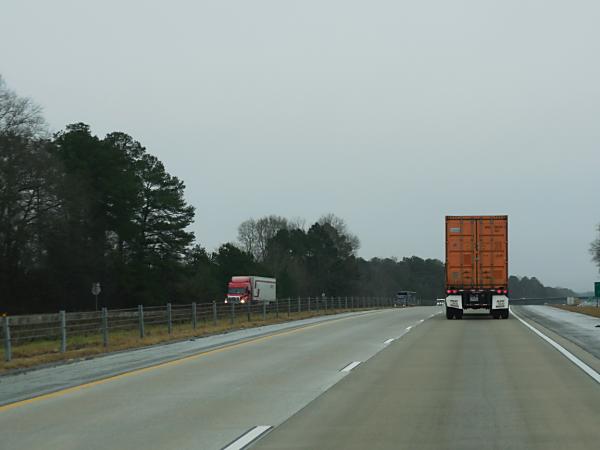 The Port of Savannah plans to receive South American fruit through a U.S. Department of Agriculture pilot program allowing imports of cold-treated commodities. The program was launched September 1.
The Savannah, Ga., port will be authorized to accept commodities from Peru and Brazil that have undergone cold treatment. Brazil and Peru grapes and Peru blueberries and citrus, including mandarins, tangelos, clementines, tangerines, grapefruit and sour limes, are to be allowed, according to a news release. The cold treatment process prevents the transmission of agricultural pests and last year, the USDA approved a similar program for cold-treated Peru and Uruguay blueberries and grapes into Port Everglades in Fort Lauderdale, Fla., and the Port of Miami.
Jacksonville, Fla.-based Crowley Maritime Corp. Inc., imports produce and other commodities through the south Florida ports and ports in Jacksonville, Pennsauken, N.J., and Gulfport. The test program should help increase produce movement, something the Savannah port doesn’t handle much of. The program is said to be the next logical step to complement cold treatment conducted at Atlanta’s Hartsfield International Airport. The port is looking to grow their perishables imports because they export a lot of poultry and refrigerated cargo.
Containers that fail cold treatment will be prohibited from entering the port and will not be offloaded from vessels but will be allowed to ship via sea to a northeastern port for retreatment or be returned to the country of origin, according to the release.
While South American fruit destined to customers in the Southeast has traditionally been shipped to northern U.S. ports, the addition of Savannah could reduce truck delivery times and allow fresher offerings for stores and longer shelf life for consumers.
The port plans to work closely with the USDA’s Animal and Plant Health Inspection Service and the Department of Homeland Security’s Customs and Border Protection to evaluate the application of cold treatment and to monitor its progress, according to the release.
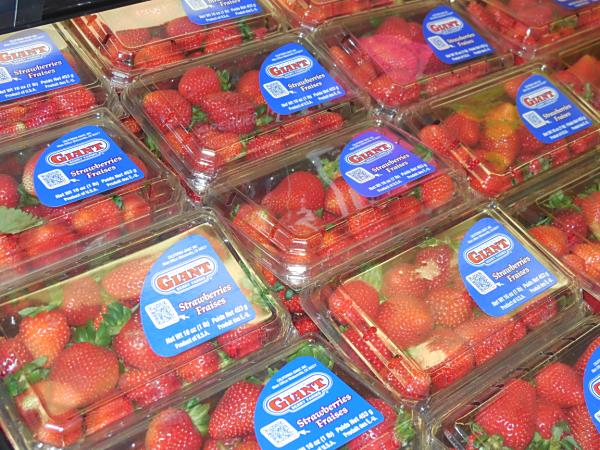 During the past year researchers have been studying how temperature monitoring can help ensure longer shelf lives for strawberries. A temperature tracking system has been used to study how various fresh produce items and strawberries fare.
Jeffrey Brecht, director of the University of Florida Institute of Food and Agricultural Sciences’ Center for Food Distribution and Retailing, and other researchers studied how temperature monitoring can help ensure longer shelf lives for strawberries. Using radio frequency identification tags, researchers collected temperature data and mapped temperatures throughout shipments of trailer loads from Oxnard, Calif., and Plant City, Fla., to Wal-Mart distribution centers. Florida berries were tracked in shipments to Illinois and Washington, D.C., while California strawberry loads were recorded in shipments to Alabama, South Carolina and Washington state.
Brecht says the research showed strawberries can warm during transport ,but not uniformly throughout the trailer. There was a variance of about 5 degree F. in temperatures in the trucks with the pallets nearest the truck walls, particularly those on the truck’s south side exposed to the sun from California shipments to the East Coast. This is were the most increase in temperature occurred.
If a shipper knows the quality of the produce and the temperatures the products have been exposed to, they will know which pallets should be delivered first to stores for longer shelf life, Brecht said.
The researcher adds the tracking technology can be used on many perishable produce items, including bell peppers, cucumbers, squash and tomatoes.
“All the crop inputs, there are so many things if you think of it, it’s mind-boggling,” Brecht said. “If we take it all the way to the end and the product winds up in the trash can in someone’s kitchen, it’s a horrible waste. Making sure everything is of high enough quality and will be eaten by the ultimate consumer, that’s improving sustainability.”
Models developed by the researchers are being commercialized by project partners Franwell Inc., a Plant City agricultural software firm, and the a Bridgeton, Mo.-based Hussman Corp., which manufactures refrigeration and food merchandising equipment. The research was funded by a $155,000 grant by the Fayetteville, Ark.-based National Strawberry Sustainability Initiative, which is supported by the Bentonville, Ark.-based Wal-Mart Stores Inc’s foundation.
 45 percent of U.S. residents buy organic foods at least once a month, according to research recently released by Consumer Reports.
Additionally, the USDA reports $35 billion was spent on organic food in 2013. However, that is still only 5 percent of the total “at home food sales” for that year. In another report, TechSci research forecasts annual sales increases of 14 percent through 2018 for organic foods. This is causing a lot of folks to believe organic foods are on the verge of becoming mainstream.
Big retailers such as Wal-Mart and Target and preparing to cash in on the trend. Both have recently announced they will be adding over 100 organic and “natural” products.
In a press release Wal-Mart stated 91 percent of their customers would choose organic over conventional if the different in price wasn’t too much. The retailer later this year plans launch an organic private label, Wild Oats, that will save shippers 25 percent compared to other organic products.
Organic Web Domain
Next consumers will be seeing websites with a new domain name “organic” instead of com or net. It will be one of more than 175 new generic top-level domains recently introduced by the Internet Corporation for Assigned Names and Numbers, Marina del Ray, CA. Until 2013 there were only 22 domains, with the best known including com, net, org and edu.
Afilia Limited, an Irish registry services company with its subsidiary Afilias USA Inc. based near Philadelphia, is handling the new organic domain. Only certified organic producers and marketers and organic trade associations will be allowed to use the domain.
 HALL, NY– Say hello to Butterkin, a flavorful new variety of winter squash developed for its distinctive flavor and texture.
“I think the best way to describe it is Butterkin is like butternut’s hotter cousin. It’s sweeter than butternut with a creamier texture and less stringiness. I see it gaining popularity over the next few years as more people are exposed to it,” says Michele Collins at Fair Weather Acres in Connecticut.
There are over 300 growers in 34 U.S. states and five Canadian provinces who are growing it.
“The feedback from the growers has been very positive and we’re looking forward to a very successful season,” says Dean Cotton, Vegetable Seed Business Manager at SEEDWAY, LLC.
This new variety measures about 6 to 7.5 inches in diameter and weighs between 2 to 4 pounds, according to a press release. Its flavor is a perfect blend of sweet and buttery, and its texture makes it extremely versatile and excellent for baking, roasting, steaming and even grilling.
Butterkin will be harvested in September and available in parts of the U.S. and Canada, with supplies expected to last through November.
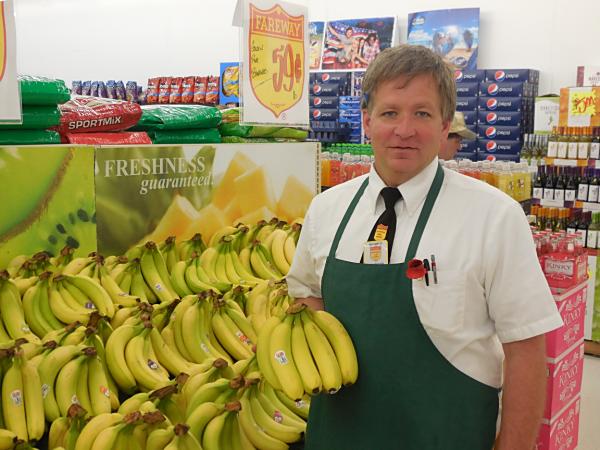 By Dole Food Company
LATROBE, Pa. — Last year, the world watched as Latrobe, Pa., was officially recognized as the birthplace of the banana split with the unveiling of a historical marker from the Commonwealth of Pennsylvania, in honor of National Banana Split Day. This spirited, appealing ceremony, held at the location where the banana split was first created in 1904, kicked-off a weekend-long celebration of the classic American dessert christened the Great American Banana Split Celebration.
Since Dole Fresh Fruit wants to be where banana lovers are, the banana leader teamed up once again with The City of Latrobe and Saint Vincent College to continue this sweet tradition, honoring the iconic, triple-scoop treat – as well as the city where it all began – by hosting Second Annual Great American Banana Split Celebration, a two-day celebration of both the classic banana split and new, healthier versions developed by Dole.
The festival culminated with August 26th launch of National Banana Split Day at the exact place in Latrobe, the former site of Tassel Pharmacy, where David Strickler created the first banana split 110 years ago.
Dole Fresh Fruit, based in Westlake Village, Calif., served as a title sponsor of the event and provided thousands of DOLE® Bananas and recipes for banana-themed snacks, entrees, drinks and of course, banana splits. Continuing in its tradition of offering “guilt-free” versions of classic desserts, Dole used its involvement to offer recipes for healthier banana split varieties featuring bananas topped with Greek yogurt, sorbet, honey, pomegranate seeds, berries, sliced pineapples and other fresh fruit.
“Last year we celebrated Latrobe as the birthplace of the banana split but also introduced healthier ways to enjoy this iconic dessert as part of Dole’s commitment to health and nutrition,” said Bill Goldfield, Dole’s director of corporate communications. “As America’s number one banana provider, Dole helped host the 2014 event to reinforce this message that there are healthy-but-fun—and just as delicious— alternatives to the ‘traditional’ banana split.”
About The City of Latrobe
With its relatively small size and proximity to Pittsburgh, the City of Latrobe affords its residents a full service community nestled within one of Pennsylvania’s most beautiful regions. Latrobe is recognized as the birthplace of the original banana split, Mr. Fred Rogers, Arnold Palmer, and the first ever professional football team.
 Coconut water, maple water, even birch and cactus waters… A quick inventory of beverages in the produce section makes it clear — plant waters are rising.
Soda and non-fresh juice sales are flat or slipping slightly, but plant-based products like coconut water — along with other alternative beverages such as kombucha and tea-based drinks — are growing, particularly those sold alongside your fruits and veggies, according to data compiled by market research firm Nielsen.
“The one area of the store where we are just seeing phenomenal growth is the produce department,” says Sherry Frey, health and wellness expert for Nielsen.
Coconut water has been big for a while, after being introduced several years ago. Maple water is a newer entry and is essentially maple sap, the stuff that normally is boiled down to syrup. Brands include Vertical Water and SEVA. And that’s not the only tree water on the market. There’s also birch water and, on the plant side, cactus, barley and artichoke waters.
Sales of all waters, including the new products, “fitness” and enhanced waters, as well as regular sparkling and still, grew 4 percent by value and nearly 7 percent by volume since July 2013.
Coconut water is not yet being tracked specifically, but totals for beverages in the produce department, which is where much coconut water is sold, showed double-digit growth. The value jump for all produce section beverages — which includes smoothies, fresh juices and teas as well as water — was nearly 13 percent.
Why the sudden thirst? Nutrition expert and registered dietitian Tina Ruggiero sees it as a trend driven by the beverage industry’s desire to find the next big thing, as well as consumers’ interest in finding natural alternatives to soda. “This natural beverage market just presents a tremendous opportunity,” she says. “There is a fight to create the next best-selling natural water.”
All of the brands promise unique nutrition benefits, but Ruggiero advises clients to read labels carefully, beware of the hype and watch for calorie content. Chocolate “healthy” waters may not be any better for you than some other sweetened drink.
Plant waters are fine for recreational athletes, i.e. people who exercise less than 90 minutes a day, says Ruggiero. On the other hand, you’re also fine with good old tap water — which is much, much cheaper — and maybe a banana and/or some salted pretzels.
Does all this choice in natural beverages make Americans No. 1 in hydration?
Ruggiero laughs. “I don’t know if we’re the best hydrated,” she says, “but we sure as heck spend a lot of money on bottled water and beverages in general.”
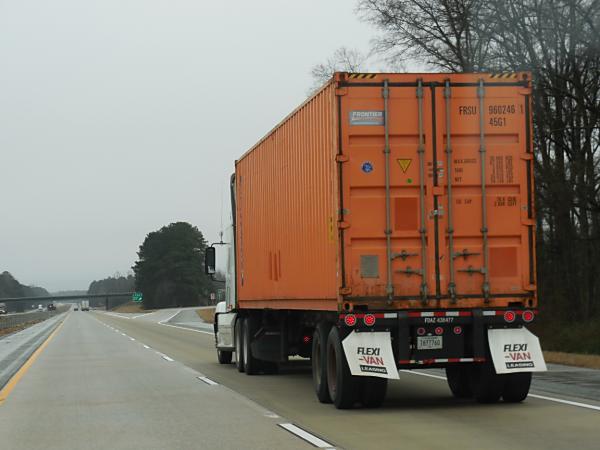 The ports of the Delaware River are growing and expanding services for the global fruit trade, offering more loading opportunities for refrigerated trucking operations.
International produce trade is originating from countries such as Peru and Uruguay, which are expanding in their role to export fresh fruits and vegetables to the United States. Chile remains an enormous produce supplier, as that trade has become year around. Central American and South American banana trade remains strong as always. South Africa, Spain and Morocco are building their export volumes to the United States. Argentina, Ecuador, Honduras, Costa Rica Guatemala and Brazil are among Latin America’s strong suppliers of fresh produce. All of these countries, and more, are shipping product through the Delaware River ports.
Bananas are coming into Wilmington, DE, Gloucester City, NJ, and Philadelphia by Dole, Chiquita, Del Monte, Turbana and Banacol .
Soft-peel citrus has become a major commodity for seaports and their service providers here both during the summer and winter months.
The area also has independent cold storages such as Manfredi Cold Storage in Kennett Square, PA, and Lucca Freezer & Cold Storage Inc., in Mullica Hill, NJ. These cold storages have been or increasing the efficiency of the ports with not only large, modern cold storages but also repacking and other services to benefit the refrigerated commodities.
Uruguay will start exporting more summer citrus. That country shipped a handful of containers last year. This year they plan to ship a lot more. Peru is a big growth market. Costa Rica is always a staple with pineapples and bananas. Ecuador is a staple. Chile is huge as well.
 By Washington State Fruit Commission
YAKIMA, Wash. — Stone fruit from Washington state, including juicy peaches, nectarines, apricots, plums and prunes are now available on store shelves nationwide while the season lasts, approximately through mid-September. Thanks to the early summer weather in Washington, stone fruit farmers are anticipating a slightly larger crop with some of the sweetest, juiciest fruits yet. The outstanding quality of another popular stone fruit grown in the region, sweet cherries, has already been helping growers sell the quickest and second-largest cherry crop on record.
Washington stone fruit orchards are prized for their sweetness and flavor balance due to the region’s unique microclimates and ancient volcanic soils that make for ideal growing conditions. The 2014 crop is expected to be one of the best to date, as the lengthening days of early summer weather stayed within the perfect temperature ranges for growth. As with wine grapes, these long warm days followed by cooler nights typically leads to more distinctly flavorful and juicy fruit.
“When stone fruit hangs for a long period of time on the branch, it allows the fruit to build up its natural sugar content which makes them that much tastier,” said James Michael, the vice president of marketing – North America for the Washington State Fruit Commission. “We expect it to be a banner year with an exceptionally flavorful crop!”
In addition to their delicious taste, peaches in particular are also grabbing the spotlight for their noted health benefits. A recent study by researchers at Washington State University (then at Texas A&M) and published in The Journal of Nutritional Biochemistry, shows that the compounds found in peaches could supplement therapies that reduce the risk of metastasis in breast and other types of cancer. The study shows compounds in peaches may inhibit growth of cancer cells and their ability to spread.
While the Washington stone fruit season only lasts a few short weeks, consumers can enjoy the taste and health benefits year round through canning and preserving. The website sweetpreservation.com, created by the Washington State Fruit Commission, is a go-to resource for canning and freezing fruit, including everything from how-to tips, traditional and modern canning recipes, craft ideas and downloadable jar labels to customize at home.
For more information on Washington state stone fruit, seasonal recipes, health information and more, visit www.wastatefruit.com.
About Northwest Cherries and Washington State Fruit Commission
Washington State Fruit Commission is a growers’ organization funded by fruit assessments to increase awareness and consumption of regional stone fruits. The organization is dedicated to the promotion, education, market development, and research of soft fruits from Northwest orchards. It began in 1947 and has since grown to include five states – Washington, Oregon, Idaho, Utah and Montana. For more information, visit www.nwcherries.com or www.wastatefruit.com.
 Cold Train Express Intermodal Service on August 7th announced it would be suspending service at its location at the Port of Quincy, WA. Cold Train, operated by Rail Logistics of Overland Park, KS, developed a transportation program model which allowed fresh producers in the Pacific Northwest to take advantage of refrigerated rail service that moved commodities to Chicago, IL, and points beyond in a timely and efficient manner.
The Northwest is expecting large crops of pears and apples. Shippers are concerned about availability of trucks and need all the transportation options available.
It is up in the air for the time being seeing what service Cold Train may be able to take to restore in the future. One other rail option continues to be Railex service to move fruit.
The Cold Train announcement follows a number of scheduling issues on BNSF Railway’s Northern Corridor line that have been occurring with BNSF beginning late last fall because of increased rail congestion. This has been caused by a surge of oil and coal shipments on the Northern Corridor line,” Cold Train said in a statement. “In fact, from November of 2013 to April of 2014, BNSF’s On-Time Percentage dramatically dropped from an average of over 90 percent to less than 5 percent.”
This past April, BSNF Railway announced an initial reduction in intermodal service out of Washington to one train a day with transit times being two to three days slower than prior timetables.
“As a result of the scheduling change in April, the rail transit time nearly doubled,” Cold Train stated. “Unfortunately, this caused Cold Train’s costs of equipment, fuel and other costs to double, and caused many customers — especially fresh produce shippers — to look for other transportation service options.
In fact, because of BNSF’s scheduling issues from November of 2013 until present, Cold Train lost most of its fresh produce business, including apples, onions, pears, potatoes, carrots and cherries, which was more than 70 percent of the company’s business. In addition to adversely impacting many Washington State fresh produce growers and shippers, BNSF’s scheduling changes have affected many retailers and wholesalers in the Midwest and East Coast that purchase Washington State fresh produce and frozen foods.”
According to data made available by Cold Train, use of intermodal transportation was growing from the Pacific Northwest. During 2010, Cold Train moved approximately 100 containers of perishables per month from Washington to the Midwest. By 2013, that number had risen to approximately 700 containers per month shipped from Washington and Portland, OR.
By the end of 2013, Cold Train anticipated it would be shipping 1,000 containers each month from the region.
 By TransFresh Corporation
Salinas, CA — TransFresh Corporation, a wholly-owned subsidiary of Chiquita Brands, has announced that its flagship technology, Tectrol® Modified Atmosphere Packaging Systems, recognized worldwide for delivering an added level of protection to help ensure the quality and marketability of fresh strawberries, has now significantly modified the Tectrol System to help deliver more consistent supplies of fresh blueberries.
TransFresh has successfully completed a multi-year research and development initiative resulting in a unique Tectrol Storage Solution that utilizes Apio’s patented BreatheWay® Technology to deliver a sealed package system with adjustable oxygen transfer rates that react dynamically to changes in temperature and berry respiration for more reliable fresh blueberry storage. Apio is a wholly-owned subsidiary of Landec Corporation.
According to TransFresh, the breakthrough sealed pallet process delivers to customers a unique storage solution with stable oxygen and carbon dioxide. “What’s remarkable about the Tectrol Storage Solution for fresh blueberries is that the innovative zip-sealed pallet system combined with the patented breathable membrane allows just the right amount of oxygen transfer needed by the fruit, resulting in greater atmosphere control than previously possible and a virtually fool-proof packaging operation,” stated Rich Macleod, TransFresh Corporation vice president (in photograph). “Customers who may have struggled in the past to meet the specific atmosphere needs of fresh blueberries are now finding they have a new solution available with higher consistency and a more stable atmosphere for greater storage reliability,” he said. Macleod further commented that customers may now have much more confidence in their storage solutions by being able to more effectively match supplies with market demand. TransFresh expects that its new storage solution can be adapted to other commodities such as fresh cherries and grapes.
To develop the unique Tectrol Storage Solution for fresh blueberries, TransFresh looked more closely at storage needs versus shipping needs. According to Reilly Rhodes, TransFresh Tectrol business manager for fresh blueberries who spearheaded the multi-year development project, the “A-ha” moment came when the pallet sealing method used for fresh strawberries was “turned on its head.” “We redesigned our seal system for the fresh blueberry market and then married the redesigned seal and bag with the Apio BreatheWay® technology,” he explained. The new Tectrol Storage Solution for blueberries is not only high-performance operationally, but is also fully “adjustable” to blueberries and their storage conditions. “At that stage,” Rhodes said, “we were no longer simply adapting a successful program for fresh strawberries to fresh blueberries, we were actually creating a new and highly adaptable solution designed specifically for fresh blueberries.”
In completing the initiative, TransFresh drew upon the extensive expertise of Apio’s BreatheWay® Technology team and also worked alongside several of the key customers who participate in the fresh blueberry industry. BreatheWay® Technology is a trademark of Apio, Inc.
Domestic markets have sold 15 percent more blueberries this year than last and represent a fast growing berry segment. As these markets have grown, the demand for a more effective storage solution has accelerated. Because blueberries are grown in a variety of countries and districts, and varieties tend to have steep production peaks, the ability to hold blueberries in modified or controlled atmosphere conditions helps to smooth out the bumps in market supply and demand. A pallet-sized atmosphere package such as the Tectrol Storage Solution gives suppliers the flexibility to market a quality product through the peaks and valleys of the distribution system.
Customers who are interested in more information may contact Reilly Rhodes, TransFresh Corp., at (949) 279-5084.
About TransFresh®
TransFresh Corporation, a wholly owned subsidiary of Chiquita Brands, is a pioneering and established global company with nearly 50 years of experience in perishables transport. Tectrol® is the trademarked brand name for the TransFresh® family of proprietary modified and controlled atmosphere systems and processes developed and owned by TransFresh. The Tectrol Service Network™ services, markets and supports the Tectrol Pallet Systems operations and technologies. Since inception, TransFresh’s innovations in packaging, equipment and sealing processes have established Tectrol as the industry standard. For more information, please visit www.transfresh.com.
About Chiquita Brands
Chiquita Brands International, Inc. (NYSE: CQB) is a leading international marketer and distributor of nutritious, high-quality fresh and value-added food products – from energy-rich bananas, blends of convenient green salads and other fruits to healthy snacking products. The company markets its healthy, fresh products under the Chiquita® and Fresh Express® premium brands and other related trademarks. With annual revenues of more than $3 billion, Chiquita employs approximately 20,000 people and has operations in approximately 70 countries worldwide. For more information, please visit www.chiquita.com.
About Apio
Apio is a wholly-owned subsidiary of Landec Corporation (LNDC). Landec, through Apio, is a market leader in the commercialization of specialty packaged vegetable products using Apio’s BreatheWay® patented technology. Landec also develops and commercializes injectable medical materials for ophthalmology and orthopedic applications. Landec’s Apio food subsidiary sells its products nationwide under the Eat Smart® and GreenLine® Brands. For more information visit www.apioinc.com.