
Posts Tagged “feature”
 Weather related issues will cut into potato hauling opportunities this season in Idaho, Colorado, Wisconsin and the Red River Valley, but there will still be ample hauls available for produce truckers.
The effects of summer rain and hail will likely put a dent in potato loadings this season, but growers are optimistic at the beginning of harvests. A few Colorado growers started digging during the past week, but the harvest is just ready to get into full swing. Around 20 percent of Colorado acreage received hail damage this summer, but most of it was minor. It only means a bumper crop has turned into a more normal crop.
Late rains in Wisconsin were complicating the start of the 2014 harvest. Some diggings in Wisconsin started about three weeks ago, and rains are expected to lower yields, but more normal potato shipments are still expected this season.
Central Wisconsin potatoes – grossing about $1100 to Chicago.
Similar circumstance are being heard from Idaho potato shippers. While its still not known how much, yields, volume and loadings will be affected, in most years it’s a darned good thing for everyone, if fewer, not more potatoes are coming out of Idaho. The state is just now entering volume shipments.
Idaho potatoes – grossing about $5600 to New York City.
In the Red River Valley of North Dakota and Minnesota, the nation’s largest shipper of dry land red potatoes should provide decent loading opportunities this season, but no one is predicting any records for volume. Most Red River Valley potato shippers see an average sized crop, if not somewhat below average. It will probably be October before good volume is available for hauling out of the valley. In the meantime, there are some loading opportunities for red potatoes out of Long Prairie, MN, although some of those spuds are delivered to the valley for washing, packing and shipping.
Long Prairie potatoes – grossing about $2800 to Dallas.
 Here’s a look at two very different hauling opportunities — red potatoes from North Dakota and Minnesota, plus the amazing growth of avocado shipments.
It used to be produce truckers rarely had avocados very high on their list of items to haul, but that has changed over the past decade or so. This year about 1.8 billion pounds (450,000 truck load equvialents) will be shipped to U.S. markets. which includes both domestic production and imports. This compares to 500 million pounds in 2000. Last June set a record for monthly shipments with 180 million pounds of avocado shipped. In 2015, loadings should hit the 2-billion-pound mark.
While California U.S. avocado shipments (which should end up at about 315 million pounds this year) are winding down with only about 20 percent of its crop left, Mexico is ramping up, with volume loadings headed to the U.S. starting this month. During Mexico’s 2013-14 season it shipped 1.1 billion pounds, with the U.S. being its biggest market. This season Mexican avocado shipments are expected to increase 20 percent over the previous season.
Mexican avocados and other produce crossing through South Texas – grossing about $4400 to New York City.
North Dakota/Minnesota Potatoes
Big Lake, MN red potato shipments are pretty much finished, while loadings out of Long Prairie, MN should continue for another two weeks….Both of these areas annually serve as a prelude to the largest growing and shipping area in the country. That would be just to the west in the Red River Valley of North Dakota and Minnesota. This marks the 20th year since this writer first visited these northern plains, which has the most beautiful, black soil for growing non-irrigated red potatoes anywhere. The only thing better than the soil in the Red River Valley are the people – they are great, hard working, honest and friendly!
The Red River Valley is expecting normal, or at least fairly close to normal shipments this season. The harvest has just started and will continue through October, if not going into November, depending upon the first heavy frost. This is when volume shipments pick up.
Big Lake, MN red potatoes – grossing about $3000 to Dallas.
 By American Pistachio Growers
FRESNO, Calif. — The benefits of including pistachios in a healthy diet extend to adults with type 2 diabetes, according to a Pennsylvania State University study published online in the Journal of the American Heart Association.
Adults with well-controlled type 2 diabetes, who were otherwise healthy, participated in a randomized, controlled clinical study and showed a more positive response to stress following a diet containing pistachios than when following a standard low-fat control diet. The healthy diet, which included two servings daily of pistachios, significantly reduced peripheral vascular resistance, increased cardiac output, improved some measure of heart rate variability and importantly reduced systolic ambulatory blood pressure.
Dr. Sheila G. West, principal investigator and professor of biobehavioral health and nutritional sciences at Penn State, and her colleagues reported similar beneficial results in a study of adults with elevated LDL cholesterol and stress, published two years ago. Increasingly it has been found that pistachios, both salted and unsalted, contribute to a heart-healthy diet in high-risk groups. Pistachios contain good fats and fiber, potassium and magnesium.
In this Penn State study, test diets included a low-fat control diet with high carbohydrate snacks (27 percent fat and 7 percent saturated fat) compared to a moderate-fat diet (33 percent fat and 7 percent saturated fat) that included 3 ounces, or 20 percent of the calories, from pistachios. The servings consisted
of equal amounts of salted and unsalted nuts. All meals were provided to the 30 participants, an equal number of men and women, ages 40-74. The calorie levels for the subjects were based on the Harris-Benedict equation so that calories and body weight did not change throughout the study.
A two-week run-in period on a typical western diet preceded the first test diet. Participants discontinued all dietary supplements at least two weeks prior to the beginning of the study. These adults were then administered each test diet for four weeks, separated by two-week compliance breaks, randomized and in a counterbalanced order. At the end of each diet period, including the run-in weeks, participants underwent comprehensive testing.
Researchers measured blood pressure and total peripheral vascular resistance, both at rest and during stress tests, which consisted of holding a hand in ice water for more than two minutes and a difficult math challenge. “After the pistachio diet, blood vessels remained more relaxed and open during the stress tests,” confirmed Dr. West. She continued, “The pistachio diet reduced their bodies’ responses to stress.”
Twenty-four hour systolic blood pressure was significantly lower following the pistachio diet compared to the control diet, with the largest reduction observed during sleep. According to Dr. Kathryn Sauder, a co-investigator who conducted the measurements, “This finding was important because individuals who do not display a dip in blood pressure during sleep may be more likely to experience a cardiovascular event.”
Dr. West concluded, “A moderate-fat diet containing pistachios may be an effective intervention to reduce cardiovascular risk in persons with type 2 diabetes.” In spite of being obese and having a diabetes diagnosis, participants had normal blood pressure and only moderate dyslipidemia. However, even in relatively healthy diabetics, there is room for improvement. The results of this study suggest that a healthy diet containing pistachios can add to the protective effects of drugs for persons with type 2 diabetes.
The researchers suggested future studies should enroll larger samples, include ambulatory blood pressure as a primary outcome and test the effectiveness of pistachio consumption on cardiovascular risk factors in a free-living setting.
The study was supported by the American Pistachio Growers, Fresno, Calif., with partial support from the National Institutes of Health-supported Clinical Research Center at Pennsylvania State University.
 By The American Chemical Society
SAN FRANCISCO — For the millions of adults and children in the U.S. who have to shun nuts to avoid an allergic reaction, help could be on the way. Scientists are now developing a method to process cashews — and potentially other nuts — that could make them safer to eat for people who are allergic to them.
The researchers recently presented their work at the 248th National Meeting & Exposition of the American Chemical Society (ACS), the world’s largest scientific society.
“The only widely accepted practice for preventing an allergic reaction to nuts is strict avoidance — stay away from the food,” notes Chris Mattison, Ph.D. “Clinical trials to test immunotherapy are underway, but we’re approaching it from an agricultural perspective rather than medical. Can we change the food, instead of treating the person, so we can eliminate or reduce severe reactions?”
For those with food allergies, responses to offending products can range from mild itching in the mouth or skin to life-threatening anaphylaxis, which makes it hard to breathe. Once every three minutes, someone in the U.S. ends up in the emergency room due to a food allergy reaction — that adds up to about 200,000 visits a year.
To try to reduce those numbers, Mattison’s team is looking at ways to modify proteins in tree nuts and peanuts (which are legumes) that trigger an immune response in people who are allergic. The response is launched by antibodies called immunoglobulin E (IgE), which recognize and latch onto the proteins. Mattison explains that changing the shape of the proteins makes it harder for IgE to find them.
But past research taking this approach has involved harsh chemicals. Mattison, a researcher with the Agricultural Research Service branch of the U.S. Department of Agriculture, wanted to see if his team could achieve the same results, but using compounds that are “generally regarded as safe,” or GRAS. These are substances that are accepted by the Food and Drug Administration for use in food and pharmaceuticals.
“We found that the GRAS compound sodium sulfite can effectively disrupt the structure of a couple of the cashew allergens,” Mattison says. “And we’ve done a couple of different tests to show we reduced IgE binding to the proteins when they’ve been treated with sodium sulfite.”
Next, they plan to conduct experiments on whole nuts and test the modified proteins on cells in the lab to see how they respond. They’re also looking at enzymes, which are molecules that can cut up proteins, as candidates to disrupt the allergens.
And, although this particular report focuses on cashew proteins, Mattison says the work could have broader implications. The kinds of allergenic proteins the GRAS compound and enzymes affect are not exclusive to one kind of nut.
The American Chemical Society is a nonprofit organization chartered by the U.S. Congress. With more than 161,000 members, ACS is the world’s largest scientific society and a global leader in providing access to chemistry-related research through its multiple databases, peer-reviewed journals and scientific conferences. Its main offices are in Washington, D.C., and Columbus, Ohio.
 Produce truckers will once again have plenty of opportunities to haul another large apple crop this season…Also, here’s a brief roundup of what appears will be a record cherry shipping season coming to an end.
The third largest shipments of U.S. apples on record is expected for the 2014-15 season, which recently started.
The U.S. Apple Association is is predicting total U.S. apple shipments will be 263.8 million 42-pound cartons, which is very close to the U.S. Department of Agriculture’s estimate, also released in August, which was 259.2 million.
Estimates from individual regions are: 174.3 million 42-pound units from the west (compared to 174.5 million from the USDA estimate) 55.9 million in the east (54.4 from the USDA) and 33.6 million in the Midwest (30.3 million from the USDA). Washington, the largest producing state, has an estimated production of 162 million 42-pound units for overall production. The industry has cited 140.2 million units as an anticipated fresh pack this year.
Cherry Shipments
Northwest cherry shipments, which are nearing the end of the season, could have record loadings . As of August 18, shippers were on pace to ship 23.4 million boxes of fruit, which would break the 2012 record of 23.1 million cartons. The revised estimate is up from pre-season estimates of more than 22 million boxes.
Washington state fruit – grossing about $4500 to Chicago.
 Produce trucking of Florida citrus has been significantly affected due to what is known as citrus greening. This disease has now shown up in the Lower Rio Grande Valley of Texas, but citrus should not be adversely affected — at least for this season.
While citrus greening is spreading in Texas, but it is not expected to hurt the 2014 orange and grapefruit crops and the loading opportunities for produce haulers. Luckily, the greening hasn’t been in Texas long enough to likely harm fruit this season, or its quality or volume.
So far this season, growers haven’t reported fruit drop or unusually small fruit — two signs of greening.
The orange harvest should begin in late September and grapefruit harvest in mid-October, with both fruits likely to start shipping in volume by late October or early November.
The disease is spread by a mottled brown bug no bigger than a pencil eraser. It arrived in the U.S. via an invasive bug called the Asian Citrus Psyllid, which carries bacteria that are left behind when the psyllid feeds on a citrus tree’s leaves. The tree continues to produce usable fruit, but eventually disease clogs the vascular system. Fruit falls, and the tree slowly dies.
The presence of greening also isn’t expected to limit shipments of Texas citrus to California, other U.S. states or even foreign markets. As long as fruit is shipped without stems or leaves, it is not at risk for spreading greening,
Citrus greening has spread in three Texas counties where oranges and red grapefruit are grown, establishing a “stronghold” in commercial groves and residential trees. There were 430 infected trees in commercial groves – including more than 50 in one block alone – and 207 infected trees in residential areas. Hidalgo, Cameron and Harris counties are under quarantine because of citrus greening, also known as huanglongbing or HLB.
The Texas Department of Agriculture is requiring all citrus trees in a 10-county area to be produced in an enclosed certified structure, to help keep the disease from infecting nurseries,
“The question weighing heavily on the minds of growers and many others in South Texas is whether Texas can avoid a catastrophic situation for our citrus industry, which wasn’t the case for our eastern neighbors in Florida,” said Ray Prewett, president of Texas Citrus Mutual, in a press release.
Mexican fruits and vegetables crossing into South Texas – grossing about $2800 Chicago.
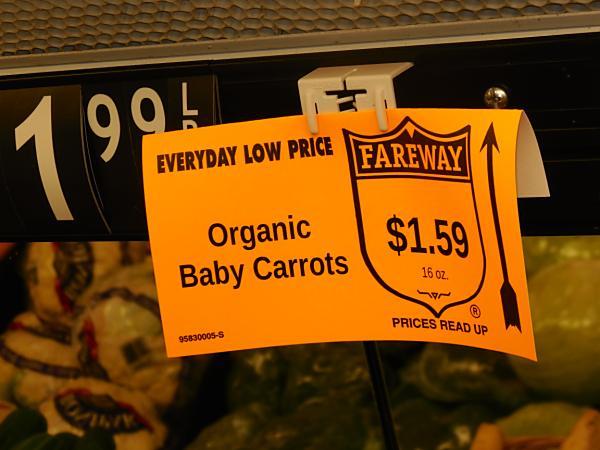 45 percent of U.S. residents buy organic foods at least once a month, according to research recently released by Consumer Reports.
Additionally, the USDA reports $35 billion was spent on organic food in 2013. However, that is still only 5 percent of the total “at home food sales” for that year. In another report, TechSci research forecasts annual sales increases of 14 percent through 2018 for organic foods. This is causing a lot of folks to believe organic foods are on the verge of becoming mainstream.
Big retailers such as Wal-Mart and Target and preparing to cash in on the trend. Both have recently announced they will be adding over 100 organic and “natural” products.
In a press release Wal-Mart stated 91 percent of their customers would choose organic over conventional if the different in price wasn’t too much. The retailer later this year plans launch an organic private label, Wild Oats, that will save shippers 25 percent compared to other organic products.
Organic Web Domain
Next consumers will be seeing websites with a new domain name “organic” instead of com or net. It will be one of more than 175 new generic top-level domains recently introduced by the Internet Corporation for Assigned Names and Numbers, Marina del Ray, CA. Until 2013 there were only 22 domains, with the best known including com, net, org and edu.
Afilia Limited, an Irish registry services company with its subsidiary Afilias USA Inc. based near Philadelphia, is handling the new organic domain. Only certified organic producers and marketers and organic trade associations will be allowed to use the domain.
 HALL, NY– Say hello to Butterkin, a flavorful new variety of winter squash developed for its distinctive flavor and texture.
“I think the best way to describe it is Butterkin is like butternut’s hotter cousin. It’s sweeter than butternut with a creamier texture and less stringiness. I see it gaining popularity over the next few years as more people are exposed to it,” says Michele Collins at Fair Weather Acres in Connecticut.
There are over 300 growers in 34 U.S. states and five Canadian provinces who are growing it.
“The feedback from the growers has been very positive and we’re looking forward to a very successful season,” says Dean Cotton, Vegetable Seed Business Manager at SEEDWAY, LLC.
This new variety measures about 6 to 7.5 inches in diameter and weighs between 2 to 4 pounds, according to a press release. Its flavor is a perfect blend of sweet and buttery, and its texture makes it extremely versatile and excellent for baking, roasting, steaming and even grilling.
Butterkin will be harvested in September and available in parts of the U.S. and Canada, with supplies expected to last through November.
 By Dole Food Company
LATROBE, Pa. — Last year, the world watched as Latrobe, Pa., was officially recognized as the birthplace of the banana split with the unveiling of a historical marker from the Commonwealth of Pennsylvania, in honor of National Banana Split Day. This spirited, appealing ceremony, held at the location where the banana split was first created in 1904, kicked-off a weekend-long celebration of the classic American dessert christened the Great American Banana Split Celebration.
Since Dole Fresh Fruit wants to be where banana lovers are, the banana leader teamed up once again with The City of Latrobe and Saint Vincent College to continue this sweet tradition, honoring the iconic, triple-scoop treat – as well as the city where it all began – by hosting Second Annual Great American Banana Split Celebration, a two-day celebration of both the classic banana split and new, healthier versions developed by Dole.
The festival culminated with August 26th launch of National Banana Split Day at the exact place in Latrobe, the former site of Tassel Pharmacy, where David Strickler created the first banana split 110 years ago.
Dole Fresh Fruit, based in Westlake Village, Calif., served as a title sponsor of the event and provided thousands of DOLE® Bananas and recipes for banana-themed snacks, entrees, drinks and of course, banana splits. Continuing in its tradition of offering “guilt-free” versions of classic desserts, Dole used its involvement to offer recipes for healthier banana split varieties featuring bananas topped with Greek yogurt, sorbet, honey, pomegranate seeds, berries, sliced pineapples and other fresh fruit.
“Last year we celebrated Latrobe as the birthplace of the banana split but also introduced healthier ways to enjoy this iconic dessert as part of Dole’s commitment to health and nutrition,” said Bill Goldfield, Dole’s director of corporate communications. “As America’s number one banana provider, Dole helped host the 2014 event to reinforce this message that there are healthy-but-fun—and just as delicious— alternatives to the ‘traditional’ banana split.”
About The City of Latrobe
With its relatively small size and proximity to Pittsburgh, the City of Latrobe affords its residents a full service community nestled within one of Pennsylvania’s most beautiful regions. Latrobe is recognized as the birthplace of the original banana split, Mr. Fred Rogers, Arnold Palmer, and the first ever professional football team.
 Coconut water, maple water, even birch and cactus waters… A quick inventory of beverages in the produce section makes it clear — plant waters are rising.
Soda and non-fresh juice sales are flat or slipping slightly, but plant-based products like coconut water — along with other alternative beverages such as kombucha and tea-based drinks — are growing, particularly those sold alongside your fruits and veggies, according to data compiled by market research firm Nielsen.
“The one area of the store where we are just seeing phenomenal growth is the produce department,” says Sherry Frey, health and wellness expert for Nielsen.
Coconut water has been big for a while, after being introduced several years ago. Maple water is a newer entry and is essentially maple sap, the stuff that normally is boiled down to syrup. Brands include Vertical Water and SEVA. And that’s not the only tree water on the market. There’s also birch water and, on the plant side, cactus, barley and artichoke waters.
Sales of all waters, including the new products, “fitness” and enhanced waters, as well as regular sparkling and still, grew 4 percent by value and nearly 7 percent by volume since July 2013.
Coconut water is not yet being tracked specifically, but totals for beverages in the produce department, which is where much coconut water is sold, showed double-digit growth. The value jump for all produce section beverages — which includes smoothies, fresh juices and teas as well as water — was nearly 13 percent.
Why the sudden thirst? Nutrition expert and registered dietitian Tina Ruggiero sees it as a trend driven by the beverage industry’s desire to find the next big thing, as well as consumers’ interest in finding natural alternatives to soda. “This natural beverage market just presents a tremendous opportunity,” she says. “There is a fight to create the next best-selling natural water.”
All of the brands promise unique nutrition benefits, but Ruggiero advises clients to read labels carefully, beware of the hype and watch for calorie content. Chocolate “healthy” waters may not be any better for you than some other sweetened drink.
Plant waters are fine for recreational athletes, i.e. people who exercise less than 90 minutes a day, says Ruggiero. On the other hand, you’re also fine with good old tap water — which is much, much cheaper — and maybe a banana and/or some salted pretzels.
Does all this choice in natural beverages make Americans No. 1 in hydration?
Ruggiero laughs. “I don’t know if we’re the best hydrated,” she says, “but we sure as heck spend a lot of money on bottled water and beverages in general.”