
Author Archive
 Here’s a quick glimpse at some produce loading opportunities from 11 different states ranging from coast-to-coast.
Washington Produce Shipments
Washington state continues to ship its 2013-14 season crop of apples, averaging about 1,500 truck load equivalents per week. Also coming out of the Yakima and Wenachee vallies are fresh cherries. Volume remains strong, but is still only about one-third the volume of apple shipments.
Washington fruit – grossing about $7500 to New York City.
Michigan Produce Shipments
Peach shipments from the Benton Harbor area and other areas of Southwest Michigan have started. Loadings for the stone fruit are generally a relatively short haul – within a 500 mile radius for the most part. Chicago is one of the more popular destinations…..Apples from the area are expected to get underway the third week of August. Meanwhile, Michigan blueberry shipments are moving into good volume, while summer mixed veggies continue.
Michigan blueberries – grossing about $2700 to Atlanta; Michigan vegetables grossing 15 to 20 percent less.
New Jersey Produce Shipments
Garden State peach shipments started a couple of weeks ago and are now moving into good volume. Jersey blueberry loadings are still occurring, butare now past peak volume. The southern part of the state also is shipping a mixture of vegetables.
Watermelon Shipments
Watermelon loadings continue from a number of states. While eastern Texas watermelon shipments, as well as Georgia watermelon shipments are declining, volume is steady out of South Carolina, but cranking up in North Carolina, followed closely by the Eastern Shore states of Delaware, Maryland and Virginia…..Look for increasing volume of Missouri watermelons out of the boot heal area…..The watermelon season has recently started out of Southwest Indiana and Southeast Illinois.
 While peak summer California produce shipments continue, few record shipments are taking place, with the possible exception of table grapes.
Most commodities and are having normal volume, or being slightly off of average shipments. Record California grape shipments occurred last year, totaling 116.2 million boxes of grapes (19-pound equivalent). This year, shipments are estimated to bet over 116.5 million boxes. The San Joaquin Valley is California’s largest grape shipping region, and loadings started earlier than usual. As of the week ending July 4, shipments were well ahead of the prior year, amounting to six million boxes out of the Coachella Valley and the San Joaquin Valley. This year, during the same period, 9.2 million boxes were shipped. The vast majority California grape shipments will take place after September 1st, when as much as 65 or 70 percent the volume will take place during the fall an into the winter.
The Central San Joaquin Valley also has good, steady volume with peaches (averaging about 425 loads per week) as well as plums and nectarines. There also are tomatoes, sweet corn and dozens of other vegetables loadings taking place, plus Westside district melons.
Further south in the valley in the Bakersfield area are avocados, with truckloads averaging over 1,000 per week, plus steady movement with carrots.
Moving to the Salinas area, strawberry shipments from Watsonville continue. Lettuce, broccoli, cauliflower and celery lead a wide contingent of other veggies being shipped from the Salinas Valley. A similar situation exists just to the south in the Santa Maria shipping district, although on a smaller scale.
Salinas Valley vegetables – grossing about $8300 to New York City.
Central San Joaquin Valley stone fruit and grapes – grossing about $5200 to Chicago.
 U.S. potato shipments from the old crop are still on going as the new season rapidly approaches. Plus, Rocky Ford cantaloupe shipments in Colorado are now underway..
Idaho and a number of other potato shipping states are scrambling to unload their old crop in order to get going on shipments for the 2014-15 season. The old crop of potato shipments is expected to continue well into August. At the same time, depending on the growing and shipping area, the new crop of spuds became available last week. Both Washington and Oregon are expected to have their first potatoes for the new season by early August, while Wisconsin potato shipments will soon follow. Then you have Idaho russet potatoes being shipped by the week of August 10th. Some red potatoes and other varieties have already started out of Washington state.
Colorado Cantaloupe Shipments
A spring freeze and two major hailstorms will have a significant effect on Colorado’s Rocky Ford cantaloupe shipments, leaving farmers uncertain over how big their crops will be this year. One grower is reported to have lost an estimated 60 acres of the 360 acres of cantaloupes that he planted this spring. Just how much yields will off set the weather damaged melons, remains to been seen. Loadings of cantaloupe started last week and will continue into September. Overall, it is estimated anywhere for 15 to 25 percent of the cantaloupe were lost. The area also ships honeydew and watermelon, but no reports on these items were available.
Arkansas Valley growers banded together in 2011 to trademark the Rocky Ford cantaloupe name and define its boundaries after melons from Jensen Farms in Holly, 90 miles east of Rocky Ford, were implicated in a listeria outbreale that killed at least 32 people.
Over the past decade, Colorado growers have planted an annual average of 2,000 acres of cantaloupes.
Idaho potatoes – grossing about $5500 to New York City.
 Since opening three years ago, the Philadelphia Wholesale Produce Market has been touting itself as the world’s largest, fully-refrigerated wholesale produce marketplace.
With 700,000 square feet of space, this modern facility has indoor, consistently chilled facilities keeping customers and produce safe from the elements, while maximizing shelf life and ensuring freshness and crispness. It is a quarter-mile-long, multi-story, skylit, fully refrigerated fruit and vegetable warehouse.
The main benefits of being in the new produce market is not having to break the cold chain, which is very important in maintaining the quality for fresh produce. The Philly market also is ahead of the curve as far as keeping up with new standards and government sanctioned food safety regulations.
This prevents product that is being staged for orders from sitting in the 100 degree heat during the summertime in Philadelphia. This past winter was a true test of the market’s value to the merchants and to their customers. Business was conducted in a clean, safe temperature controlled environment, while some other wholesale terminal markets dealt with freezing temps and blowing snow.
The lay out of the market also makes it easier for refrigerated big rigs to maneuver, with less delays. The market now employs 1,500, up from 1,100 at the former Philadelphia Regional Produce Terminal on Galloway Street in South Philly. It is now located on Essington Avenue in Southwest Philadelphia.
On the other hand, just 25 produce firms now operate in the new center, down from 40 at the old terminal, though surviving firms have expanded to fill the available space.

By Larry Oscar
A friend of mine and I were discussing the decline that our country in these troubled times when the subject of how recent our country has gone down hill came up for discussion.
Actually, it just seems that way when in fact the decline of our nation started well over 50 years ago. It started when the leaders of our country began to think the problems of bad human behavior could be solved with money and big government programs. No problems caused by bad human behavior can ever be solved by more government and throwing money at the problem.
And no human bad behavior can be covered up by excuses and political platitudes. Oh, there are brief moments when we see some signs that America may be improving for the best, but one fact remains…we are past the “Tipping Point’. A tipping point is the point when the center of gravity is above the center of buoyancy. At that point a boat becomes unstable and capsizes.
We reached several tipping points in our country a few years ago. We now have more people who vote for a living than those who work for a living. This lets the politicians sell handouts for votes at an ever increasing pace. “Vote for me and I will give you a government handout” is now the mantra of today’s politicians. Downward declines are nothing new. It happened to Rome, Egypt, the former Union of Soviet Socialist Republics, and the history books are loaded with many other nations who have fallen from grace. What is interesting to note is that you would think by the 21 st century the American people would have learned just a bit, and at least try to avoid the pitfalls that drag a society to the bottom.
I never thought I would see the day when a political party would run on a campaign of jealousy and envy, but that is just what happened in the last election of 2012. Yes indeed, we are past several tipping points in our country when politicians are running on one of the seven deadly sins, and winning. Over the past half century we have seen our freedoms eroded away gradually. However, over the past five years the pace of that erosion has dramatically increased.
If you would have told someone in the 1950s’ that in just 60 years about one half of the country would be on food stamps they would have thought you were nuts. A key failure is a General Motors vehicle that locks the steering wheel and causes 13-20 deaths from auto accidents. The result is a firing of 15 GM workers and millions in restitution to those injured. However, the government VA hospital system has resulted in the deaths of over 1100 veterans and not a single government employee has lost their job. Furthermore, the President and Congress sit back and are “mad” and “outraged” at the VA, but not one cent has been authorized for restitution to those injured by VA negligence. Maybe that’s because we expect government workers to be incompetent in the first place. We hold them to what is known as the “Stupid Standard”.
Well, I have some more good news for you. In 2012 we had 86 million full time private sector workers supporting 148 million government “benefit” takers. So we have to print and borrow money to make the handout payroll. Is it any wonder why our national debt is over $17 trillion and climbing? The national debt is another tipping point we reached a few years ago. It is now larger than our gross domestic product, which, by the way, shrank by 2.9% in the first quarter of this year.
There are some bright sides to all of this mess. For one thing you can expect interest rates to remain low. The government can’t afford a higher interest rate with that high of national debt. You can also expect to see our involvement in the affairs of other nations decline. We can’t afford to send military aid to other nations anymore. Fall TV should be good as we watch all the politicians make fools of themselves during the election. And let’s not forget the laughs we will get from the walking gaff machine Joe Biden.
I also expect more beer and wine production in the US. With a feeling of ever increasing hopelessness people tend to consume more alcoholic beverages. And, if you’re smart , you will get in line like everyone else and grab your government handout before the entire thing collapses and you’re left out in the cold. I can’t wait until the government starts handing out free beer stamps.
Larry Oscar is a graduate from the University of Tulsa and holds a degree in electrical engineering. He is retired and lives with his wife on a lake in Oklahoma where he brews his own beer, sails, and is a member of numerous clubs and organizations.
 If you like hauling bananas out of the Port of Wilmington (Del), The Diamond State Port Corp., and Chiquita Brands have agreed that Chiquita will continue to use the complex as its mid-Atlantic distribution hub for the next five years.
The agreement includes two five-year renewal options, which could extend Chiquita’s stay at Wilmington until 2029, according to a news release.
Chiquita’s business means Wilmington will continue to handle more bananas than any other port in North America.
In 1988, Chiquita consolidated mid-Atlantic supply chain operations to Wilmington, which is now its largest port operation in North America.
Chiquita brings bananas, pineapples and other tropical fruits and vegetables into North America through the port from Central America.
“We are extremely pleased that Chiquita has decided to sign a new lease with the port and continue our long and fruitful relationship,” Gene Bailey, executive director of Diamond State, said in the release. “Chiquita is a most important customer and responsible for hundreds of jobs and … significant economic impact to our port, state and region.”
“The Port of Wilmington is an important destination for Chiquita and our customers,” Mario Pacheco, Chiquita’s senior vice president of global logistics, said in the release. “We are pleased that we have reached an agreement that will enable us to continue to call Wilmington home for many years to come.”
 While most upstate New York state vegetable shipments are getting underway as much as two weeks late this year due to weather factors, things are finally starting to pick up.
First of all, vegetables are grown and shipped from a number of different areas of the state. Here are just a few cities and towns located near some of the larger vegetable operations: Marion, Florida, Goshen, Holley, King Ferry, Pine Island, Marion and Stanley.
Mid July Starts
Just getting underway are items ranging from green beans to cucumbers, and cabbage. Just a note, there will be some slow starts. For example green bean shipments are expected to be off 20 percent until about about the first of August, with normal volume coming on by the middle of August. Cabbage is one of New York’s bigger items, but shipments will be down as much as 50 percent unil mid August, when normal volume should arrive.
Late July Starts
Vegetable loadings should start by late July or early August with sweet corn, which will continue until early October. Other similar starting dates apply to squash and red round tomatoes. Labor Day Starts
Both potato shipments and onion shipments should be starting in early September around Labor Day.
New York state continues to be one of the leading shippers of fresh produce, consistently ranking in the top ten among states.
 When produce haulers think of loading storage onions, the Northwest often comes to mind first, since it leads the nation in volume in this category.
The new season for Northwest onions is upon us and shipments are expected to be about normal.
Oregon was the nation’s second-largest producer of storage onions in 2012. The Beaver State shipped 24 percent of national supplies. Storage onions ranked 10th on the state’s Top 40 Commodities list for 2012.
Malheur County onions are part of the Idaho-Eastern Oregon Onion growing region and represent significant volume for the state. A total of 10,600 acres of onions were harvested in Malheur County. About 8,700 acres were harvested for the fresh market, of which around 5,133 thousand hundredweight (cwt) were produced.
Meanwhile, Washington state ranked 11th nationally for all onion shipments in 2012.
Washington ranked second nationally for summer onion shipments, providing the nation with 23.1 percent of its supplies. In 2012, Washington producers harvested 3,100 acres of summer non-storage onions with production set at 1,147 cwt.
During the same crop year, producers harvested 23,500 acres of summer storage onions with production set at 13,865 cwt.
Onions are grossing about $3500 to Chicago.

From New York state, to Washington state, with Idaho, Texas and New Mexico thrown in, here’s a glimpse at some produce loading opportunities.
New York Onion Shipments
Harvest of Orange County, NY onions got underway last week, but it will be another five or six weeks before everyone is digging. The initial focus will be moving onions into storage. Good quality and normal sized crop are seen.
Orange County onions are typically shipped to markets in the Eastern half of the United States. Once the harvest is complete loadings will start building in volume.
Stone Fruit Shipments
Washington state shippers are saying this is one of their best apricot crops in years. The fruit will be having peak shipments for the next two weeks or so from the Yakima and Wenatchee valleys. The state also is shipping heavy volumes of peaches, nectarines and cherries. Washington is averaging nearly 1,500 truck loads of cherries per week.
Washington state cherries and other fruit – grossing about $7400 to New York City.
Idaho Potato Shipments
Even though Idaho has entered the final leg of the 2013-14 shipping season for potatoes, it is still loading around 1600 truckload equivalents per week, primarily out of the upper valley, Twin Fallsl-Burley area.
Idaho potatoes – grossing about $3000 to Chicago.
Texas Produce Shipments
Watermelon shipments, primarily from Eastern parts of the Lone Star State are averaging about 750 truckloads per week. Meanwhile, potato volume is increasing from the Hereford High Plains area in West Texas, as well as from Eastern New Mexico. Southern New Mexico onion shipments are increasing and averaging over 875 truckloads per week.
Texas watermelons – grossing about $2400 to Atlanta.
New Mexico onions – about $3600 to Chicago.
 California’s ongoing drought continues to hit price tags in grocery stores across the country including fresh fruits and vegetable prices, which will go up an estimated 6 percent in the coming months, the federal government said recently.
“You’re probably going to see the biggest produce price increases on avocados, berries, broccoli, grapes, lettuce, melons, peppers, tomatoes and packaged salads,” said Timothy Richards, a chair at the Morrison School of Agribusiness at Arizona State University.
In its monthly report on the food price outlook, the U.S. Department of Agriculture said the price of fruit and vegetables will continue to rise.
The USDA’s Economic Research Service reported that the California drought has the potential to increase food price inflation above the historical average in coming years as farmers continue to battle for water in the summer months.
Although the department is sticking with its overall forecast that U.S. food prices will increase by up to 3.5% this year over last, it cautioned that the cost of meat, dairy, fruit and vegetables will jump.
California farmers produce about half of the nation’s fruits and vegetables, and most of its high-value crops such as broccoli, tomatoes and artichokes.
But the rising cost of water has forced farmers to idle about 500,000 acres of land and produce less, making certain foods more expensive.
Fresh produce has increased the most and that’s a direct result of the California drought,” said Annemarie Kuhns, an economist with the USDA. Almost 70 percent of the nation’s lettuce is grown in California.
The department now expects 2014 U.S. fresh fruit prices to jump by up to 6 percent, up from its May projection of about 4 percent. A devastating citrus disease in Florida also sent citrus prices up 22.5 percent this year.
Consumers will also see a bump in dairy prices due to increased demand.
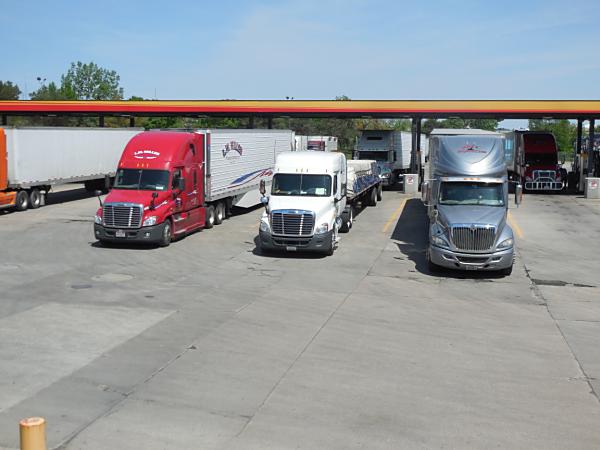 Here’s a quick glimpse at some produce loading opportunities from 11 different states ranging from coast-to-coast.
Washington Produce Shipments
Washington state continues to ship its 2013-14 season crop of apples, averaging about 1,500 truck load equivalents per week. Also coming out of the Yakima and Wenachee vallies are fresh cherries. Volume remains strong, but is still only about one-third the volume of apple shipments.
Washington fruit – grossing about $7500 to New York City.
Michigan Produce Shipments
Peach shipments from the Benton Harbor area and other areas of Southwest Michigan have started. Loadings for the stone fruit are generally a relatively short haul – within a 500 mile radius for the most part. Chicago is one of the more popular destinations…..Apples from the area are expected to get underway the third week of August. Meanwhile, Michigan blueberry shipments are moving into good volume, while summer mixed veggies continue.
Michigan blueberries – grossing about $2700 to Atlanta; Michigan vegetables grossing 15 to 20 percent less.
New Jersey Produce Shipments
Garden State peach shipments started a couple of weeks ago and are now moving into good volume. Jersey blueberry loadings are still occurring, butare now past peak volume. The southern part of the state also is shipping a mixture of vegetables.
Watermelon Shipments
Watermelon loadings continue from a number of states. While eastern Texas watermelon shipments, as well as Georgia watermelon shipments are declining, volume is steady out of South Carolina, but cranking up in North Carolina, followed closely by the Eastern Shore states of Delaware, Maryland and Virginia…..Look for increasing volume of Missouri watermelons out of the boot heal area…..The watermelon season has recently started out of Southwest Indiana and Southeast Illinois.
 While peak summer California produce shipments continue, few record shipments are taking place, with the possible exception of table grapes.
Most commodities and are having normal volume, or being slightly off of average shipments. Record California grape shipments occurred last year, totaling 116.2 million boxes of grapes (19-pound equivalent). This year, shipments are estimated to bet over 116.5 million boxes. The San Joaquin Valley is California’s largest grape shipping region, and loadings started earlier than usual. As of the week ending July 4, shipments were well ahead of the prior year, amounting to six million boxes out of the Coachella Valley and the San Joaquin Valley. This year, during the same period, 9.2 million boxes were shipped. The vast majority California grape shipments will take place after September 1st, when as much as 65 or 70 percent the volume will take place during the fall an into the winter.
The Central San Joaquin Valley also has good, steady volume with peaches (averaging about 425 loads per week) as well as plums and nectarines. There also are tomatoes, sweet corn and dozens of other vegetables loadings taking place, plus Westside district melons.
Further south in the valley in the Bakersfield area are avocados, with truckloads averaging over 1,000 per week, plus steady movement with carrots.
Moving to the Salinas area, strawberry shipments from Watsonville continue. Lettuce, broccoli, cauliflower and celery lead a wide contingent of other veggies being shipped from the Salinas Valley. A similar situation exists just to the south in the Santa Maria shipping district, although on a smaller scale.
Salinas Valley vegetables – grossing about $8300 to New York City.
Central San Joaquin Valley stone fruit and grapes – grossing about $5200 to Chicago.
 U.S. potato shipments from the old crop are still on going as the new season rapidly approaches. Plus, Rocky Ford cantaloupe shipments in Colorado are now underway..
Idaho and a number of other potato shipping states are scrambling to unload their old crop in order to get going on shipments for the 2014-15 season. The old crop of potato shipments is expected to continue well into August. At the same time, depending on the growing and shipping area, the new crop of spuds became available last week. Both Washington and Oregon are expected to have their first potatoes for the new season by early August, while Wisconsin potato shipments will soon follow. Then you have Idaho russet potatoes being shipped by the week of August 10th. Some red potatoes and other varieties have already started out of Washington state.
Colorado Cantaloupe Shipments
A spring freeze and two major hailstorms will have a significant effect on Colorado’s Rocky Ford cantaloupe shipments, leaving farmers uncertain over how big their crops will be this year. One grower is reported to have lost an estimated 60 acres of the 360 acres of cantaloupes that he planted this spring. Just how much yields will off set the weather damaged melons, remains to been seen. Loadings of cantaloupe started last week and will continue into September. Overall, it is estimated anywhere for 15 to 25 percent of the cantaloupe were lost. The area also ships honeydew and watermelon, but no reports on these items were available.
Arkansas Valley growers banded together in 2011 to trademark the Rocky Ford cantaloupe name and define its boundaries after melons from Jensen Farms in Holly, 90 miles east of Rocky Ford, were implicated in a listeria outbreale that killed at least 32 people.
Over the past decade, Colorado growers have planted an annual average of 2,000 acres of cantaloupes.
Idaho potatoes – grossing about $5500 to New York City.
 Since opening three years ago, the Philadelphia Wholesale Produce Market has been touting itself as the world’s largest, fully-refrigerated wholesale produce marketplace.
With 700,000 square feet of space, this modern facility has indoor, consistently chilled facilities keeping customers and produce safe from the elements, while maximizing shelf life and ensuring freshness and crispness. It is a quarter-mile-long, multi-story, skylit, fully refrigerated fruit and vegetable warehouse.
The main benefits of being in the new produce market is not having to break the cold chain, which is very important in maintaining the quality for fresh produce. The Philly market also is ahead of the curve as far as keeping up with new standards and government sanctioned food safety regulations.
This prevents product that is being staged for orders from sitting in the 100 degree heat during the summertime in Philadelphia. This past winter was a true test of the market’s value to the merchants and to their customers. Business was conducted in a clean, safe temperature controlled environment, while some other wholesale terminal markets dealt with freezing temps and blowing snow.
The lay out of the market also makes it easier for refrigerated big rigs to maneuver, with less delays. The market now employs 1,500, up from 1,100 at the former Philadelphia Regional Produce Terminal on Galloway Street in South Philly. It is now located on Essington Avenue in Southwest Philadelphia.
On the other hand, just 25 produce firms now operate in the new center, down from 40 at the old terminal, though surviving firms have expanded to fill the available space.

By Larry Oscar
A friend of mine and I were discussing the decline that our country in these troubled times when the subject of how recent our country has gone down hill came up for discussion.
Actually, it just seems that way when in fact the decline of our nation started well over 50 years ago. It started when the leaders of our country began to think the problems of bad human behavior could be solved with money and big government programs. No problems caused by bad human behavior can ever be solved by more government and throwing money at the problem.
And no human bad behavior can be covered up by excuses and political platitudes. Oh, there are brief moments when we see some signs that America may be improving for the best, but one fact remains…we are past the “Tipping Point’. A tipping point is the point when the center of gravity is above the center of buoyancy. At that point a boat becomes unstable and capsizes.
We reached several tipping points in our country a few years ago. We now have more people who vote for a living than those who work for a living. This lets the politicians sell handouts for votes at an ever increasing pace. “Vote for me and I will give you a government handout” is now the mantra of today’s politicians. Downward declines are nothing new. It happened to Rome, Egypt, the former Union of Soviet Socialist Republics, and the history books are loaded with many other nations who have fallen from grace. What is interesting to note is that you would think by the 21 st century the American people would have learned just a bit, and at least try to avoid the pitfalls that drag a society to the bottom.
I never thought I would see the day when a political party would run on a campaign of jealousy and envy, but that is just what happened in the last election of 2012. Yes indeed, we are past several tipping points in our country when politicians are running on one of the seven deadly sins, and winning. Over the past half century we have seen our freedoms eroded away gradually. However, over the past five years the pace of that erosion has dramatically increased.
If you would have told someone in the 1950s’ that in just 60 years about one half of the country would be on food stamps they would have thought you were nuts. A key failure is a General Motors vehicle that locks the steering wheel and causes 13-20 deaths from auto accidents. The result is a firing of 15 GM workers and millions in restitution to those injured. However, the government VA hospital system has resulted in the deaths of over 1100 veterans and not a single government employee has lost their job. Furthermore, the President and Congress sit back and are “mad” and “outraged” at the VA, but not one cent has been authorized for restitution to those injured by VA negligence. Maybe that’s because we expect government workers to be incompetent in the first place. We hold them to what is known as the “Stupid Standard”.
Well, I have some more good news for you. In 2012 we had 86 million full time private sector workers supporting 148 million government “benefit” takers. So we have to print and borrow money to make the handout payroll. Is it any wonder why our national debt is over $17 trillion and climbing? The national debt is another tipping point we reached a few years ago. It is now larger than our gross domestic product, which, by the way, shrank by 2.9% in the first quarter of this year.
There are some bright sides to all of this mess. For one thing you can expect interest rates to remain low. The government can’t afford a higher interest rate with that high of national debt. You can also expect to see our involvement in the affairs of other nations decline. We can’t afford to send military aid to other nations anymore. Fall TV should be good as we watch all the politicians make fools of themselves during the election. And let’s not forget the laughs we will get from the walking gaff machine Joe Biden.
I also expect more beer and wine production in the US. With a feeling of ever increasing hopelessness people tend to consume more alcoholic beverages. And, if you’re smart , you will get in line like everyone else and grab your government handout before the entire thing collapses and you’re left out in the cold. I can’t wait until the government starts handing out free beer stamps.
Larry Oscar is a graduate from the University of Tulsa and holds a degree in electrical engineering. He is retired and lives with his wife on a lake in Oklahoma where he brews his own beer, sails, and is a member of numerous clubs and organizations.
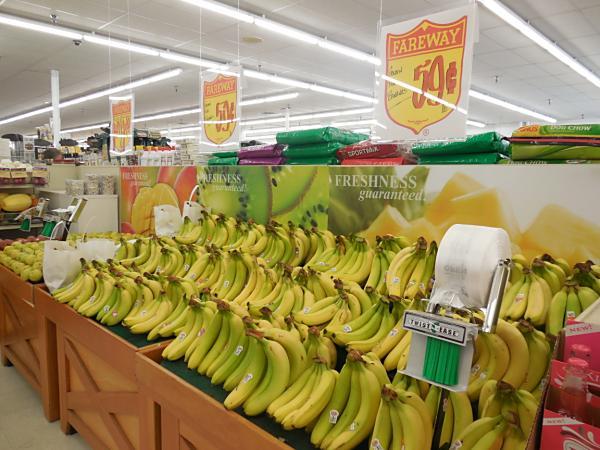 If you like hauling bananas out of the Port of Wilmington (Del), The Diamond State Port Corp., and Chiquita Brands have agreed that Chiquita will continue to use the complex as its mid-Atlantic distribution hub for the next five years.
The agreement includes two five-year renewal options, which could extend Chiquita’s stay at Wilmington until 2029, according to a news release.
Chiquita’s business means Wilmington will continue to handle more bananas than any other port in North America.
In 1988, Chiquita consolidated mid-Atlantic supply chain operations to Wilmington, which is now its largest port operation in North America.
Chiquita brings bananas, pineapples and other tropical fruits and vegetables into North America through the port from Central America.
“We are extremely pleased that Chiquita has decided to sign a new lease with the port and continue our long and fruitful relationship,” Gene Bailey, executive director of Diamond State, said in the release. “Chiquita is a most important customer and responsible for hundreds of jobs and … significant economic impact to our port, state and region.”
“The Port of Wilmington is an important destination for Chiquita and our customers,” Mario Pacheco, Chiquita’s senior vice president of global logistics, said in the release. “We are pleased that we have reached an agreement that will enable us to continue to call Wilmington home for many years to come.”
 While most upstate New York state vegetable shipments are getting underway as much as two weeks late this year due to weather factors, things are finally starting to pick up.
First of all, vegetables are grown and shipped from a number of different areas of the state. Here are just a few cities and towns located near some of the larger vegetable operations: Marion, Florida, Goshen, Holley, King Ferry, Pine Island, Marion and Stanley.
Mid July Starts
Just getting underway are items ranging from green beans to cucumbers, and cabbage. Just a note, there will be some slow starts. For example green bean shipments are expected to be off 20 percent until about about the first of August, with normal volume coming on by the middle of August. Cabbage is one of New York’s bigger items, but shipments will be down as much as 50 percent unil mid August, when normal volume should arrive.
Late July Starts
Vegetable loadings should start by late July or early August with sweet corn, which will continue until early October. Other similar starting dates apply to squash and red round tomatoes. Labor Day Starts
Both potato shipments and onion shipments should be starting in early September around Labor Day.
New York state continues to be one of the leading shippers of fresh produce, consistently ranking in the top ten among states.
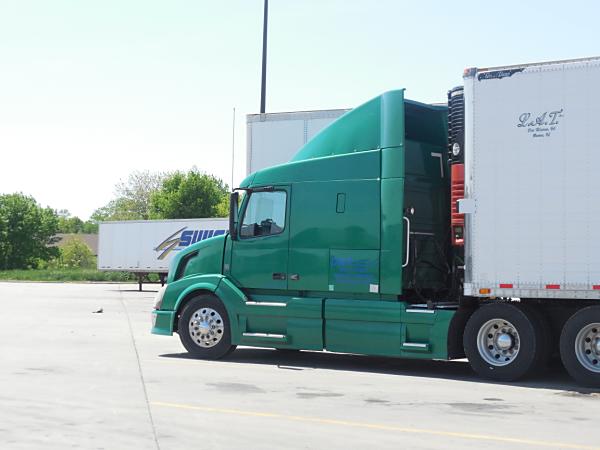 When produce haulers think of loading storage onions, the Northwest often comes to mind first, since it leads the nation in volume in this category.
The new season for Northwest onions is upon us and shipments are expected to be about normal.
Oregon was the nation’s second-largest producer of storage onions in 2012. The Beaver State shipped 24 percent of national supplies. Storage onions ranked 10th on the state’s Top 40 Commodities list for 2012.
Malheur County onions are part of the Idaho-Eastern Oregon Onion growing region and represent significant volume for the state. A total of 10,600 acres of onions were harvested in Malheur County. About 8,700 acres were harvested for the fresh market, of which around 5,133 thousand hundredweight (cwt) were produced.
Meanwhile, Washington state ranked 11th nationally for all onion shipments in 2012.
Washington ranked second nationally for summer onion shipments, providing the nation with 23.1 percent of its supplies. In 2012, Washington producers harvested 3,100 acres of summer non-storage onions with production set at 1,147 cwt.
During the same crop year, producers harvested 23,500 acres of summer storage onions with production set at 13,865 cwt.
Onions are grossing about $3500 to Chicago.
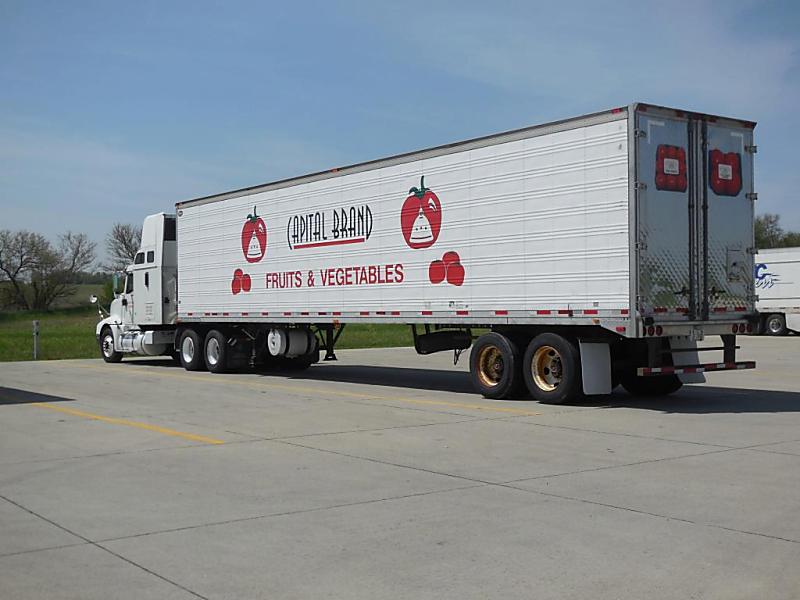
From New York state, to Washington state, with Idaho, Texas and New Mexico thrown in, here’s a glimpse at some produce loading opportunities.
New York Onion Shipments
Harvest of Orange County, NY onions got underway last week, but it will be another five or six weeks before everyone is digging. The initial focus will be moving onions into storage. Good quality and normal sized crop are seen.
Orange County onions are typically shipped to markets in the Eastern half of the United States. Once the harvest is complete loadings will start building in volume.
Stone Fruit Shipments
Washington state shippers are saying this is one of their best apricot crops in years. The fruit will be having peak shipments for the next two weeks or so from the Yakima and Wenatchee valleys. The state also is shipping heavy volumes of peaches, nectarines and cherries. Washington is averaging nearly 1,500 truck loads of cherries per week.
Washington state cherries and other fruit – grossing about $7400 to New York City.
Idaho Potato Shipments
Even though Idaho has entered the final leg of the 2013-14 shipping season for potatoes, it is still loading around 1600 truckload equivalents per week, primarily out of the upper valley, Twin Fallsl-Burley area.
Idaho potatoes – grossing about $3000 to Chicago.
Texas Produce Shipments
Watermelon shipments, primarily from Eastern parts of the Lone Star State are averaging about 750 truckloads per week. Meanwhile, potato volume is increasing from the Hereford High Plains area in West Texas, as well as from Eastern New Mexico. Southern New Mexico onion shipments are increasing and averaging over 875 truckloads per week.
Texas watermelons – grossing about $2400 to Atlanta.
New Mexico onions – about $3600 to Chicago.
 California’s ongoing drought continues to hit price tags in grocery stores across the country including fresh fruits and vegetable prices, which will go up an estimated 6 percent in the coming months, the federal government said recently.
“You’re probably going to see the biggest produce price increases on avocados, berries, broccoli, grapes, lettuce, melons, peppers, tomatoes and packaged salads,” said Timothy Richards, a chair at the Morrison School of Agribusiness at Arizona State University.
In its monthly report on the food price outlook, the U.S. Department of Agriculture said the price of fruit and vegetables will continue to rise.
The USDA’s Economic Research Service reported that the California drought has the potential to increase food price inflation above the historical average in coming years as farmers continue to battle for water in the summer months.
Although the department is sticking with its overall forecast that U.S. food prices will increase by up to 3.5% this year over last, it cautioned that the cost of meat, dairy, fruit and vegetables will jump.
California farmers produce about half of the nation’s fruits and vegetables, and most of its high-value crops such as broccoli, tomatoes and artichokes.
But the rising cost of water has forced farmers to idle about 500,000 acres of land and produce less, making certain foods more expensive.
Fresh produce has increased the most and that’s a direct result of the California drought,” said Annemarie Kuhns, an economist with the USDA. Almost 70 percent of the nation’s lettuce is grown in California.
The department now expects 2014 U.S. fresh fruit prices to jump by up to 6 percent, up from its May projection of about 4 percent. A devastating citrus disease in Florida also sent citrus prices up 22.5 percent this year.
Consumers will also see a bump in dairy prices due to increased demand.