
Posts Tagged “feature”
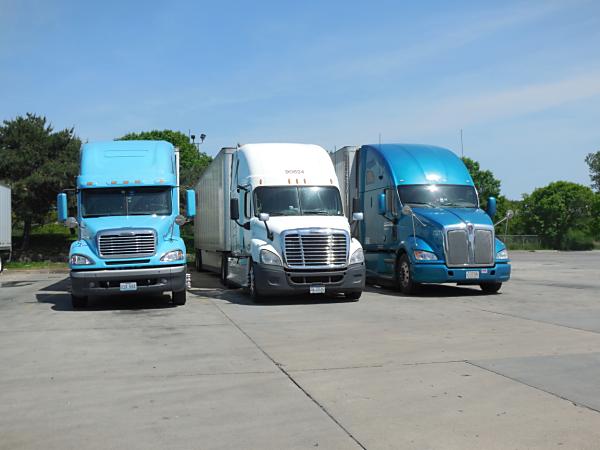 Nogales Port Authority statistics show commercial border crossings at the Mariposa Port of Entry have been increasing and likely will continue to do so.
Both the dollar amount of cargo and the number of trucks hauling it have increased “substantially” since 2010, according to a recent news release. Truck traffic increased 13 percent, growing from 276,877 trucks in 2009 to 311,669 trucks in 2013.
The value of cargo going through the Mariposa crossing is rose from 50 percent to 75 percent. In 2011 an estimated $20 billion to $25 billion in trade goods went through the crossing. The port authority estimates for 2014 it will be $30 billion to $35 billion. Mariposa is particularly popular with produce shippers and produce truckers, according to the Fresh Produce Association of the Americas
.
For September 2013 through April this year, FPAA officials said 37 percent of all Mexican produce came to the U.S. via Mariposa. For the same period in 2013 Mariposa was the entry port for 34 percent of Mexican produce, according to a news release.
“Enhanced staffing of the port, along with current investments in Mexican infrastructure, will complement the U.S. investment in our port and expedite trade. Trade opportunities are both northbound and southbound. We will continue to see increases in export trade southbound into Mexico,” Nils Urman, representing Nogales Community Development, said in the release from the port authority.
 Cold Train Express Intermodal Service on August 7th announced it would be suspending service at its location at the Port of Quincy, WA. Cold Train, operated by Rail Logistics of Overland Park, KS, developed a transportation program model which allowed fresh producers in the Pacific Northwest to take advantage of refrigerated rail service that moved commodities to Chicago, IL, and points beyond in a timely and efficient manner.
The Northwest is expecting large crops of pears and apples. Shippers are concerned about availability of trucks and need all the transportation options available.
It is up in the air for the time being seeing what service Cold Train may be able to take to restore in the future. One other rail option continues to be Railex service to move fruit.
The Cold Train announcement follows a number of scheduling issues on BNSF Railway’s Northern Corridor line that have been occurring with BNSF beginning late last fall because of increased rail congestion. This has been caused by a surge of oil and coal shipments on the Northern Corridor line,” Cold Train said in a statement. “In fact, from November of 2013 to April of 2014, BNSF’s On-Time Percentage dramatically dropped from an average of over 90 percent to less than 5 percent.”
This past April, BSNF Railway announced an initial reduction in intermodal service out of Washington to one train a day with transit times being two to three days slower than prior timetables.
“As a result of the scheduling change in April, the rail transit time nearly doubled,” Cold Train stated. “Unfortunately, this caused Cold Train’s costs of equipment, fuel and other costs to double, and caused many customers — especially fresh produce shippers — to look for other transportation service options.
In fact, because of BNSF’s scheduling issues from November of 2013 until present, Cold Train lost most of its fresh produce business, including apples, onions, pears, potatoes, carrots and cherries, which was more than 70 percent of the company’s business. In addition to adversely impacting many Washington State fresh produce growers and shippers, BNSF’s scheduling changes have affected many retailers and wholesalers in the Midwest and East Coast that purchase Washington State fresh produce and frozen foods.”
According to data made available by Cold Train, use of intermodal transportation was growing from the Pacific Northwest. During 2010, Cold Train moved approximately 100 containers of perishables per month from Washington to the Midwest. By 2013, that number had risen to approximately 700 containers per month shipped from Washington and Portland, OR.
By the end of 2013, Cold Train anticipated it would be shipping 1,000 containers each month from the region.
 There should be significantly more produce loading opportunities from the Rocky Mountain State, primarily due to a great snowpack and a lot of favorable growing conditions.
Depending on location, snow packs in the Rocky Mountains have been anywhere from 130 to 150 percent of normal, filling up reservoirs, and easing concerns over drought conditions.
Colorado Peach Shipments
Peach shipments from Colorado’s western slope have been underway since the last week of July. Loadings should continue until after Labor Day, and a few limited loadings could be available into the third week of September. Last year, peach volume was off 25 percent because of weather factors. This season loadings are expected to only be down 10 to 15 percent from what is considered a full crop. There also are some loadings available with apple and pears, although its is much smaller than with peaches.
Rocky Ford Melon Shipments
Cantaloupe shipments, as well as honeydew are now coming out of Colorado’s Rocky Ford area. Loadings should be available for another month.
Colorado Vegetable Shipments
San Luis Valley potato shipments could be up as much as eight percent this season. A combination of 54,200 acres of potatoes planted, combined with plentiful water supplies have helped. While limited potato shipments started from Northeastern Colorado a week ago, most volume comes out of the San Luis Valley. SLV harvesting generally gets underway after Labor Day and wraps up in October, with shipments continuing into following the summer.
The Northeastern part of the state also is shipping items ranging from onions to sweet corn and squash.
 South Carolina produce peaches and vegetable loadings continue. We also take a look a upcoming Wisconsin cranberry shipments.
South Carolina Produce Shipments
There is good volume peach shipments from South Carolina that finally got going in July and will continue with nice volume through August, although a seasonal decline will begin soon. Loadings, however will continue into September.
South Carolina, despite being a small state (41st in size among the 50 states), ranks high in produce shipments. It is the nation’s second-largest shipper of peaches, behind California, and ahead of Georgia. South Carolina places in the top 10 for truck loadings of leafy greens, cantaloupe, peanuts, watermelons, tomatoes, mixed vegetables and sweet potatoes.
South Carolina peaches and vegetables – grossing about $3400 to New York City.
Wisconsin Cranberry Shipments
Cranberrries have experienced a 57 percent increase in shipments nationwide from 2002 to 2013. As a result, poor prices are resulting from too much fruit for the amount of demand. Many U.S. growers are struggling to create new markets to absorb a growing oversupply of the tiny tart berries grown in marshes. Wisconsin is at the center of the glut. Between 2012 and 2013, Wisconsin had a 25 percent boost in production, a record-breaking harvest of 6 million barrels of cranberries. The state produced 67 percent of all cranberries harvested in the United States in 2013, marking the 19th consecutive year as the country’s leader in cranberry shipper.
Central Wisconsin cranberry shipments will be starting in mid September in light volume. Heaviest volume occurs as we enter November leading up to Thanksgiving (Nov. 27th).
 There should be excellent hauling opportunities for apples and pears from Washington this season.
Similar to most crops along the West Coast this year, Washington apple shipments got underway unusually early with the Gingergold variety in late July. It may have been the first time fruit was picked before August.
As the season is off and running it appears there will be record shipments this year, mostly by truck. Washington apple shipments are expected to be around 140 million cartons, which would easily surpass the previous record of just under 130 million cartons during the 2012-13 season.
Washington Pear Shipments
The green colored Bartlett pears started being shipped from Washington state in early August. As the Bartletts lead off pear loadings, other varieties are nearing being shipped as well.
Red Anjous and Starkrimson are getting underway this week. Soon to follow will be the Bosc, Forelle, Comice, Seckel, Asian and Red Sensation pears. Shipments of Bartletts, Starkrimsons and Red Sensations will continue through December. Seckels, Comice and Asian pears ship during the winter months, and Red and Green Anjous typically ship from late summer or early fall into the next summer.
Washington apples, pears and cherries – grossing about $4300 to Chicago.
 By TransFresh Corporation
Salinas, CA — TransFresh Corporation, a wholly-owned subsidiary of Chiquita Brands, has announced that its flagship technology, Tectrol® Modified Atmosphere Packaging Systems, recognized worldwide for delivering an added level of protection to help ensure the quality and marketability of fresh strawberries, has now significantly modified the Tectrol System to help deliver more consistent supplies of fresh blueberries.
TransFresh has successfully completed a multi-year research and development initiative resulting in a unique Tectrol Storage Solution that utilizes Apio’s patented BreatheWay® Technology to deliver a sealed package system with adjustable oxygen transfer rates that react dynamically to changes in temperature and berry respiration for more reliable fresh blueberry storage. Apio is a wholly-owned subsidiary of Landec Corporation.
According to TransFresh, the breakthrough sealed pallet process delivers to customers a unique storage solution with stable oxygen and carbon dioxide. “What’s remarkable about the Tectrol Storage Solution for fresh blueberries is that the innovative zip-sealed pallet system combined with the patented breathable membrane allows just the right amount of oxygen transfer needed by the fruit, resulting in greater atmosphere control than previously possible and a virtually fool-proof packaging operation,” stated Rich Macleod, TransFresh Corporation vice president (in photograph). “Customers who may have struggled in the past to meet the specific atmosphere needs of fresh blueberries are now finding they have a new solution available with higher consistency and a more stable atmosphere for greater storage reliability,” he said. Macleod further commented that customers may now have much more confidence in their storage solutions by being able to more effectively match supplies with market demand. TransFresh expects that its new storage solution can be adapted to other commodities such as fresh cherries and grapes.
To develop the unique Tectrol Storage Solution for fresh blueberries, TransFresh looked more closely at storage needs versus shipping needs. According to Reilly Rhodes, TransFresh Tectrol business manager for fresh blueberries who spearheaded the multi-year development project, the “A-ha” moment came when the pallet sealing method used for fresh strawberries was “turned on its head.” “We redesigned our seal system for the fresh blueberry market and then married the redesigned seal and bag with the Apio BreatheWay® technology,” he explained. The new Tectrol Storage Solution for blueberries is not only high-performance operationally, but is also fully “adjustable” to blueberries and their storage conditions. “At that stage,” Rhodes said, “we were no longer simply adapting a successful program for fresh strawberries to fresh blueberries, we were actually creating a new and highly adaptable solution designed specifically for fresh blueberries.”
In completing the initiative, TransFresh drew upon the extensive expertise of Apio’s BreatheWay® Technology team and also worked alongside several of the key customers who participate in the fresh blueberry industry. BreatheWay® Technology is a trademark of Apio, Inc.
Domestic markets have sold 15 percent more blueberries this year than last and represent a fast growing berry segment. As these markets have grown, the demand for a more effective storage solution has accelerated. Because blueberries are grown in a variety of countries and districts, and varieties tend to have steep production peaks, the ability to hold blueberries in modified or controlled atmosphere conditions helps to smooth out the bumps in market supply and demand. A pallet-sized atmosphere package such as the Tectrol Storage Solution gives suppliers the flexibility to market a quality product through the peaks and valleys of the distribution system.
Customers who are interested in more information may contact Reilly Rhodes, TransFresh Corp., at (949) 279-5084.
About TransFresh®
TransFresh Corporation, a wholly owned subsidiary of Chiquita Brands, is a pioneering and established global company with nearly 50 years of experience in perishables transport. Tectrol® is the trademarked brand name for the TransFresh® family of proprietary modified and controlled atmosphere systems and processes developed and owned by TransFresh. The Tectrol Service Network™ services, markets and supports the Tectrol Pallet Systems operations and technologies. Since inception, TransFresh’s innovations in packaging, equipment and sealing processes have established Tectrol as the industry standard. For more information, please visit www.transfresh.com.
About Chiquita Brands
Chiquita Brands International, Inc. (NYSE: CQB) is a leading international marketer and distributor of nutritious, high-quality fresh and value-added food products – from energy-rich bananas, blends of convenient green salads and other fruits to healthy snacking products. The company markets its healthy, fresh products under the Chiquita® and Fresh Express® premium brands and other related trademarks. With annual revenues of more than $3 billion, Chiquita employs approximately 20,000 people and has operations in approximately 70 countries worldwide. For more information, please visit www.chiquita.com.
About Apio
Apio is a wholly-owned subsidiary of Landec Corporation (LNDC). Landec, through Apio, is a market leader in the commercialization of specialty packaged vegetable products using Apio’s BreatheWay® patented technology. Landec also develops and commercializes injectable medical materials for ophthalmology and orthopedic applications. Landec’s Apio food subsidiary sells its products nationwide under the Eat Smart® and GreenLine® Brands. For more information visit www.apioinc.com.
 The California drought is hurting everyone from growers to shippers – and produce truckers – to the consumer, who ultimately is paying more for their food.
Groundwater supplies pumped from wells will make up most of the shortfall in agricultural water caused by the California drought.
A new study says the drought will still result in $810 million in lost crop revenues this year. The study, “Economic Analysis of the 2014 Drought for California Agriculture,” published by the University of California at Davis Center for Watershed Schiences, the study estimated the total statewide economic costs of the drought at $2.2 billion, including the loss of 17,100 seasonal and part time jobs.
Crop values of the state’s fruit and nut trees will decline by $277 million because of the drought, while losses to vegetables and non-tree fruit are estimated at $47 million in 2014.. The drought is expected to decrease cropland in California by 428,000 acres in 2014. Of that total, fruit and nut trees account for 41,000 acres of the total reduction, with vegetables and non tree fruit representing 10,000 acres of idled ground.
The surface water reduction caused by the drought, according to the report, is estimated at 6.6 million acre-feet. The increase in groundwater pumping of water was estimated 5.1 million acre-feet, leaving the net water shortage of 1.6 million acre-feet. Besides crop revenue losses of $810 million, other costs include additional water pumping expenses of $454 million and $203 million in livestock and dairy revenue loss. That totals $1.5 billion in direct costs.
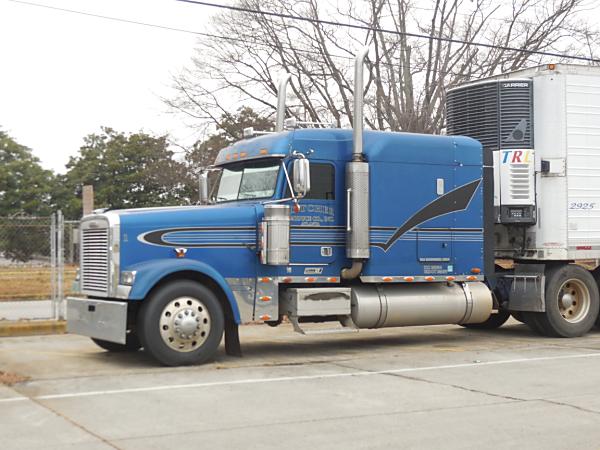 This is an update on produce shipments from Washington, Oregon and California.
Northwest Onion Shipments
Potato shipments for the new season have recently got underway from the Columbia Basin in Oregon and Washington state. They are now moving into good volume.
In Walla Walla, WA, shipping of Walla Walla sweet onions have been ongoing for serval weeks and will continue until around Labor Day.
Northwest potato shipments from the old crop are still happening, but declining in volume as the season concludes.
California Produce Shipments
Strawberry shipments have been on a steady keel for a while now out of the Watsonville area averaging about 900 truck loads per week. Volume also is steady from the Santa Maria district, although volume is only about 25 percent of that from Watsonville.
Meanwhile moderate loadings of broccoli, cauliflower and celery continues. Lettuce, not surprisingly, leads Salinas Valley vegetable shipments. Head lettuce and romaine alone, are averaging over 1800 truckloads per week. There also are other types of lettuce and a few dozen different other veggie items being shipped.
Tomato loadings are available from the Central San Joaquin Valley, as well as the Oceanside area, and from Baja crossing the Mexican/US border at Otay Mesa.
Pear shipments are now ongoing from the Sacramento area and the northern San Joaquin Valley.
California pears – grossing about $4900 to Dallas.
Salinas Valley produce – grossing about $5600 to Cleveland.
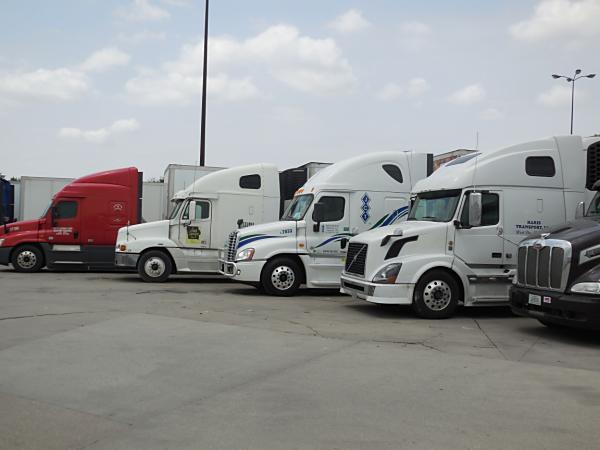
Labor Day (September 1st) is less than a month away and here is a quick view of some items that should be available for hauling between now and then.
Michigan sweet corn shipments are currently at a peak, and there is decent volume coming out of the Goshen, IN area…..Michigan also continues with good volume blueberry shipments and summer vegetables.
.
Sweet Corn Shipments
Western North Carolina sweet corn shipments should still have good volume by Labor Day, along with tomatoes.
California sweet corn should have good volume out of the San Joaquin Valley for Labor Day, although shipments will be ligher than Memorital Day or the Fourth of July. Melons out of the Westside District will continue in steady volume, as will as grape shipments, whose volume has been excellent, but the majority of the loadings will take place after Labor Day through the end of the year.
Sweet Potato Shipments
With a short sweet potato crop nationally for the 2013-14 season, limited loading opportunities are available as the seasons comes to an end. However, the 2014-15 sweet shipments should improve, particular since leading producer North Carolina has increased its plantings from 54,000 acres a year ago to 66,000 acres this year.
Here’s hoping sweet potato shippers don’t get in such a hurry to ship product in the new season that they don’t take time to cure first. Curing sweet potatoes, which doesn’t take that long, are much better. North Carolina shipments should get underway after Labor Day, while Mississippi may start the last week of August.
Eastern North Carolina sweet potatoes – grossing about $2500 to New York City.
Mississippi sweet potatoes – grossing about $2100 to Chicago.
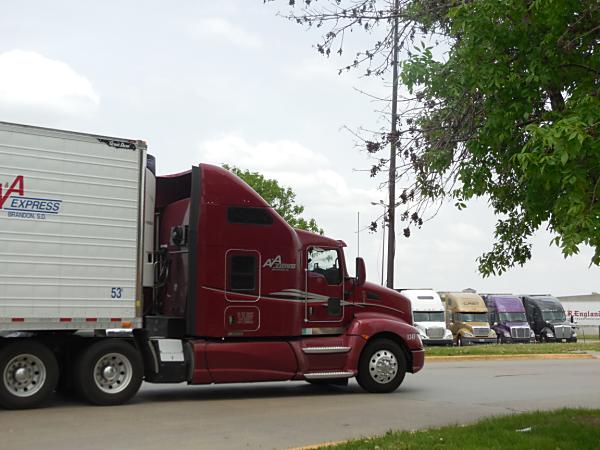 Here is a look a new season shipments for New York and California apples, plus some other loading opportunities in both of these states.
New York Apple Shipments
New York state’s apple harvest is scheduled to begin August 15th, with shipments getting underway shortly thereafter. The Empire State expects to ship about 30 million bushels of fruit this season, down only slightly from the 32 million bushels shipped during the 2013-14 season. However, total volume is still expected to stay above the state’s five-year averages of 29.5 million bushels. Although the apple harvest should end in November, loading opportunities will continue well into next spring, if not summer. The Hudson Valley is New York’s leading area for apple shipments, although several other areas of the state also have the fruit in significant volume.
New York vegetable shipments are moving in steady volume, especially from western and central areas of the state.
Western New York vegetables – grossing about $1600 to New York City.
California Apple Shipments
Apple shipments out of California’ San Joaquin Valley got underway a couple of weeks ago, but are only entering volume loadings now. This is one of the earliest maturing crops on record. Overall, California expects to ship about 2.4 million boxes of apples this season, which is fairly normal.
While gala shipments started in mid July, granny smiths should get underway the week of August 11th, followed by fujis around August 18th. followed by Pink Lady apples in the middle of October.
California’s San Joaquin Valley produce shipments are in good volume with everything ranging from grapes to tomatoes, stone fruit and vegetables.
San Joaquin Valley vegetables and melons – grossing about $7500 to New York City.