
Author Archive
 Cross docking has become more popular, especially in the past 10 to 15 years, as shippers deal with shortages of drivers and equipment, and with the rising popularity of loads mixed with several different fresh produce commodities, possibly from several different growers or other entities. This increases the chances of quality problems from the heat or cold at open docks, depending upon the time of the year.
It is common for temperature recording devices to keep a record of how long that trailer door is open. It also will record the spike in temperature in the trailer due to warm weather, or the drop of temperature in colder environments.
“If you are a driver, there’s a full recording of how long that door is open and that can come back to haunt the driver at destination,” states Rich Macleod of TransFresh Corp. of Salinas, CA, whose career has been dedicated to improving in-transist issues associated with fresh produce, and how to improve upon delivering a fresh, quality product.
“If you are at an open loading dock, you need to turn your reefer unit off when the product is being loaded,” Macleod cautions.
Otherwise, a running refrigeration unit will be sucking warm air across the trailer floor and into the reefer unit. This puts exceptional demand on that reefer unit, he notes. If there is warm air coming across the unit’s coils, that results in a lot more condensation — and freezing.
“So the first thing that happens when you close the trailer doors is that unit goes into defrost So then you just further aggravate what ever break you have in the cold chain. So back up to the dock, shut off the reefer, load, and then close the trailer door and re-start the reefer unit. You will have colder loads,” Macleod relates.
One situation Macleod is noticing is when a partial load of strawberries is loaded at Watsonsville, CA and the driver proceeds to the Central San Joaquin Valley to fill out the trailer with stone fruit.
“The trucker backs up to the dock and sometimes that driver will leave the reefer unit running. then they (shipper) re-balance the load, perhaps placing the heavier commodities in the front of the trailer.. They pull the strawberries (off the truck), place them on the loading dock to move in the other product. Typically, those strawberries will start picking up temperature within 15 to 30 minutes,” Macleod says.
Of course, factors such as whether those strawberries on the dock are sitting in the shade, or sun, whether the wind is blowing, temperature, etc.
This has resulted in strawberry shippers insisting the strawberries being picked up and loaded last onto the trailer.
(This is the third in a five-part series featuring an interview with Rich Macleod, vice president, pallet division North America for TransFresh Corp., Salinas, CA. He has been with the company since 1976, and has a masters degree in post harvest science from the University of California, Davis.)
 While California’s overall fruit shipments in the fall may not match those of summertime, there are some exception when looking at individual commodities. Here is a round up on leading California fruit shipments this fall.
Grape Shipments
At least 60 percent of California grape shipments occur after Labor Day and continue into January. Since California is easy the biggest table grape shipping state, we are talking about a lot of fruit. The shipping season actually started last May from the desert and the total season forecast calls for 116.5 million, 19-pound cartons to be shipped. That is less than one million cartons away from last season record setting shipments.
Citrus Shipments
Larger volumes of tangerinees (which includes mandarins) are forecast this fall. Numbers are not yet available, but last season there were 26 million, 40-pound cartons of tangerines shipped….Navel orange loadings should become available sometime in October, with full volume coming in November — and in time for Thanksgiving shipments.
Kiwi Shipments
Kiwifruit loadings are predicted to be about 7 million tray equivalents, similar to last season.
Pomegranate Shipments
Loadings of pomegranates have been increasing 20 percent annually in recent years, and volume once again should be bigger – estimated at 6 million 25-pound box equivalents.
Apple Shipments
California apple shipments pale in comparison to that of Washington state. Shipments have been underway since late July and will last into November.
Strawberry Shipments
Peak shipments from the Watsonville area occurred during July and August. There still good volume, but seasonally lower amounts are still occurring there. In October, strawberry shipments will shift to Oxnard and the Baja California peninsula of Mexico.
Watsonville strawberries, Salinas Valley vegetables – grossing about $5600 to Cleveland.
Central San Joaquin Valley table grapes, stone fruit, vegetables – grossing about $6,600 to Orlando.
(To see the TransFresh and Techtrol atmosphere checklist go to the Haulproduce.com post of April 10, 2014, or to: www.transfresh.com)
One of the most important functions to perform when loading a refrigerated trailer is to take not only the pulp temperature, but an adequate number of pulp temperatures. But how many is enough?
Rich Macleod of TransFresh Corp. in Salinas, CA states, “I would get two temperature readings per pallet from each lot going into the trailer. If you had a lot of peaches, nectarines and plums, you would want at least two pulp temperatures from each of those stone fruits – so about six pulp temperatures.”
TransFresh is well known in the produce industry and the refrigerated trucking industry for its Techtrol atmosphere process where carbon dioxide (CO2) is pumped into a plastic bag that covers and surrounds a pallet of strawberries and some other perishable fruits. Studies have shown Techtrol’s CO2 atmosphere extends the shelf life of some fruits.
It is critical to know whether produce items have been pre-cooled at shipping point and what the temperature of the product is when loaded. It could mean a big difference upon arrival at destination, especially if there is an issue with the quality and condition of the product.
This is of course in a perfect world, which often is non existant at shipping point. Macleod is well attuned to the “politics” and what goes on at loading docks. Too often, there may be resistance at the dock when a trucker wants to take his own pulp temperatures.
“In the strawberry trade we run into this (at the loading dock) because they don’t want the trucker punching holes in the techtrol bag. (At least) that is the excuse. We very carefully train our customers to let the drivers do that and just take a piece of tape and cover it (the hole in the bag) back up again. There are special stickers so you can cover the hole,” Macleod says.
He is aware the driver must contend with the policies of management at shipping point. The driver might even have to deal with a forklift driver, who on that particular day just doesn’t want to take the time to allow for the pulp reading. In reality, Macleod said it usually comes down to the “outlook” of the people where the loading is taking place.
“As important as it (taking pulp temperatures), I don’t think that is a real comfortable thing for drivers to do. What I see is maybe 10 to 15 percent of the loads get pulped by the driver,” Macleod observes. “The key is the driver should be aware of what the pulp temperature is. Some shippers, or people on the dock will take the pulp temperature for them (driver).”
From the shipper’s point of view and from a safety aspect, Macleod notes, when a shipper and the trucker take the pulp temperature together, that is okay. If the shipper is concerned about food safety issues, whose temperature probe do you want used?
(This is the second in a five-part series featuring an interview with Rich Macleod, vice president, pallet division North America for TransFresh Corp., Salinas, CA. He has been with the company since 1976, and has a masters degree in post harvest science from the University of California, Davis.)
 During the past year researchers have been studying how temperature monitoring can help ensure longer shelf lives for strawberries. A temperature tracking system has been used to study how various fresh produce items and strawberries fare.
Jeffrey Brecht, director of the University of Florida Institute of Food and Agricultural Sciences’ Center for Food Distribution and Retailing, and other researchers studied how temperature monitoring can help ensure longer shelf lives for strawberries. Using radio frequency identification tags, researchers collected temperature data and mapped temperatures throughout shipments of trailer loads from Oxnard, Calif., and Plant City, Fla., to Wal-Mart distribution centers. Florida berries were tracked in shipments to Illinois and Washington, D.C., while California strawberry loads were recorded in shipments to Alabama, South Carolina and Washington state.
Brecht says the research showed strawberries can warm during transport ,but not uniformly throughout the trailer. There was a variance of about 5 degree F. in temperatures in the trucks with the pallets nearest the truck walls, particularly those on the truck’s south side exposed to the sun from California shipments to the East Coast. This is were the most increase in temperature occurred.
If a shipper knows the quality of the produce and the temperatures the products have been exposed to, they will know which pallets should be delivered first to stores for longer shelf life, Brecht said.
The researcher adds the tracking technology can be used on many perishable produce items, including bell peppers, cucumbers, squash and tomatoes.
“All the crop inputs, there are so many things if you think of it, it’s mind-boggling,” Brecht said. “If we take it all the way to the end and the product winds up in the trash can in someone’s kitchen, it’s a horrible waste. Making sure everything is of high enough quality and will be eaten by the ultimate consumer, that’s improving sustainability.”
Models developed by the researchers are being commercialized by project partners Franwell Inc., a Plant City agricultural software firm, and the a Bridgeton, Mo.-based Hussman Corp., which manufactures refrigeration and food merchandising equipment. The research was funded by a $155,000 grant by the Fayetteville, Ark.-based National Strawberry Sustainability Initiative, which is supported by the Bentonville, Ark.-based Wal-Mart Stores Inc’s foundation.
As technology creeps more and more into our daily lives it is becoming more invasive through monitoring and surveillance devices. Whether it is the collection of our buying habits or social media postings, we are being tracked. It certainly extends to professional drivers who deliver most of our nation’s freight.
“The electronic policing, or monitoring, has got to be incredibly irritating to the drivers,” states Rich Macleod (see photo) of TransFresh Corp. in Salinas, CA, who has spent nearly four decades studying in-transit issues that have resulted in valuable information for the refrigerated trucking industry. For example, his creation of the Fresh Produce Mixer & Loading Guide in the 1990s is still used as a reference, and has undoubtedly contributed to preventing countless number of claims and rejected loads.
Macleod laments during the past two generations of truckers, it has moved away from the independent owner operators, or the “cowboy” image, towards team drivers and relay teams.
He correctly views the long haul drivers as very independent individuals, but now those truckers are being asked (or told) to have electronic monitoring of their log books, not to mention deal with other modern day devices.
“I imagine there is a lot of grinding and gnarling of teeth (by drivers),” Macleod says. “How that relates to loading and check lists is just going to be a fact of life.”
It is noted there are trucks coming out of Mexico being ripped off by gangs and cartels, which is just something else contributing to the monitoring and surveillance of the physical location of loads, not to mention the in-transit temperature at any given time.
“We are just going to have to get over it and play in that Orson Wells world,” Macleod relates. “In some respects it is unfortunate, but it’s a fact of life.”
Continuing, Macleod adds, “The reality is, you can have all of this fancy technology and this ‘eye’ in the sky, but if that reefer unit is not maintained properly, if the bulkheads are not maintained properly, and if the load isn’t unloaded correctly, this monitoring is quite frankly blowin’ smoke.”
He reminds everyone the real goal in trucking is to deliver fresh perishables at the right temperature in a timely fashion.
“It still remains with the foot print of the driver to assure his load is protected and with the correct temperature.”
However, it also is important to have a good relationship between the buyer (receiver) and the shipper at loading point. Macleod gave a scenario where a driver may have a great checklist, know what he is doing, yet be forced to compromise, due to something like the number of pallets being put in the trailer.
“It is upon the driver to be vigilant,” he stresses. because one or both of the parties involved in the transaction may want to put two or four more pallets in that trailer that already has 26 or more pallets in it. The driver knows it could adversely affect anything from air circulation to being over weight. “That driver may lose the argument in such a case, but he’s really the last in the line of defense, to avoid unnecessary problems – and it helps if that driver is knowledgeable in these areas.”
This is where a check list….becomes a key component. Speaking of check lists, one can be found at www.transfresh.com.
“We are doing all of this monitoring, figuring out where the load is, and making sure the load is at the right temperature,” Macleod surmised. “Yet, the loading dock person can mess this whole thing up. If the goal is to maintain the product at the proper temperature, it can be at the wrong temperature even though you tracked it perfectly across country.”
(This is the first in a five-part series featuring an interview with Rich Macleod, vice president, pallet division North America for TransFresh Corp., Salinas, CA. He has been with the company since 1976, and has a masters degree in post harvest science from the University of California, Davis.)
 Despite all the cheerleading for healthy eating, Americans still eat only about 1 serving of fruit per day, on average. And our veggie consumption, according to an analysis from the Centers for Disease Control and Prevention, falls short, too.
So, with the back-to-school season underway and families thinking about what to pack in the lunch box, grocers are hoping to entice young consumers and their parents to the produce aisle by creating new, kid-focused snacking sections.
Giant Eagle is in the process of installing the go-to kid sections in about 200 stores in the mid-Atlantic and Ohio. And Walmart is piloting the concept in 30 stores in California, with plans to roll it out to 1,500 stores later this fall.
Bolthouse Farms, the produce company that rolled out the successful extreme baby carrot campaign, is behind the effort.
The company has been developing products such as pureed fruit tubes that kids can suck and slurp, all-fruit smoothies and bags of baby carrots called Veggie Snackers that come with pouches of bright-colored, bold-flavored seasonings.
When kids open the package and shake in the seasoning, the carrots take on some of the characteristics of chips like Doritos. “They give you that crunch and flavor,” says Jeff Dunn, CEO of Bolthouse. “You’re going to lick your fingers, and get that same sensory [experience] you get with salty snacks.”
Dunn, a former Coca-Cola executive, is borrowing a lot of the marketing and design tactics used in the soda and snack industries to drive up demand in the healthy snacks business.
And many grocery retailers are eager to get in on the action. Laura Karet, CEO of Giant Eagle, says when she was first pitched the kid-focused destination in her stores’ produce aisles, she thought, “This is a win-win.”
“When I go into the produce section,” Karet says, “there’s not quite as much going on for [kids] compared to, say, the cereal aisle or the candy shelves.”
And she’s hoping the new approach will make the produce section pop for more kids. The price point, at $3.99 for multi-packs of Fruit Tubes and Veggie Snackers, is competitive, too.
 There are numerous factors that must be considered at all times to properly maintain the temperature sensitive products being transported. Successful cold chains require planning, communication, and the right technology at every step of the journey, according to an article in the online publication, Fresh Fruit Portal.com.
People are continuously searching for a better (and often more cost effective) way to safely transport temperature controlled items around the world.
This stems from a combination of globalization, increased safety regulations, and growing customer demands. Customers in northern regions are coming to expect the availability of fresh tropical fruit all year long. As the world shrinks, so too does the idea of “seasonal produce” and “regional products”.
This trend has led to increased maritime transportation of temperature sensitive products. Perhaps not the most recent invention, but certainly one of the most popular resources used in temperature controlled shipping are refrigerated containers. In fact, in 1980 only 33% of refrigerated capacity was containerized, whereas in 2010 this share was up to 90%, according to a study from Hofstra University.
Thanks to these containers, temperature controlled products can withstand longer transit times without spoiling and consumers around the world can experience exotic foods and goods – perhaps for the first time – without leaving their local grocery store.
For an industry that’s constantly improving, the question soon becomes: “What’s next? How can we improve refrigeration technology for the changing industry?” The answer is not necessarily in improved cooling abilities (although that certainly plays a role), but rather on the supervision and reporting capabilities of reefers.
Today’s technology offers a variety of tools to not only keep products at the right temperature, but to better monitor the load – from temperature sensors and GPS tracking to self-reporting alerts for computers and mobile devices. Smart refrigerated units even help monitor the location, temperature, humidity, and motion of shipments in real time.
Advanced tracking abilities give relevant parties advanced warning of any changes or malfunctions with the equipment. These types of notifications can help ensure necessary maintenance is performed regularly or even secure alternate capacity before a load is compromised. Unfortunately, this type of technology can be costly. Until the price tag comes down, it’s important to weigh the benefits you’ll receive with the expense involved.
Whether or not you decide to employ the latest technology, it’s important to remember other tried and true methods to protect your temperature sensitive freight. From clear communication to process improvements, it is critical to encompass all involved parties in any changes. At a minimum, this should include carriers, vendors, providers, and receivers.
Like the rest of the transportation industry and the world at large, temperature controlled shipping is changing. Technology plays a large role in the dynamic changes we’re already seeing and will continue to see for many years to come. It wouldn’t be surprising if in the near future there will be the ability to regulate the temperature of refrigerated equipment from mobile devices as easily as changing the thermostat at home.
 Today, we’re going to bounce around the U.S. a little bit. First, we’ll give a glimpse at loading opportunities as the volume increases for Eastern apple shipments. We’ll also go to Colorado and the new onion shipping season, before finishing up with a look at the annual growing volume with sweet onions from Peru at various American ports.
Average shipments of apples from the three leading Eastern states are expected this season, and loadings have started in recent weeks.
New York Apple Shipments
The Empire State had a big crop last season and will be down only slightly this season at 30 million bushels. Loadings originate out of the Hudson and Champlain Valleys, as well as from central and western areas of the state.
Hudson Valley apples – grossing about $3400 to Atlanta.
Pennsylvania Apple Shipments
Pennsylvania also is expecting normal apple shipments, with a forecast of 11.8 million bushels for the season. Initial light volume started in mid August with early varieties of fruit from towns such as Gardners and Fairfield.
Virginia Apple Shipments
Some weather issues should result in Virginia apple shipments being about 75 t0 80 percent of a full crop. Shipments originate from communities ranging from Charlottesville to Timberville. Virginia expects to ship about 4,285 bushels this season.
Colorado Onion Shipments
Colorado onions shipments have moved into good volume from the Northeastern part of the state. Loadings should remain fairly steady into January.
Peruvian Onion Imports
Imports of sweet onions from Peru are now arriving at various U.S. Ports. Good, steady volume of Peruvian onion shipments should be available from ports well into the first quarter of 2015. Over the past decade or so, Peru has come to fill a void with sweet onions, because domestic sweet onion supplies are pretty much depleted by this time of the year.
 Weather related issues will cut into potato hauling opportunities this season in Idaho, Colorado, Wisconsin and the Red River Valley, but there will still be ample hauls available for produce truckers.
The effects of summer rain and hail will likely put a dent in potato loadings this season, but growers are optimistic at the beginning of harvests. A few Colorado growers started digging during the past week, but the harvest is just ready to get into full swing. Around 20 percent of Colorado acreage received hail damage this summer, but most of it was minor. It only means a bumper crop has turned into a more normal crop.
Late rains in Wisconsin were complicating the start of the 2014 harvest. Some diggings in Wisconsin started about three weeks ago, and rains are expected to lower yields, but more normal potato shipments are still expected this season.
Central Wisconsin potatoes – grossing about $1100 to Chicago.
Similar circumstance are being heard from Idaho potato shippers. While its still not known how much, yields, volume and loadings will be affected, in most years it’s a darned good thing for everyone, if fewer, not more potatoes are coming out of Idaho. The state is just now entering volume shipments.
Idaho potatoes – grossing about $5600 to New York City.
In the Red River Valley of North Dakota and Minnesota, the nation’s largest shipper of dry land red potatoes should provide decent loading opportunities this season, but no one is predicting any records for volume. Most Red River Valley potato shippers see an average sized crop, if not somewhat below average. It will probably be October before good volume is available for hauling out of the valley. In the meantime, there are some loading opportunities for red potatoes out of Long Prairie, MN, although some of those spuds are delivered to the valley for washing, packing and shipping.
Long Prairie potatoes – grossing about $2800 to Dallas.
 Here’s a look at two very different hauling opportunities — red potatoes from North Dakota and Minnesota, plus the amazing growth of avocado shipments.
It used to be produce truckers rarely had avocados very high on their list of items to haul, but that has changed over the past decade or so. This year about 1.8 billion pounds (450,000 truck load equvialents) will be shipped to U.S. markets. which includes both domestic production and imports. This compares to 500 million pounds in 2000. Last June set a record for monthly shipments with 180 million pounds of avocado shipped. In 2015, loadings should hit the 2-billion-pound mark.
While California U.S. avocado shipments (which should end up at about 315 million pounds this year) are winding down with only about 20 percent of its crop left, Mexico is ramping up, with volume loadings headed to the U.S. starting this month. During Mexico’s 2013-14 season it shipped 1.1 billion pounds, with the U.S. being its biggest market. This season Mexican avocado shipments are expected to increase 20 percent over the previous season.
Mexican avocados and other produce crossing through South Texas – grossing about $4400 to New York City.
North Dakota/Minnesota Potatoes
Big Lake, MN red potato shipments are pretty much finished, while loadings out of Long Prairie, MN should continue for another two weeks….Both of these areas annually serve as a prelude to the largest growing and shipping area in the country. That would be just to the west in the Red River Valley of North Dakota and Minnesota. This marks the 20th year since this writer first visited these northern plains, which has the most beautiful, black soil for growing non-irrigated red potatoes anywhere. The only thing better than the soil in the Red River Valley are the people – they are great, hard working, honest and friendly!
The Red River Valley is expecting normal, or at least fairly close to normal shipments this season. The harvest has just started and will continue through October, if not going into November, depending upon the first heavy frost. This is when volume shipments pick up.
Big Lake, MN red potatoes – grossing about $3000 to Dallas.
 Cross docking has become more popular, especially in the past 10 to 15 years, as shippers deal with shortages of drivers and equipment, and with the rising popularity of loads mixed with several different fresh produce commodities, possibly from several different growers or other entities. This increases the chances of quality problems from the heat or cold at open docks, depending upon the time of the year.
It is common for temperature recording devices to keep a record of how long that trailer door is open. It also will record the spike in temperature in the trailer due to warm weather, or the drop of temperature in colder environments.
“If you are a driver, there’s a full recording of how long that door is open and that can come back to haunt the driver at destination,” states Rich Macleod of TransFresh Corp. of Salinas, CA, whose career has been dedicated to improving in-transist issues associated with fresh produce, and how to improve upon delivering a fresh, quality product.
“If you are at an open loading dock, you need to turn your reefer unit off when the product is being loaded,” Macleod cautions.
Otherwise, a running refrigeration unit will be sucking warm air across the trailer floor and into the reefer unit. This puts exceptional demand on that reefer unit, he notes. If there is warm air coming across the unit’s coils, that results in a lot more condensation — and freezing.
“So the first thing that happens when you close the trailer doors is that unit goes into defrost So then you just further aggravate what ever break you have in the cold chain. So back up to the dock, shut off the reefer, load, and then close the trailer door and re-start the reefer unit. You will have colder loads,” Macleod relates.
One situation Macleod is noticing is when a partial load of strawberries is loaded at Watsonsville, CA and the driver proceeds to the Central San Joaquin Valley to fill out the trailer with stone fruit.
“The trucker backs up to the dock and sometimes that driver will leave the reefer unit running. then they (shipper) re-balance the load, perhaps placing the heavier commodities in the front of the trailer.. They pull the strawberries (off the truck), place them on the loading dock to move in the other product. Typically, those strawberries will start picking up temperature within 15 to 30 minutes,” Macleod says.
Of course, factors such as whether those strawberries on the dock are sitting in the shade, or sun, whether the wind is blowing, temperature, etc.
This has resulted in strawberry shippers insisting the strawberries being picked up and loaded last onto the trailer.
(This is the third in a five-part series featuring an interview with Rich Macleod, vice president, pallet division North America for TransFresh Corp., Salinas, CA. He has been with the company since 1976, and has a masters degree in post harvest science from the University of California, Davis.)
 While California’s overall fruit shipments in the fall may not match those of summertime, there are some exception when looking at individual commodities. Here is a round up on leading California fruit shipments this fall.
Grape Shipments
At least 60 percent of California grape shipments occur after Labor Day and continue into January. Since California is easy the biggest table grape shipping state, we are talking about a lot of fruit. The shipping season actually started last May from the desert and the total season forecast calls for 116.5 million, 19-pound cartons to be shipped. That is less than one million cartons away from last season record setting shipments.
Citrus Shipments
Larger volumes of tangerinees (which includes mandarins) are forecast this fall. Numbers are not yet available, but last season there were 26 million, 40-pound cartons of tangerines shipped….Navel orange loadings should become available sometime in October, with full volume coming in November — and in time for Thanksgiving shipments.
Kiwi Shipments
Kiwifruit loadings are predicted to be about 7 million tray equivalents, similar to last season.
Pomegranate Shipments
Loadings of pomegranates have been increasing 20 percent annually in recent years, and volume once again should be bigger – estimated at 6 million 25-pound box equivalents.
Apple Shipments
California apple shipments pale in comparison to that of Washington state. Shipments have been underway since late July and will last into November.
Strawberry Shipments
Peak shipments from the Watsonville area occurred during July and August. There still good volume, but seasonally lower amounts are still occurring there. In October, strawberry shipments will shift to Oxnard and the Baja California peninsula of Mexico.
Watsonville strawberries, Salinas Valley vegetables – grossing about $5600 to Cleveland.
Central San Joaquin Valley table grapes, stone fruit, vegetables – grossing about $6,600 to Orlando.
(To see the TransFresh and Techtrol atmosphere checklist go to the Haulproduce.com post of April 10, 2014, or to: www.transfresh.com)
One of the most important functions to perform when loading a refrigerated trailer is to take not only the pulp temperature, but an adequate number of pulp temperatures. But how many is enough?
Rich Macleod of TransFresh Corp. in Salinas, CA states, “I would get two temperature readings per pallet from each lot going into the trailer. If you had a lot of peaches, nectarines and plums, you would want at least two pulp temperatures from each of those stone fruits – so about six pulp temperatures.”
TransFresh is well known in the produce industry and the refrigerated trucking industry for its Techtrol atmosphere process where carbon dioxide (CO2) is pumped into a plastic bag that covers and surrounds a pallet of strawberries and some other perishable fruits. Studies have shown Techtrol’s CO2 atmosphere extends the shelf life of some fruits.
It is critical to know whether produce items have been pre-cooled at shipping point and what the temperature of the product is when loaded. It could mean a big difference upon arrival at destination, especially if there is an issue with the quality and condition of the product.
This is of course in a perfect world, which often is non existant at shipping point. Macleod is well attuned to the “politics” and what goes on at loading docks. Too often, there may be resistance at the dock when a trucker wants to take his own pulp temperatures.
“In the strawberry trade we run into this (at the loading dock) because they don’t want the trucker punching holes in the techtrol bag. (At least) that is the excuse. We very carefully train our customers to let the drivers do that and just take a piece of tape and cover it (the hole in the bag) back up again. There are special stickers so you can cover the hole,” Macleod says.
He is aware the driver must contend with the policies of management at shipping point. The driver might even have to deal with a forklift driver, who on that particular day just doesn’t want to take the time to allow for the pulp reading. In reality, Macleod said it usually comes down to the “outlook” of the people where the loading is taking place.
“As important as it (taking pulp temperatures), I don’t think that is a real comfortable thing for drivers to do. What I see is maybe 10 to 15 percent of the loads get pulped by the driver,” Macleod observes. “The key is the driver should be aware of what the pulp temperature is. Some shippers, or people on the dock will take the pulp temperature for them (driver).”
From the shipper’s point of view and from a safety aspect, Macleod notes, when a shipper and the trucker take the pulp temperature together, that is okay. If the shipper is concerned about food safety issues, whose temperature probe do you want used?
(This is the second in a five-part series featuring an interview with Rich Macleod, vice president, pallet division North America for TransFresh Corp., Salinas, CA. He has been with the company since 1976, and has a masters degree in post harvest science from the University of California, Davis.)
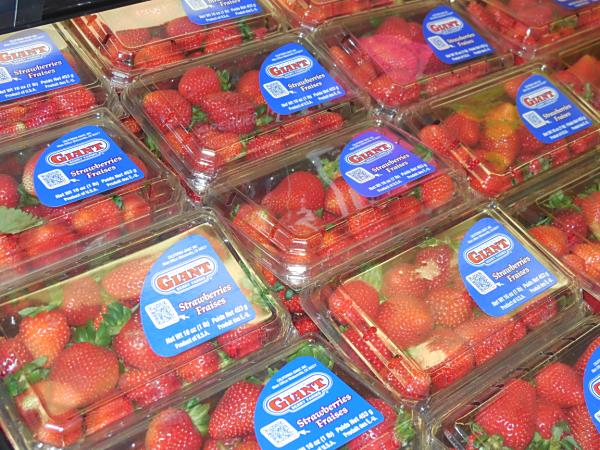 During the past year researchers have been studying how temperature monitoring can help ensure longer shelf lives for strawberries. A temperature tracking system has been used to study how various fresh produce items and strawberries fare.
Jeffrey Brecht, director of the University of Florida Institute of Food and Agricultural Sciences’ Center for Food Distribution and Retailing, and other researchers studied how temperature monitoring can help ensure longer shelf lives for strawberries. Using radio frequency identification tags, researchers collected temperature data and mapped temperatures throughout shipments of trailer loads from Oxnard, Calif., and Plant City, Fla., to Wal-Mart distribution centers. Florida berries were tracked in shipments to Illinois and Washington, D.C., while California strawberry loads were recorded in shipments to Alabama, South Carolina and Washington state.
Brecht says the research showed strawberries can warm during transport ,but not uniformly throughout the trailer. There was a variance of about 5 degree F. in temperatures in the trucks with the pallets nearest the truck walls, particularly those on the truck’s south side exposed to the sun from California shipments to the East Coast. This is were the most increase in temperature occurred.
If a shipper knows the quality of the produce and the temperatures the products have been exposed to, they will know which pallets should be delivered first to stores for longer shelf life, Brecht said.
The researcher adds the tracking technology can be used on many perishable produce items, including bell peppers, cucumbers, squash and tomatoes.
“All the crop inputs, there are so many things if you think of it, it’s mind-boggling,” Brecht said. “If we take it all the way to the end and the product winds up in the trash can in someone’s kitchen, it’s a horrible waste. Making sure everything is of high enough quality and will be eaten by the ultimate consumer, that’s improving sustainability.”
Models developed by the researchers are being commercialized by project partners Franwell Inc., a Plant City agricultural software firm, and the a Bridgeton, Mo.-based Hussman Corp., which manufactures refrigeration and food merchandising equipment. The research was funded by a $155,000 grant by the Fayetteville, Ark.-based National Strawberry Sustainability Initiative, which is supported by the Bentonville, Ark.-based Wal-Mart Stores Inc’s foundation.
As technology creeps more and more into our daily lives it is becoming more invasive through monitoring and surveillance devices. Whether it is the collection of our buying habits or social media postings, we are being tracked. It certainly extends to professional drivers who deliver most of our nation’s freight.
“The electronic policing, or monitoring, has got to be incredibly irritating to the drivers,” states Rich Macleod (see photo) of TransFresh Corp. in Salinas, CA, who has spent nearly four decades studying in-transit issues that have resulted in valuable information for the refrigerated trucking industry. For example, his creation of the Fresh Produce Mixer & Loading Guide in the 1990s is still used as a reference, and has undoubtedly contributed to preventing countless number of claims and rejected loads.
Macleod laments during the past two generations of truckers, it has moved away from the independent owner operators, or the “cowboy” image, towards team drivers and relay teams.
He correctly views the long haul drivers as very independent individuals, but now those truckers are being asked (or told) to have electronic monitoring of their log books, not to mention deal with other modern day devices.
“I imagine there is a lot of grinding and gnarling of teeth (by drivers),” Macleod says. “How that relates to loading and check lists is just going to be a fact of life.”
It is noted there are trucks coming out of Mexico being ripped off by gangs and cartels, which is just something else contributing to the monitoring and surveillance of the physical location of loads, not to mention the in-transit temperature at any given time.
“We are just going to have to get over it and play in that Orson Wells world,” Macleod relates. “In some respects it is unfortunate, but it’s a fact of life.”
Continuing, Macleod adds, “The reality is, you can have all of this fancy technology and this ‘eye’ in the sky, but if that reefer unit is not maintained properly, if the bulkheads are not maintained properly, and if the load isn’t unloaded correctly, this monitoring is quite frankly blowin’ smoke.”
He reminds everyone the real goal in trucking is to deliver fresh perishables at the right temperature in a timely fashion.
“It still remains with the foot print of the driver to assure his load is protected and with the correct temperature.”
However, it also is important to have a good relationship between the buyer (receiver) and the shipper at loading point. Macleod gave a scenario where a driver may have a great checklist, know what he is doing, yet be forced to compromise, due to something like the number of pallets being put in the trailer.
“It is upon the driver to be vigilant,” he stresses. because one or both of the parties involved in the transaction may want to put two or four more pallets in that trailer that already has 26 or more pallets in it. The driver knows it could adversely affect anything from air circulation to being over weight. “That driver may lose the argument in such a case, but he’s really the last in the line of defense, to avoid unnecessary problems – and it helps if that driver is knowledgeable in these areas.”
This is where a check list….becomes a key component. Speaking of check lists, one can be found at www.transfresh.com.
“We are doing all of this monitoring, figuring out where the load is, and making sure the load is at the right temperature,” Macleod surmised. “Yet, the loading dock person can mess this whole thing up. If the goal is to maintain the product at the proper temperature, it can be at the wrong temperature even though you tracked it perfectly across country.”
(This is the first in a five-part series featuring an interview with Rich Macleod, vice president, pallet division North America for TransFresh Corp., Salinas, CA. He has been with the company since 1976, and has a masters degree in post harvest science from the University of California, Davis.)
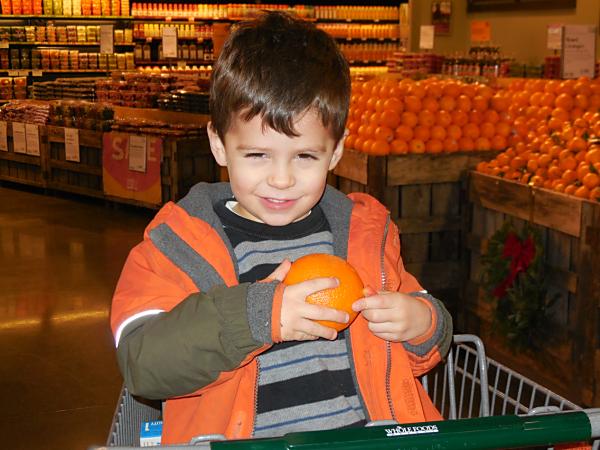 Despite all the cheerleading for healthy eating, Americans still eat only about 1 serving of fruit per day, on average. And our veggie consumption, according to an analysis from the Centers for Disease Control and Prevention, falls short, too.
So, with the back-to-school season underway and families thinking about what to pack in the lunch box, grocers are hoping to entice young consumers and their parents to the produce aisle by creating new, kid-focused snacking sections.
Giant Eagle is in the process of installing the go-to kid sections in about 200 stores in the mid-Atlantic and Ohio. And Walmart is piloting the concept in 30 stores in California, with plans to roll it out to 1,500 stores later this fall.
Bolthouse Farms, the produce company that rolled out the successful extreme baby carrot campaign, is behind the effort.
The company has been developing products such as pureed fruit tubes that kids can suck and slurp, all-fruit smoothies and bags of baby carrots called Veggie Snackers that come with pouches of bright-colored, bold-flavored seasonings.
When kids open the package and shake in the seasoning, the carrots take on some of the characteristics of chips like Doritos. “They give you that crunch and flavor,” says Jeff Dunn, CEO of Bolthouse. “You’re going to lick your fingers, and get that same sensory [experience] you get with salty snacks.”
Dunn, a former Coca-Cola executive, is borrowing a lot of the marketing and design tactics used in the soda and snack industries to drive up demand in the healthy snacks business.
And many grocery retailers are eager to get in on the action. Laura Karet, CEO of Giant Eagle, says when she was first pitched the kid-focused destination in her stores’ produce aisles, she thought, “This is a win-win.”
“When I go into the produce section,” Karet says, “there’s not quite as much going on for [kids] compared to, say, the cereal aisle or the candy shelves.”
And she’s hoping the new approach will make the produce section pop for more kids. The price point, at $3.99 for multi-packs of Fruit Tubes and Veggie Snackers, is competitive, too.
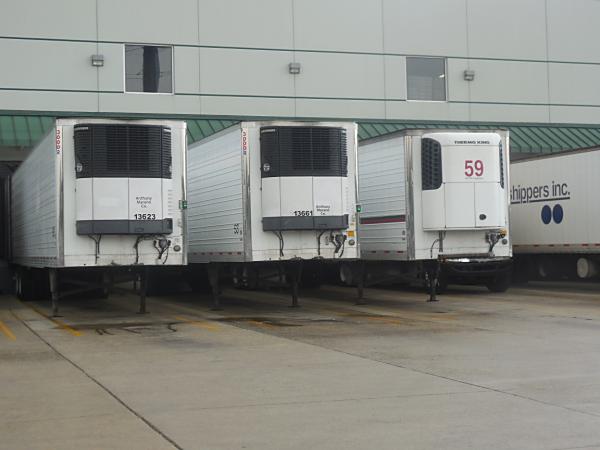 There are numerous factors that must be considered at all times to properly maintain the temperature sensitive products being transported. Successful cold chains require planning, communication, and the right technology at every step of the journey, according to an article in the online publication, Fresh Fruit Portal.com.
People are continuously searching for a better (and often more cost effective) way to safely transport temperature controlled items around the world.
This stems from a combination of globalization, increased safety regulations, and growing customer demands. Customers in northern regions are coming to expect the availability of fresh tropical fruit all year long. As the world shrinks, so too does the idea of “seasonal produce” and “regional products”.
This trend has led to increased maritime transportation of temperature sensitive products. Perhaps not the most recent invention, but certainly one of the most popular resources used in temperature controlled shipping are refrigerated containers. In fact, in 1980 only 33% of refrigerated capacity was containerized, whereas in 2010 this share was up to 90%, according to a study from Hofstra University.
Thanks to these containers, temperature controlled products can withstand longer transit times without spoiling and consumers around the world can experience exotic foods and goods – perhaps for the first time – without leaving their local grocery store.
For an industry that’s constantly improving, the question soon becomes: “What’s next? How can we improve refrigeration technology for the changing industry?” The answer is not necessarily in improved cooling abilities (although that certainly plays a role), but rather on the supervision and reporting capabilities of reefers.
Today’s technology offers a variety of tools to not only keep products at the right temperature, but to better monitor the load – from temperature sensors and GPS tracking to self-reporting alerts for computers and mobile devices. Smart refrigerated units even help monitor the location, temperature, humidity, and motion of shipments in real time.
Advanced tracking abilities give relevant parties advanced warning of any changes or malfunctions with the equipment. These types of notifications can help ensure necessary maintenance is performed regularly or even secure alternate capacity before a load is compromised. Unfortunately, this type of technology can be costly. Until the price tag comes down, it’s important to weigh the benefits you’ll receive with the expense involved.
Whether or not you decide to employ the latest technology, it’s important to remember other tried and true methods to protect your temperature sensitive freight. From clear communication to process improvements, it is critical to encompass all involved parties in any changes. At a minimum, this should include carriers, vendors, providers, and receivers.
Like the rest of the transportation industry and the world at large, temperature controlled shipping is changing. Technology plays a large role in the dynamic changes we’re already seeing and will continue to see for many years to come. It wouldn’t be surprising if in the near future there will be the ability to regulate the temperature of refrigerated equipment from mobile devices as easily as changing the thermostat at home.
 Today, we’re going to bounce around the U.S. a little bit. First, we’ll give a glimpse at loading opportunities as the volume increases for Eastern apple shipments. We’ll also go to Colorado and the new onion shipping season, before finishing up with a look at the annual growing volume with sweet onions from Peru at various American ports.
Average shipments of apples from the three leading Eastern states are expected this season, and loadings have started in recent weeks.
New York Apple Shipments
The Empire State had a big crop last season and will be down only slightly this season at 30 million bushels. Loadings originate out of the Hudson and Champlain Valleys, as well as from central and western areas of the state.
Hudson Valley apples – grossing about $3400 to Atlanta.
Pennsylvania Apple Shipments
Pennsylvania also is expecting normal apple shipments, with a forecast of 11.8 million bushels for the season. Initial light volume started in mid August with early varieties of fruit from towns such as Gardners and Fairfield.
Virginia Apple Shipments
Some weather issues should result in Virginia apple shipments being about 75 t0 80 percent of a full crop. Shipments originate from communities ranging from Charlottesville to Timberville. Virginia expects to ship about 4,285 bushels this season.
Colorado Onion Shipments
Colorado onions shipments have moved into good volume from the Northeastern part of the state. Loadings should remain fairly steady into January.
Peruvian Onion Imports
Imports of sweet onions from Peru are now arriving at various U.S. Ports. Good, steady volume of Peruvian onion shipments should be available from ports well into the first quarter of 2015. Over the past decade or so, Peru has come to fill a void with sweet onions, because domestic sweet onion supplies are pretty much depleted by this time of the year.
 Weather related issues will cut into potato hauling opportunities this season in Idaho, Colorado, Wisconsin and the Red River Valley, but there will still be ample hauls available for produce truckers.
The effects of summer rain and hail will likely put a dent in potato loadings this season, but growers are optimistic at the beginning of harvests. A few Colorado growers started digging during the past week, but the harvest is just ready to get into full swing. Around 20 percent of Colorado acreage received hail damage this summer, but most of it was minor. It only means a bumper crop has turned into a more normal crop.
Late rains in Wisconsin were complicating the start of the 2014 harvest. Some diggings in Wisconsin started about three weeks ago, and rains are expected to lower yields, but more normal potato shipments are still expected this season.
Central Wisconsin potatoes – grossing about $1100 to Chicago.
Similar circumstance are being heard from Idaho potato shippers. While its still not known how much, yields, volume and loadings will be affected, in most years it’s a darned good thing for everyone, if fewer, not more potatoes are coming out of Idaho. The state is just now entering volume shipments.
Idaho potatoes – grossing about $5600 to New York City.
In the Red River Valley of North Dakota and Minnesota, the nation’s largest shipper of dry land red potatoes should provide decent loading opportunities this season, but no one is predicting any records for volume. Most Red River Valley potato shippers see an average sized crop, if not somewhat below average. It will probably be October before good volume is available for hauling out of the valley. In the meantime, there are some loading opportunities for red potatoes out of Long Prairie, MN, although some of those spuds are delivered to the valley for washing, packing and shipping.
Long Prairie potatoes – grossing about $2800 to Dallas.
 Here’s a look at two very different hauling opportunities — red potatoes from North Dakota and Minnesota, plus the amazing growth of avocado shipments.
It used to be produce truckers rarely had avocados very high on their list of items to haul, but that has changed over the past decade or so. This year about 1.8 billion pounds (450,000 truck load equvialents) will be shipped to U.S. markets. which includes both domestic production and imports. This compares to 500 million pounds in 2000. Last June set a record for monthly shipments with 180 million pounds of avocado shipped. In 2015, loadings should hit the 2-billion-pound mark.
While California U.S. avocado shipments (which should end up at about 315 million pounds this year) are winding down with only about 20 percent of its crop left, Mexico is ramping up, with volume loadings headed to the U.S. starting this month. During Mexico’s 2013-14 season it shipped 1.1 billion pounds, with the U.S. being its biggest market. This season Mexican avocado shipments are expected to increase 20 percent over the previous season.
Mexican avocados and other produce crossing through South Texas – grossing about $4400 to New York City.
North Dakota/Minnesota Potatoes
Big Lake, MN red potato shipments are pretty much finished, while loadings out of Long Prairie, MN should continue for another two weeks….Both of these areas annually serve as a prelude to the largest growing and shipping area in the country. That would be just to the west in the Red River Valley of North Dakota and Minnesota. This marks the 20th year since this writer first visited these northern plains, which has the most beautiful, black soil for growing non-irrigated red potatoes anywhere. The only thing better than the soil in the Red River Valley are the people – they are great, hard working, honest and friendly!
The Red River Valley is expecting normal, or at least fairly close to normal shipments this season. The harvest has just started and will continue through October, if not going into November, depending upon the first heavy frost. This is when volume shipments pick up.
Big Lake, MN red potatoes – grossing about $3000 to Dallas.