
Author Archive
According Target, the Minneapolis-based chain, more perishables including meat and produce will be available in over 100 stores  beginning March 25th. The stores will have about 10,000 square feet for perishables, and will come at the expense of reducing such areas as home and apparel and accessories.
To see the locations of stores with expansions go to Target’s website for a map.
It was in 2008 the chain launched a program for groceries in its 1765 stores to provide one-stop shopping for customers.
Despite a freeze on January 3-4, which caused some damage to early spring Florida produce, overall it has been a warmer-than-normal winter and most  shipments should be one to two weeks earlier. Florida’s peak spring shipments will occur from late March, extending into May until hot weather begins reducing volume.
Florida spring loadings often involve multiple pick ups of items ranging from bell peppers to squash, cabbage, cucumbers and other veggies. Loads with multiple pick ups often mean multiple drops at the other end of the haul, so be sure and negotiate your freight rates with this in mind.
Tomatoes are a big volume item from Florida and expect loads to be available a week earlier than usual from the Immokalee and Palmetto-Ruskin areas — starting in early April.
As for citrus, shipments are expected to wind down up to three weeks earlier on items such as tangerines (late March) and grapefruit (in April). Tangerine loadings normally end in late April.
Florida ships a significant amount of spring red potatoes from the southern part of the state such as from Lake Wales. Heaviest red potato loadings take place during March and April.
Florida watermelon shipments will get underway in early April.
South Florida red potatoes grossing about $2600 to Philadelphia.
Jerry Cravens has been trucking since 1991 and as an owner operator since 2002. After all these years, he is fueling at an Atlanta truckstop before picking up his first load of produce.
Leased to A.L. Smith Trucking of Versailles, OH, Jerry is picking up a load of tomatoes from a Del Monte warehouse in Atlanta for delivery to another Del Monte facility in Winset, NC. At the Winset warehouse, he’ll load more fresh produce and head to Del Monte’s operation in Columbus, OH.
The closest Jerry has come to hauling produce was about 20 years ago with a load of cheese. Since then his focus has been with dry freight.
As Jerry was preparing to pull out of the truck stop and head to the Del Monte warehouse, this writer forgot to get his contact information. It would be very interesting to see if his first produce load would be his last. Or just maybe he found a new challenge after all these years that he really likes!
Jerry fully realizes hauling perishables “is definately more challenging than pulling a dry van.” He decided to haul produce on the recommendation of a friend who had “made good money” over the past year leasing with A.L. Smith.
Jerry says his career as an owner operator has succeeded by being careful whom he hauls for and taking the most profitable loads.
Over the years he has considered obtaining his own operating authority, but he has known too many truckers who have tried it and failed.
Prior to trucking Jerry graduated from high school, then enlisted in the U.S. Navy for four years, before transferring to the U.S. Army for another six years.
Between the experience in the military and his time hauling dry freight, he seems confident he is prepared to enter the world of produce trucking. Jerry is aware of the “weird hours” and delays often associated with loading and unloading fresh fruits and vegetables, plus plenty of other issues at the docks. He has been briefed on important factors such as maintaining the correct temperature for his load of tomatoes he’ll transport in a 53-foot Utility trailer equipped with a Carrier refrigeration unit. The trailer is owned by the company to whom he is leased.
As Jerry was finishing fueling his truck, he was asked if he had any advice for anyone looking to enter trucking and wanted their own truck. He advised they first learn the industry as a company driver.
As for buying a tractor, he advised against purchasing a new one. He cited the high monthly payments as a primary negative with a new truck, along with the higher down payment required. Jerry also cited other factors such as lease-purchase plans “where you will end up paying too much. Buy a new truck and it is hard to come up with those $1800 per month truck payments.”
Jerry practices what he preaches. He owns a 2001 Kenworth T-600 with a 250-inch wheel base and a 13 speed transmission. His truck payments are $500 per month.
“If you own your own truck you always have a way home,” he surmises. “I’ve seen too many of these company drivers fired while on the road and have had to find their own way home.”
Some of the best loading opportunties this time of year are out of the Northwestern United States – namely with Washington state (apples, pears, 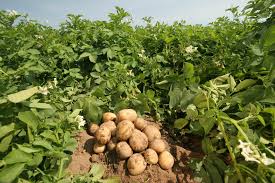 potatoes and onions) and Idaho and Oregon (onions and potatoes). While the onions and spuds may pay a lower freight rate than fruit, this region at least has good volume in late winter.
Washington’s Yakima and Wentachee valleys continue shipping a lot of apples and lesser amounts of pears. Apple loadings are averaging about 2,500 truckload equivalents per week, with pears loading around 400 truckload equivalents weekly. I use the term “equivalents” in the Northwest since a heavier percentage of produce is shipped by rail than most regions.
There also are onions being shipped from Washington’s Columbia Basin, as well as the nearby Umatilla Basin in Oregon. The two areas combined are averaging around 670 truckload equivalents per week being shipped….The Western area of Idaho and adjacent Malheur County of eastern Oregon is loading about 750 truckload equivalents of onions weekly.
Idaho easily remains the largest shipper of russet potatoes, but has been increasing shipments of red potatoes in recent years. Most produce is originating out of the Upper Valley and the Twin Falls-Burley District. The state is shipping over 1,550 truckload equivalents per week.
Washington apples/pears are grossing about – $6000 to Miami.
Washington’s Columbia Basin potatoes/onions – $3800 to Chicago.
Idaho/Oregon onions – $1600 to Los Angeles.
Idaho potatoes – $5300 to New York City.
If there’s something I’d be willing to bet the farm on – if I had one – it would  be that the Hunts Point Terminal Wholesale Market – at least in my lifetime, will never leave the South Bronx for New Jersey, or anywhere else.
This once again comes to mind as New York City and the governing body of the world’s largest wholesale produce market – the Hunts Point Terminal Produce Market Cooperative, have agreed to a 90-day extension for exclusive negotiations to continue trying to reach a long-term lease. In essence, this gives the involved parties through May to negotiate.
While New York City certainly doesn’t want Hunts Point to move its facilities to New Jersey, which keeps offering it tax incentives to do so, it’s not going to happen. New York City loves the taxes it receives from the $2 billion in annual revenues Hunts Point generates. There are 47 vendors, primarily wholesale receivers and distributors, on Hunts Point, and they love the location. It is situated in the middle of America’s largest concentrated population. The last thing they want is a wholesale market in Jersey, and having to distribute fresh fruits and veggies to customers in New York City, which would require crossing the gridlocked George Washington Bridge, Lincoln Tunnel and countless other thoroughfares going over and under the giant Hudson River.
While it might be a long haul produce trucker’s dream delivering product in New Jersey rather than the South Bronx, it isn’t going to happen. The only reason the Hunt Point folks even pretend to want to move to Jersey is as a negotiation tool to leverage a better deal with New York City, who actually owns and leases Hunts Point.
Easter is Sunday, April 8th and is always big for such items as strawberries and asparagus. California will be just about the only place shipping such items for Easter as Mexican strawberries will be pretty much finished for the season, while California “grass” from the desert may not have the greatest volume with its season just getting underway. California strawberries will have the market to itself with Florida and Mexico shipments finished. California berries will be heaviest out of the Oxnard district, with lighter volume coming out of Santa Maria.
 In Michigan, apple shipments continue from the Western Part of the state, primarily from the Grand Rapids area. The state should ship about 23 million cartons, down some from its record setting season that had 28 million cartons of apples.
In the Appalachian district of Maryland, Pennsylvania, Virginia and West Virginia about 50 truckloads of apples are being shipped each week. New York state is loading about 200 truckloads of apples weekly from the Hudson Valley, as well as Central and Western areas of the state.
Southern California berries, citrus grossing – about $5600 to New York City.
Western Michigan apples – $3200 to Dallas.
Central New York apples – $3150 to Boston.
I have just returned from Florida and over the weekend had the opportunity  to attend the Florida Strawberry Festival at Plant City, FL, just east of Tampa. Before talking about the event, here’s the bottom line on Florida strawberry shipments. Volume is good from the area, with over 400 truckloads being shipped weekly. However, if the warm, humid weather continues shipments will start rapidly declining, which is pretty normal for the last half of March.
Strawberries grossing about $1,000 to Atlanta.
The Florida Strawberry Festival has been held since 1930 and is quite similar to a state fair with everything from midway rides to a queen contest and awards for cake decorating, plus plenty of entertainment, among countless other activities.
I caught the show by the pop group Air Supply on Saturday night (March 3). I’m told they had several big hits during the 1980s, but I guess I missed them somehow. Anyway, wasn’t my flavor of music, but they did have a great band!
If you’re looking for something to do and in the area, it can be a fun event, which lasts through March 11th. By the way, lots of huge, beautiful flats of strawberries are being sold at the festival for $7 and $8.
The food stamp program, part of the Department of Agriculture, is
pleased to be distributing the greatest amount of food stamps ever.
Meanwhile, the Park Service, also part of the USDA, asks us to “Please Do Not Feed the Animals” because the animals may grow dependent and not learn to take care of themselves.
By Larry Oscar
 Now that Spring has nearly arrived, I can’t help but notice the abundance of weeds this year. For years I have marveled at how they just seem to pop up everywhere. Weeds can grow in just about anyplace. And to make it even more of a wonder, they seem to thrive in places that you couldn’t get any plant to grow if you wanted.
You can buy plants and place them where you think they will thrive and two weeks later you look to find them dead. Not so with weeds, they can appear in cracks in rocks and grow to magnificent specimens of horticultural bliss. Then it occurred to me. The ever present battle with weeds is probably our own fault. If we tried to get them to grow, they would probably refuse to and just die off. The problem here is not that weeds are not vulnerable. The problem is that they know we don’t like or want them, and they have adopted a stubborn rebellious attitude. They are stubbornly going to survive just to show us how much smarter they are and get their own way. They have grown independent and resourceful.
I think weeds take great pride in their accomplishments. They make us spend billions of dollars in herbicides. They must be having a big laugh alright. Gathering around the nation’s yards and gardens at night talking about how they managed to survive and defying us at every turn must give them a great sense of accomplishment.
I say we use some reverse psychology here. What if we really made an effort to nurture and support them. Why not open up some weed stores. If weeds knew that we were trying to propagate them the problem could go away. They would soon learn to be dependant on us for everything they want and need in life. They would not develop the survival skills to make it on their own and compete for food and water. They would have to depend on us for everything. Weeds would not show up and grow on their own, but rather sit around in greenhouses waiting for us to feed and plant them. They would not have a clue that what we are doing is bad for them. They would swallow the whole thing like a fish rising to the bait.
We will have developed the world’s first “lazy weed.” If we could do this, we could eliminate them from the planet.
Creating a cycle of dependency here is just the strategy we need. Nothing works quite as well for destroying a sense of personal accomplishment and personal pride than a good cycle of dependency. It’s bound to work wonders on weeds. We could even justify the whole process emotionally by claiming we are just trying to help the poor homeless weeds make it in a cruel and unforgiving world. A world that is running rampant with total disregard and lack of respect for weeds. That would make us feel better about what we are really doing.
I would be in favor of setting up the ACLWU to make sure that weeds don’t get their rights trampled on. After all, weeds should have rights too. We spend more time and money on trying to grow privileged plants than we do weeds. There is obviously a wealth gap here.
Yes sir, you can learn a lot from weeds. Maybe weeds are put here for a much greater purpose than we realize. Maybe they serve as a reminder of how individuality and diversity makes all of life a marvel. When you drive by a field in the early spring and look out to see the morning sun shining on the bright yellow-green colors, you would never know that the field was just a bunch of weeds. Each weed growing to be the best weed it can be. Each weed taking pride in its own individual accomplishments, and eventually trying something new that leads to innovation and changes in the species.
Weeds…you just gotta love’em. I just wish some of my friends would quit smoking so many of them.
The seasonal change in California shipping areas for vegetables will be here sooner than you think. In March shipments will start winding down from the 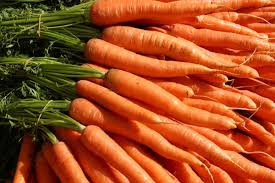 desert areas such as the Coachella Valley and Imperial Valley, as well as the Yuma district in Arizona. This can be a tricky time of the year, which can either result in shipping gaps as one area may finish before the other start. However, unless adverse weather changes things it should be a fairly smooth transition this spring.
As produce shipments move from the desert up north, there is actually a limited amount of broccoli being loaded from Salinas, CA. Broccoli volume is expected to be limited until the third or fourth week of March…..Head lettuce and leaf lettuce should start loadings in late March from Huron District in the San Joaquin Valley. These shipments will last a month or so before transitioning to the Salinas Valley around the third week of April.
The Santa Maria District typically starts lettuce shipments ahead of Salinas and Huron. Look for loadings of leaf, romaine and butter lettuce from Santa Maria to get underway in Mid March.
An exception to all this are carrots. This veggie is typically shipped from the Bakersfield area from Thanksgiving to mid-March. Then shipments will transistion southward to the desert areas of the Coachella and Imperial valleys.
According Target, the Minneapolis-based chain, more perishables including meat and produce will be available in over 100 stores beginning March 25th. The stores will have about 10,000 square feet for perishables, and will come at the expense of reducing such areas as home and apparel and accessories.
To see the locations of stores with expansions go to Target’s website for a map.
It was in 2008 the chain launched a program for groceries in its 1765 stores to provide one-stop shopping for customers.
Despite a freeze on January 3-4, which caused some damage to early spring Florida produce, overall it has been a warmer-than-normal winter and most shipments should be one to two weeks earlier. Florida’s peak spring shipments will occur from late March, extending into May until hot weather begins reducing volume.
Florida spring loadings often involve multiple pick ups of items ranging from bell peppers to squash, cabbage, cucumbers and other veggies. Loads with multiple pick ups often mean multiple drops at the other end of the haul, so be sure and negotiate your freight rates with this in mind.
Tomatoes are a big volume item from Florida and expect loads to be available a week earlier than usual from the Immokalee and Palmetto-Ruskin areas — starting in early April.
As for citrus, shipments are expected to wind down up to three weeks earlier on items such as tangerines (late March) and grapefruit (in April). Tangerine loadings normally end in late April.
Florida ships a significant amount of spring red potatoes from the southern part of the state such as from Lake Wales. Heaviest red potato loadings take place during March and April.
Florida watermelon shipments will get underway in early April.
South Florida red potatoes grossing about $2600 to Philadelphia.
Jerry Cravens has been trucking since 1991 and as an owner operator since 2002. After all these years, he is fueling at an Atlanta truckstop before picking up his first load of produce.
Leased to A.L. Smith Trucking of Versailles, OH, Jerry is picking up a load of tomatoes from a Del Monte warehouse in Atlanta for delivery to another Del Monte facility in Winset, NC. At the Winset warehouse, he’ll load more fresh produce and head to Del Monte’s operation in Columbus, OH.
The closest Jerry has come to hauling produce was about 20 years ago with a load of cheese. Since then his focus has been with dry freight.
As Jerry was preparing to pull out of the truck stop and head to the Del Monte warehouse, this writer forgot to get his contact information. It would be very interesting to see if his first produce load would be his last. Or just maybe he found a new challenge after all these years that he really likes!
Jerry fully realizes hauling perishables “is definately more challenging than pulling a dry van.” He decided to haul produce on the recommendation of a friend who had “made good money” over the past year leasing with A.L. Smith.
Jerry says his career as an owner operator has succeeded by being careful whom he hauls for and taking the most profitable loads.
Over the years he has considered obtaining his own operating authority, but he has known too many truckers who have tried it and failed.
Prior to trucking Jerry graduated from high school, then enlisted in the U.S. Navy for four years, before transferring to the U.S. Army for another six years.
Between the experience in the military and his time hauling dry freight, he seems confident he is prepared to enter the world of produce trucking. Jerry is aware of the “weird hours” and delays often associated with loading and unloading fresh fruits and vegetables, plus plenty of other issues at the docks. He has been briefed on important factors such as maintaining the correct temperature for his load of tomatoes he’ll transport in a 53-foot Utility trailer equipped with a Carrier refrigeration unit. The trailer is owned by the company to whom he is leased.
As Jerry was finishing fueling his truck, he was asked if he had any advice for anyone looking to enter trucking and wanted their own truck. He advised they first learn the industry as a company driver.
As for buying a tractor, he advised against purchasing a new one. He cited the high monthly payments as a primary negative with a new truck, along with the higher down payment required. Jerry also cited other factors such as lease-purchase plans “where you will end up paying too much. Buy a new truck and it is hard to come up with those $1800 per month truck payments.”
Jerry practices what he preaches. He owns a 2001 Kenworth T-600 with a 250-inch wheel base and a 13 speed transmission. His truck payments are $500 per month.
“If you own your own truck you always have a way home,” he surmises. “I’ve seen too many of these company drivers fired while on the road and have had to find their own way home.”
Some of the best loading opportunties this time of year are out of the Northwestern United States – namely with Washington state (apples, pears, potatoes and onions) and Idaho and Oregon (onions and potatoes). While the onions and spuds may pay a lower freight rate than fruit, this region at least has good volume in late winter.
Washington’s Yakima and Wentachee valleys continue shipping a lot of apples and lesser amounts of pears. Apple loadings are averaging about 2,500 truckload equivalents per week, with pears loading around 400 truckload equivalents weekly. I use the term “equivalents” in the Northwest since a heavier percentage of produce is shipped by rail than most regions.
There also are onions being shipped from Washington’s Columbia Basin, as well as the nearby Umatilla Basin in Oregon. The two areas combined are averaging around 670 truckload equivalents per week being shipped….The Western area of Idaho and adjacent Malheur County of eastern Oregon is loading about 750 truckload equivalents of onions weekly.
Idaho easily remains the largest shipper of russet potatoes, but has been increasing shipments of red potatoes in recent years. Most produce is originating out of the Upper Valley and the Twin Falls-Burley District. The state is shipping over 1,550 truckload equivalents per week.
Washington apples/pears are grossing about – $6000 to Miami.
Washington’s Columbia Basin potatoes/onions – $3800 to Chicago.
Idaho/Oregon onions – $1600 to Los Angeles.
Idaho potatoes – $5300 to New York City.
If there’s something I’d be willing to bet the farm on – if I had one – it would be that the Hunts Point Terminal Wholesale Market – at least in my lifetime, will never leave the South Bronx for New Jersey, or anywhere else.
This once again comes to mind as New York City and the governing body of the world’s largest wholesale produce market – the Hunts Point Terminal Produce Market Cooperative, have agreed to a 90-day extension for exclusive negotiations to continue trying to reach a long-term lease. In essence, this gives the involved parties through May to negotiate.
While New York City certainly doesn’t want Hunts Point to move its facilities to New Jersey, which keeps offering it tax incentives to do so, it’s not going to happen. New York City loves the taxes it receives from the $2 billion in annual revenues Hunts Point generates. There are 47 vendors, primarily wholesale receivers and distributors, on Hunts Point, and they love the location. It is situated in the middle of America’s largest concentrated population. The last thing they want is a wholesale market in Jersey, and having to distribute fresh fruits and veggies to customers in New York City, which would require crossing the gridlocked George Washington Bridge, Lincoln Tunnel and countless other thoroughfares going over and under the giant Hudson River.
While it might be a long haul produce trucker’s dream delivering product in New Jersey rather than the South Bronx, it isn’t going to happen. The only reason the Hunt Point folks even pretend to want to move to Jersey is as a negotiation tool to leverage a better deal with New York City, who actually owns and leases Hunts Point.
Easter is Sunday, April 8th and is always big for such items as strawberries and asparagus. California will be just about the only place shipping such items for Easter as Mexican strawberries will be pretty much finished for the season, while California “grass” from the desert may not have the greatest volume with its season just getting underway. California strawberries will have the market to itself with Florida and Mexico shipments finished. California berries will be heaviest out of the Oxnard district, with lighter volume coming out of Santa Maria.
In Michigan, apple shipments continue from the Western Part of the state, primarily from the Grand Rapids area. The state should ship about 23 million cartons, down some from its record setting season that had 28 million cartons of apples.
In the Appalachian district of Maryland, Pennsylvania, Virginia and West Virginia about 50 truckloads of apples are being shipped each week. New York state is loading about 200 truckloads of apples weekly from the Hudson Valley, as well as Central and Western areas of the state.
Southern California berries, citrus grossing – about $5600 to New York City.
Western Michigan apples – $3200 to Dallas.
Central New York apples – $3150 to Boston.
I have just returned from Florida and over the weekend had the opportunity to attend the Florida Strawberry Festival at Plant City, FL, just east of Tampa. Before talking about the event, here’s the bottom line on Florida strawberry shipments. Volume is good from the area, with over 400 truckloads being shipped weekly. However, if the warm, humid weather continues shipments will start rapidly declining, which is pretty normal for the last half of March.
Strawberries grossing about $1,000 to Atlanta.
The Florida Strawberry Festival has been held since 1930 and is quite similar to a state fair with everything from midway rides to a queen contest and awards for cake decorating, plus plenty of entertainment, among countless other activities.
I caught the show by the pop group Air Supply on Saturday night (March 3). I’m told they had several big hits during the 1980s, but I guess I missed them somehow. Anyway, wasn’t my flavor of music, but they did have a great band!
If you’re looking for something to do and in the area, it can be a fun event, which lasts through March 11th. By the way, lots of huge, beautiful flats of strawberries are being sold at the festival for $7 and $8.
The food stamp program, part of the Department of Agriculture, is
pleased to be distributing the greatest amount of food stamps ever.
Meanwhile, the Park Service, also part of the USDA, asks us to “Please Do Not Feed the Animals” because the animals may grow dependent and not learn to take care of themselves.
By Larry Oscar
Now that Spring has nearly arrived, I can’t help but notice the abundance of weeds this year. For years I have marveled at how they just seem to pop up everywhere. Weeds can grow in just about anyplace. And to make it even more of a wonder, they seem to thrive in places that you couldn’t get any plant to grow if you wanted.
You can buy plants and place them where you think they will thrive and two weeks later you look to find them dead. Not so with weeds, they can appear in cracks in rocks and grow to magnificent specimens of horticultural bliss. Then it occurred to me. The ever present battle with weeds is probably our own fault. If we tried to get them to grow, they would probably refuse to and just die off. The problem here is not that weeds are not vulnerable. The problem is that they know we don’t like or want them, and they have adopted a stubborn rebellious attitude. They are stubbornly going to survive just to show us how much smarter they are and get their own way. They have grown independent and resourceful.
I think weeds take great pride in their accomplishments. They make us spend billions of dollars in herbicides. They must be having a big laugh alright. Gathering around the nation’s yards and gardens at night talking about how they managed to survive and defying us at every turn must give them a great sense of accomplishment.
I say we use some reverse psychology here. What if we really made an effort to nurture and support them. Why not open up some weed stores. If weeds knew that we were trying to propagate them the problem could go away. They would soon learn to be dependant on us for everything they want and need in life. They would not develop the survival skills to make it on their own and compete for food and water. They would have to depend on us for everything. Weeds would not show up and grow on their own, but rather sit around in greenhouses waiting for us to feed and plant them. They would not have a clue that what we are doing is bad for them. They would swallow the whole thing like a fish rising to the bait.
We will have developed the world’s first “lazy weed.” If we could do this, we could eliminate them from the planet.
Creating a cycle of dependency here is just the strategy we need. Nothing works quite as well for destroying a sense of personal accomplishment and personal pride than a good cycle of dependency. It’s bound to work wonders on weeds. We could even justify the whole process emotionally by claiming we are just trying to help the poor homeless weeds make it in a cruel and unforgiving world. A world that is running rampant with total disregard and lack of respect for weeds. That would make us feel better about what we are really doing.
I would be in favor of setting up the ACLWU to make sure that weeds don’t get their rights trampled on. After all, weeds should have rights too. We spend more time and money on trying to grow privileged plants than we do weeds. There is obviously a wealth gap here.
Yes sir, you can learn a lot from weeds. Maybe weeds are put here for a much greater purpose than we realize. Maybe they serve as a reminder of how individuality and diversity makes all of life a marvel. When you drive by a field in the early spring and look out to see the morning sun shining on the bright yellow-green colors, you would never know that the field was just a bunch of weeds. Each weed growing to be the best weed it can be. Each weed taking pride in its own individual accomplishments, and eventually trying something new that leads to innovation and changes in the species.
Weeds…you just gotta love’em. I just wish some of my friends would quit smoking so many of them.
The seasonal change in California shipping areas for vegetables will be here sooner than you think. In March shipments will start winding down from the desert areas such as the Coachella Valley and Imperial Valley, as well as the Yuma district in Arizona. This can be a tricky time of the year, which can either result in shipping gaps as one area may finish before the other start. However, unless adverse weather changes things it should be a fairly smooth transition this spring.
As produce shipments move from the desert up north, there is actually a limited amount of broccoli being loaded from Salinas, CA. Broccoli volume is expected to be limited until the third or fourth week of March…..Head lettuce and leaf lettuce should start loadings in late March from Huron District in the San Joaquin Valley. These shipments will last a month or so before transitioning to the Salinas Valley around the third week of April.
The Santa Maria District typically starts lettuce shipments ahead of Salinas and Huron. Look for loadings of leaf, romaine and butter lettuce from Santa Maria to get underway in Mid March.
An exception to all this are carrots. This veggie is typically shipped from the Bakersfield area from Thanksgiving to mid-March. Then shipments will transistion southward to the desert areas of the Coachella and Imperial valleys.