
Author Archive
 Here is a glimpse at shipments on Northwest pears, as well as California melon loadings, and finally tomato shipments out of Southern California and Mexico. Finally, are produce rates too high as one shipper claims?
Pear Shipments
The Northwest pear shipping forecast has been revised for the upcoming 2014 harvest, with 20.2 million, 44-pound cartons now expected to be packed by season’s end. This estimate is two per cent larger than the five-year average but six per cent smaller than last year’s record shipments. This year’s initial spring projection showed a crop of 18.7 million cartons.
Shipments have been underway about a month, and with no significant weather issues so far, and harvest is expected to extend into mid-October. Green Anjou pears are expected to make up 53 per cent of the total 2014 crop, with the Bartlett and Bosc varieties likely to yield 22 per cent and 15 per cent respectively. The organic portion of the Northwest crop has increased by around three per cent, with around 976,700 cartons.
Melon Shipments
In California, Westside district melon shipments from the San Joaquin Valley should continue into mid October, although volume will be much smaller that last month of the season. Quality is reported excellent, however, shippers are complaining about movement not being as good as it should. A big crop is reported, so could it be the market is a little high and consumers are resisting?
California Tomato Shipments
Further south in California, tomato shipments are in full swing with another large crop moving from the San Diego area and Mexico’s Baja California. One tomato shipper recently described freight rates on tomatoes as “ridiculous.” He said it was costing $4 to $5 per box to ship his tomatoes.
 The states of Michigan and New York at various times claim to be the second largest shipper of apples (Washington state is the easy first), but both states will have large, and similar sized crops this season.
Michigan apple shipments should hit about 28.7 million bushels of apples this year, which isn’t that far off of their record setting 2013 crop, which was 30 million bushels. The estimate is showing what many Michigan apple shippers been predicting for several years. The average Michigan apple crop size will continue to increase. Because of the high-density plantings (approximately 1,000 trees per acre) and advancements in technology, Michigan is going to continue to produce a larger quantity of apples.
Michigan blueberry shipments – grossing about $2700 to Atlanta; Michigan vegetable shipments grossing about 20 percent less. Too few apples yet, to quote.
New York Apple Shipments
Unlike Michigan, which has most of its apple operations in the Western part of the state, New York grows and ships apples were several different areas, although the heaviest volume originates out of the Hudson Valley. Still, New York state also ships apples from the Champlain Valley, as well as from areas in the central and western part of the state. Excellent growing conditions, including a late spring with warm weather, good rainfall, and cool nights have cultivated a harvest which is so far was exceeding the 30 million bushels forecast made this past July.
Western New York vegetable shipments – grossing about $1500 to Baltimore.
 Sweet potatoes lead North Carolina produce shipments….We also take a look at the upcoming U.S. cranberry shipping season.
North Carolina Produce Shipments
North Carolina produce shipments were worth $608 million last year, including fruits, vegetables, nuts and berries. However, it was sweet potatoes that led the way.
The Tar Heel state ranks number one in the nation for shipping sweet potatoes, which are not only used as fresh, but in making vodka, butter and chips, as well as microwave-ready yams and even recipes for gourmet meals with sweet potato French fries.
Because of its location in the Southeast, North Carolina’s fresh produce can be shipped to 65 percent of the U.S. population within 24 hours.
North Carolina sweet potatoes from the old season are virtually finished, while the new crop is being harvested and cured. Significant volume is a few weeks away.
Watermelons loadings are on the decline.
North Carolina watermelons – grossing about $1000 to Atlanta.
Cranberry Shipments
U.S. cranberry shipments are predicted to fall 4 perecent in 2014, because of lower production in industry leader Wisconsin. About 8.6 million barrels are expected this year.
Growers in Wisconsin are reporting lower yields than last year.
Cool weather in Wisconsin has resulted in smaller berries, plus there were some losses due to hail damage in late July.
In Massachusetts, reports are mixed. Some growers expect above-average yields due to good pollination, excellent weather and very little rot. Others report lower production due to heat stress.
Oregon and Washington growers are expecting higher yields due to good weather. Shipments are expected to be up in all major-producing states except Wisconsin.
Wisconsin should produce about 5.39 million barrels, Massachusetts 2.07 million barrels, New Jersey 558,000 barrels, Oregon 395,000 barrels and Washington 162,000 barrels. 90 percent of all cranberries are generally for the processing with the balance going to the fresh market. New Jersey has little if any cranberry shipments for the fresh market.
 By Washington State Fruit Commission
YAKIMA, Wash. — Stone fruit from Washington state, including juicy peaches, nectarines, apricots, plums and prunes are now available on store shelves nationwide while the season lasts, approximately through mid-September. Thanks to the early summer weather in Washington, stone fruit farmers are anticipating a slightly larger crop with some of the sweetest, juiciest fruits yet. The outstanding quality of another popular stone fruit grown in the region, sweet cherries, has already been helping growers sell the quickest and second-largest cherry crop on record.
Washington stone fruit orchards are prized for their sweetness and flavor balance due to the region’s unique microclimates and ancient volcanic soils that make for ideal growing conditions. The 2014 crop is expected to be one of the best to date, as the lengthening days of early summer weather stayed within the perfect temperature ranges for growth. As with wine grapes, these long warm days followed by cooler nights typically leads to more distinctly flavorful and juicy fruit.
“When stone fruit hangs for a long period of time on the branch, it allows the fruit to build up its natural sugar content which makes them that much tastier,” said James Michael, the vice president of marketing – North America for the Washington State Fruit Commission. “We expect it to be a banner year with an exceptionally flavorful crop!”
In addition to their delicious taste, peaches in particular are also grabbing the spotlight for their noted health benefits. A recent study by researchers at Washington State University (then at Texas A&M) and published in The Journal of Nutritional Biochemistry, shows that the compounds found in peaches could supplement therapies that reduce the risk of metastasis in breast and other types of cancer. The study shows compounds in peaches may inhibit growth of cancer cells and their ability to spread.
While the Washington stone fruit season only lasts a few short weeks, consumers can enjoy the taste and health benefits year round through canning and preserving. The website sweetpreservation.com, created by the Washington State Fruit Commission, is a go-to resource for canning and freezing fruit, including everything from how-to tips, traditional and modern canning recipes, craft ideas and downloadable jar labels to customize at home.
For more information on Washington state stone fruit, seasonal recipes, health information and more, visit www.wastatefruit.com.
About Northwest Cherries and Washington State Fruit Commission
Washington State Fruit Commission is a growers’ organization funded by fruit assessments to increase awareness and consumption of regional stone fruits. The organization is dedicated to the promotion, education, market development, and research of soft fruits from Northwest orchards. It began in 1947 and has since grown to include five states – Washington, Oregon, Idaho, Utah and Montana. For more information, visit www.nwcherries.com or www.wastatefruit.com.
 Salmonella can grow on bruised blueberries kept at shipping or retail display temperatures, according to a new study in the Journal of Food Protection. The study was conducted by researchers at the Department of Food Science and Human Nutrition, Citrus Research and Education Center at the Institute of Food and Agricultural Sciences at the University of Florida,
Strawberries and blueberries harvested at or near full-ripe maturity and softer than those that are not as ripe and therefore more susceptible to bruising during harvest and transport. The researchers wanted to see how E. coli O157:H7 and Salmonella behaved on bruised fruit and intact fruit at shipping temperature, 35.6˚ F, and retail display 59.9˚ F. So they The bruised the berries inoculated them with bacteria and observed.
They found that the E. coli O157:H7 and Salmonella did not grow on strawberries at shipping or retail display temperatures. But that Salmonella did grow on bruised fully ripe blueberries at retail display temperatures.
Salmonella causes an infection called salmonellosis. Symptoms include abdominal cramps, fever, vomiting and diarrhea that can be bloody.
 Mexican avocados joining other produce from south of the border being imported to the U.S. Peruvian onions are set for arrivals at U.S. Ports.
Mexican Produce Shipments
Avocado shipments should stay steady as California and Peru wind down in early September, although location of loading opportunities will shift. In September shipments out of Mexico ramp up. California avocado shipments were lighter than normal this season, and shipments will be 95 percent completed after Labor Day. Shipments also will be wrapping up earlier than usual.
While imports of Mexican avocados get started in September, it will be the middle of October before there is good volume.
Mexican avocados crossing the U.S. border into the Lower Rio Grande Valley of Texas are averaging around about 500 truck loads a week – but as mentioned, are gradually increasing in volume.
Peruvian Onions
Exports of Peruvian sweet onions to the U.S. may grow by as much as 10 percent during the 2014-15 season. The United States buys 57 percent of the Peruvian exports of onions. The current export season starting ramping up in late July and should continue into late January. The Peruvian onions arrive a various U.S. ports, before being trucked to markets across the U.S. and Canada.
Mexican avocados, mangos, citrus, tomatoes, and vegetables crossing at McAllen, TX – grossing about $4200 to New York City.
 Heat and drought the Northwest raises question about how potato and onion shipments may be affected this season.
Oregon potato shippers, as well as those in Washington are in wait-and-see mode following a heat wave that hit the Pacific Northwest in July. It may reduce potential fall harvest yield – and ultimately shipments. Some temperatures hit 108 degress F.
The plants just shut down during the day and stop growing. It’s still too early to tell how this heat will impact the fall crop.
Oregon has a total of 38,000 acres planted in potatoes. Of this total, 17 percent is planted to fresh potatoes. The 2014 fresh volume should be comparable to last year. However, the Klamath area may be down slightly.
Far eastern Oregon/Malheur County is extremely short on water. Acres were reduced and moved to locations closer to irrigation water sources. Most of the region was out out or extremely reduced of water by the end of July.
While onion production continues in the area, Brewer said there will be no fresh potatoes moving into the pipeline. “Some land was left idle this spring to lengthen season,” he commented.
Eighty percent of Oregon’s potatoes are shipped outside the Beaver State, heavy volume going to Canada, Mexico and Korea.
Washington Potato Shipments
In Washington state, it is estimated 165,000 acres have been planted. Abouty 13-15 percent of that would go to the fresh market.
Washington state. Washington state potato growers have the highest yields in the world and historically have averaged around 60,000 pounds per acre.
Treasure Valley Onion Shipments
Treasure Valley onions in Eastern Oregon and Western Idaho started shipping about two weeks ago and now are providing some volume for produce haulers.
While acreage is up around two to three percent this season, whether that translates into more loading opportunities remains up in the air. Some shippers are facing more problems with drought than others.
 Central Wisconsin potato shipments got underway in light volume nearly two weeks ago, while Texas citrus shipments get underway next month.
Wisconsin typically ships up to 30 million cwt. with roughly 45 percent of the crop going to the fresh market. Excellent growing conditions in the Badger State is expected to result in good quality potatoes coming out of storages during the season. That should translate into good arrivals at destination for potato haulers.
There should be good, steady volume for Labor Day deliveries. Steady shipments are expected to continue through Memorial Day next year and possibly through the Fourth of July — unless, of course, something weatherwise or disease wise happens between now and the completion of the current harvest.
Potatoes from the Stevens Point, WI area – grossing about $1100 to Chicago.
Texas Citrus Shipments
We are still at least six weeks away from shipments of South Texas citrus shipments for the 2014-15 season. The season typically kicks off in late September and continues into the following May.
Last season, the Lower Rio Grande Valley had about 5 million cartons of grapefruit and about 3 million cartons of oranges shipped.
One change this seaon is the USDA has a new rule allowing smaller sizes of Texas grapefruit and oranges shipped. The size decreased from 2 6/16 inches (which is size 138 fruit per carton) to 2 3/16 inches in diameter (163 fruits per carton).
Mexican citrus, fruit and vegetables crossing through McAllen, Tx – grossing about $2600 to Chicago.
 Nogales Port Authority statistics show commercial border crossings at the Mariposa Port of Entry have been increasing and likely will continue to do so.
Both the dollar amount of cargo and the number of trucks hauling it have increased “substantially” since 2010, according to a recent news release. Truck traffic increased 13 percent, growing from 276,877 trucks in 2009 to 311,669 trucks in 2013.
The value of cargo going through the Mariposa crossing is rose from 50 percent to 75 percent. In 2011 an estimated $20 billion to $25 billion in trade goods went through the crossing. The port authority estimates for 2014 it will be $30 billion to $35 billion. Mariposa is particularly popular with produce shippers and produce truckers, according to the Fresh Produce Association of the Americas
.
For September 2013 through April this year, FPAA officials said 37 percent of all Mexican produce came to the U.S. via Mariposa. For the same period in 2013 Mariposa was the entry port for 34 percent of Mexican produce, according to a news release.
“Enhanced staffing of the port, along with current investments in Mexican infrastructure, will complement the U.S. investment in our port and expedite trade. Trade opportunities are both northbound and southbound. We will continue to see increases in export trade southbound into Mexico,” Nils Urman, representing Nogales Community Development, said in the release from the port authority.
 Cold Train Express Intermodal Service on August 7th announced it would be suspending service at its location at the Port of Quincy, WA. Cold Train, operated by Rail Logistics of Overland Park, KS, developed a transportation program model which allowed fresh producers in the Pacific Northwest to take advantage of refrigerated rail service that moved commodities to Chicago, IL, and points beyond in a timely and efficient manner.
The Northwest is expecting large crops of pears and apples. Shippers are concerned about availability of trucks and need all the transportation options available.
It is up in the air for the time being seeing what service Cold Train may be able to take to restore in the future. One other rail option continues to be Railex service to move fruit.
The Cold Train announcement follows a number of scheduling issues on BNSF Railway’s Northern Corridor line that have been occurring with BNSF beginning late last fall because of increased rail congestion. This has been caused by a surge of oil and coal shipments on the Northern Corridor line,” Cold Train said in a statement. “In fact, from November of 2013 to April of 2014, BNSF’s On-Time Percentage dramatically dropped from an average of over 90 percent to less than 5 percent.”
This past April, BSNF Railway announced an initial reduction in intermodal service out of Washington to one train a day with transit times being two to three days slower than prior timetables.
“As a result of the scheduling change in April, the rail transit time nearly doubled,” Cold Train stated. “Unfortunately, this caused Cold Train’s costs of equipment, fuel and other costs to double, and caused many customers — especially fresh produce shippers — to look for other transportation service options.
In fact, because of BNSF’s scheduling issues from November of 2013 until present, Cold Train lost most of its fresh produce business, including apples, onions, pears, potatoes, carrots and cherries, which was more than 70 percent of the company’s business. In addition to adversely impacting many Washington State fresh produce growers and shippers, BNSF’s scheduling changes have affected many retailers and wholesalers in the Midwest and East Coast that purchase Washington State fresh produce and frozen foods.”
According to data made available by Cold Train, use of intermodal transportation was growing from the Pacific Northwest. During 2010, Cold Train moved approximately 100 containers of perishables per month from Washington to the Midwest. By 2013, that number had risen to approximately 700 containers per month shipped from Washington and Portland, OR.
By the end of 2013, Cold Train anticipated it would be shipping 1,000 containers each month from the region.
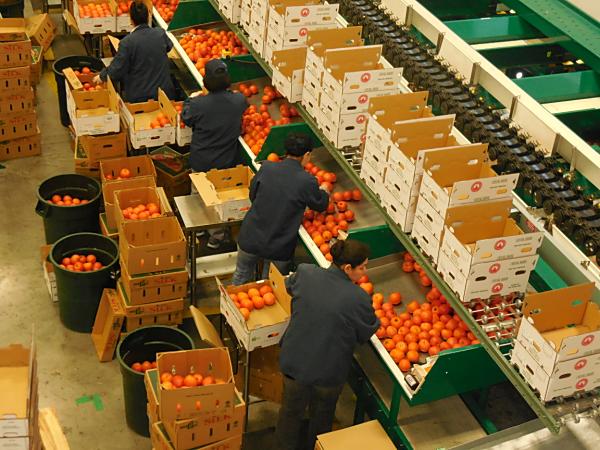 Here is a glimpse at shipments on Northwest pears, as well as California melon loadings, and finally tomato shipments out of Southern California and Mexico. Finally, are produce rates too high as one shipper claims?
Pear Shipments
The Northwest pear shipping forecast has been revised for the upcoming 2014 harvest, with 20.2 million, 44-pound cartons now expected to be packed by season’s end. This estimate is two per cent larger than the five-year average but six per cent smaller than last year’s record shipments. This year’s initial spring projection showed a crop of 18.7 million cartons.
Shipments have been underway about a month, and with no significant weather issues so far, and harvest is expected to extend into mid-October. Green Anjou pears are expected to make up 53 per cent of the total 2014 crop, with the Bartlett and Bosc varieties likely to yield 22 per cent and 15 per cent respectively. The organic portion of the Northwest crop has increased by around three per cent, with around 976,700 cartons.
Melon Shipments
In California, Westside district melon shipments from the San Joaquin Valley should continue into mid October, although volume will be much smaller that last month of the season. Quality is reported excellent, however, shippers are complaining about movement not being as good as it should. A big crop is reported, so could it be the market is a little high and consumers are resisting?
California Tomato Shipments
Further south in California, tomato shipments are in full swing with another large crop moving from the San Diego area and Mexico’s Baja California. One tomato shipper recently described freight rates on tomatoes as “ridiculous.” He said it was costing $4 to $5 per box to ship his tomatoes.
 The states of Michigan and New York at various times claim to be the second largest shipper of apples (Washington state is the easy first), but both states will have large, and similar sized crops this season.
Michigan apple shipments should hit about 28.7 million bushels of apples this year, which isn’t that far off of their record setting 2013 crop, which was 30 million bushels. The estimate is showing what many Michigan apple shippers been predicting for several years. The average Michigan apple crop size will continue to increase. Because of the high-density plantings (approximately 1,000 trees per acre) and advancements in technology, Michigan is going to continue to produce a larger quantity of apples.
Michigan blueberry shipments – grossing about $2700 to Atlanta; Michigan vegetable shipments grossing about 20 percent less. Too few apples yet, to quote.
New York Apple Shipments
Unlike Michigan, which has most of its apple operations in the Western part of the state, New York grows and ships apples were several different areas, although the heaviest volume originates out of the Hudson Valley. Still, New York state also ships apples from the Champlain Valley, as well as from areas in the central and western part of the state. Excellent growing conditions, including a late spring with warm weather, good rainfall, and cool nights have cultivated a harvest which is so far was exceeding the 30 million bushels forecast made this past July.
Western New York vegetable shipments – grossing about $1500 to Baltimore.
 Sweet potatoes lead North Carolina produce shipments….We also take a look at the upcoming U.S. cranberry shipping season.
North Carolina Produce Shipments
North Carolina produce shipments were worth $608 million last year, including fruits, vegetables, nuts and berries. However, it was sweet potatoes that led the way.
The Tar Heel state ranks number one in the nation for shipping sweet potatoes, which are not only used as fresh, but in making vodka, butter and chips, as well as microwave-ready yams and even recipes for gourmet meals with sweet potato French fries.
Because of its location in the Southeast, North Carolina’s fresh produce can be shipped to 65 percent of the U.S. population within 24 hours.
North Carolina sweet potatoes from the old season are virtually finished, while the new crop is being harvested and cured. Significant volume is a few weeks away.
Watermelons loadings are on the decline.
North Carolina watermelons – grossing about $1000 to Atlanta.
Cranberry Shipments
U.S. cranberry shipments are predicted to fall 4 perecent in 2014, because of lower production in industry leader Wisconsin. About 8.6 million barrels are expected this year.
Growers in Wisconsin are reporting lower yields than last year.
Cool weather in Wisconsin has resulted in smaller berries, plus there were some losses due to hail damage in late July.
In Massachusetts, reports are mixed. Some growers expect above-average yields due to good pollination, excellent weather and very little rot. Others report lower production due to heat stress.
Oregon and Washington growers are expecting higher yields due to good weather. Shipments are expected to be up in all major-producing states except Wisconsin.
Wisconsin should produce about 5.39 million barrels, Massachusetts 2.07 million barrels, New Jersey 558,000 barrels, Oregon 395,000 barrels and Washington 162,000 barrels. 90 percent of all cranberries are generally for the processing with the balance going to the fresh market. New Jersey has little if any cranberry shipments for the fresh market.
 By Washington State Fruit Commission
YAKIMA, Wash. — Stone fruit from Washington state, including juicy peaches, nectarines, apricots, plums and prunes are now available on store shelves nationwide while the season lasts, approximately through mid-September. Thanks to the early summer weather in Washington, stone fruit farmers are anticipating a slightly larger crop with some of the sweetest, juiciest fruits yet. The outstanding quality of another popular stone fruit grown in the region, sweet cherries, has already been helping growers sell the quickest and second-largest cherry crop on record.
Washington stone fruit orchards are prized for their sweetness and flavor balance due to the region’s unique microclimates and ancient volcanic soils that make for ideal growing conditions. The 2014 crop is expected to be one of the best to date, as the lengthening days of early summer weather stayed within the perfect temperature ranges for growth. As with wine grapes, these long warm days followed by cooler nights typically leads to more distinctly flavorful and juicy fruit.
“When stone fruit hangs for a long period of time on the branch, it allows the fruit to build up its natural sugar content which makes them that much tastier,” said James Michael, the vice president of marketing – North America for the Washington State Fruit Commission. “We expect it to be a banner year with an exceptionally flavorful crop!”
In addition to their delicious taste, peaches in particular are also grabbing the spotlight for their noted health benefits. A recent study by researchers at Washington State University (then at Texas A&M) and published in The Journal of Nutritional Biochemistry, shows that the compounds found in peaches could supplement therapies that reduce the risk of metastasis in breast and other types of cancer. The study shows compounds in peaches may inhibit growth of cancer cells and their ability to spread.
While the Washington stone fruit season only lasts a few short weeks, consumers can enjoy the taste and health benefits year round through canning and preserving. The website sweetpreservation.com, created by the Washington State Fruit Commission, is a go-to resource for canning and freezing fruit, including everything from how-to tips, traditional and modern canning recipes, craft ideas and downloadable jar labels to customize at home.
For more information on Washington state stone fruit, seasonal recipes, health information and more, visit www.wastatefruit.com.
About Northwest Cherries and Washington State Fruit Commission
Washington State Fruit Commission is a growers’ organization funded by fruit assessments to increase awareness and consumption of regional stone fruits. The organization is dedicated to the promotion, education, market development, and research of soft fruits from Northwest orchards. It began in 1947 and has since grown to include five states – Washington, Oregon, Idaho, Utah and Montana. For more information, visit www.nwcherries.com or www.wastatefruit.com.
 Salmonella can grow on bruised blueberries kept at shipping or retail display temperatures, according to a new study in the Journal of Food Protection. The study was conducted by researchers at the Department of Food Science and Human Nutrition, Citrus Research and Education Center at the Institute of Food and Agricultural Sciences at the University of Florida,
Strawberries and blueberries harvested at or near full-ripe maturity and softer than those that are not as ripe and therefore more susceptible to bruising during harvest and transport. The researchers wanted to see how E. coli O157:H7 and Salmonella behaved on bruised fruit and intact fruit at shipping temperature, 35.6˚ F, and retail display 59.9˚ F. So they The bruised the berries inoculated them with bacteria and observed.
They found that the E. coli O157:H7 and Salmonella did not grow on strawberries at shipping or retail display temperatures. But that Salmonella did grow on bruised fully ripe blueberries at retail display temperatures.
Salmonella causes an infection called salmonellosis. Symptoms include abdominal cramps, fever, vomiting and diarrhea that can be bloody.
 Mexican avocados joining other produce from south of the border being imported to the U.S. Peruvian onions are set for arrivals at U.S. Ports.
Mexican Produce Shipments
Avocado shipments should stay steady as California and Peru wind down in early September, although location of loading opportunities will shift. In September shipments out of Mexico ramp up. California avocado shipments were lighter than normal this season, and shipments will be 95 percent completed after Labor Day. Shipments also will be wrapping up earlier than usual.
While imports of Mexican avocados get started in September, it will be the middle of October before there is good volume.
Mexican avocados crossing the U.S. border into the Lower Rio Grande Valley of Texas are averaging around about 500 truck loads a week – but as mentioned, are gradually increasing in volume.
Peruvian Onions
Exports of Peruvian sweet onions to the U.S. may grow by as much as 10 percent during the 2014-15 season. The United States buys 57 percent of the Peruvian exports of onions. The current export season starting ramping up in late July and should continue into late January. The Peruvian onions arrive a various U.S. ports, before being trucked to markets across the U.S. and Canada.
Mexican avocados, mangos, citrus, tomatoes, and vegetables crossing at McAllen, TX – grossing about $4200 to New York City.
 Heat and drought the Northwest raises question about how potato and onion shipments may be affected this season.
Oregon potato shippers, as well as those in Washington are in wait-and-see mode following a heat wave that hit the Pacific Northwest in July. It may reduce potential fall harvest yield – and ultimately shipments. Some temperatures hit 108 degress F.
The plants just shut down during the day and stop growing. It’s still too early to tell how this heat will impact the fall crop.
Oregon has a total of 38,000 acres planted in potatoes. Of this total, 17 percent is planted to fresh potatoes. The 2014 fresh volume should be comparable to last year. However, the Klamath area may be down slightly.
Far eastern Oregon/Malheur County is extremely short on water. Acres were reduced and moved to locations closer to irrigation water sources. Most of the region was out out or extremely reduced of water by the end of July.
While onion production continues in the area, Brewer said there will be no fresh potatoes moving into the pipeline. “Some land was left idle this spring to lengthen season,” he commented.
Eighty percent of Oregon’s potatoes are shipped outside the Beaver State, heavy volume going to Canada, Mexico and Korea.
Washington Potato Shipments
In Washington state, it is estimated 165,000 acres have been planted. Abouty 13-15 percent of that would go to the fresh market.
Washington state. Washington state potato growers have the highest yields in the world and historically have averaged around 60,000 pounds per acre.
Treasure Valley Onion Shipments
Treasure Valley onions in Eastern Oregon and Western Idaho started shipping about two weeks ago and now are providing some volume for produce haulers.
While acreage is up around two to three percent this season, whether that translates into more loading opportunities remains up in the air. Some shippers are facing more problems with drought than others.
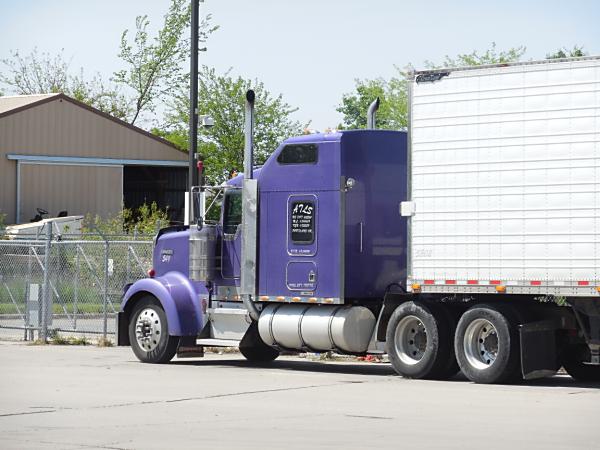 Central Wisconsin potato shipments got underway in light volume nearly two weeks ago, while Texas citrus shipments get underway next month.
Wisconsin typically ships up to 30 million cwt. with roughly 45 percent of the crop going to the fresh market. Excellent growing conditions in the Badger State is expected to result in good quality potatoes coming out of storages during the season. That should translate into good arrivals at destination for potato haulers.
There should be good, steady volume for Labor Day deliveries. Steady shipments are expected to continue through Memorial Day next year and possibly through the Fourth of July — unless, of course, something weatherwise or disease wise happens between now and the completion of the current harvest.
Potatoes from the Stevens Point, WI area – grossing about $1100 to Chicago.
Texas Citrus Shipments
We are still at least six weeks away from shipments of South Texas citrus shipments for the 2014-15 season. The season typically kicks off in late September and continues into the following May.
Last season, the Lower Rio Grande Valley had about 5 million cartons of grapefruit and about 3 million cartons of oranges shipped.
One change this seaon is the USDA has a new rule allowing smaller sizes of Texas grapefruit and oranges shipped. The size decreased from 2 6/16 inches (which is size 138 fruit per carton) to 2 3/16 inches in diameter (163 fruits per carton).
Mexican citrus, fruit and vegetables crossing through McAllen, Tx – grossing about $2600 to Chicago.
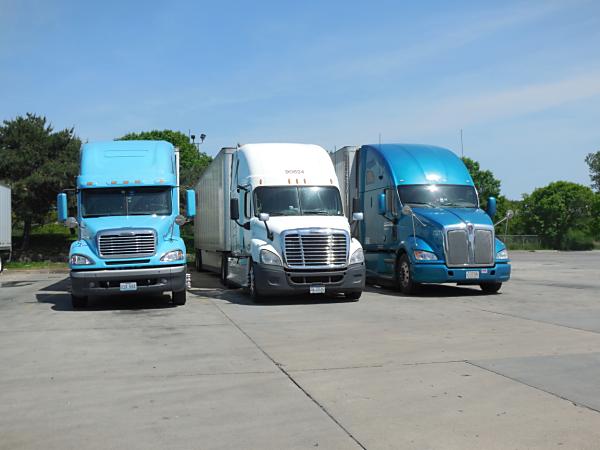 Nogales Port Authority statistics show commercial border crossings at the Mariposa Port of Entry have been increasing and likely will continue to do so.
Both the dollar amount of cargo and the number of trucks hauling it have increased “substantially” since 2010, according to a recent news release. Truck traffic increased 13 percent, growing from 276,877 trucks in 2009 to 311,669 trucks in 2013.
The value of cargo going through the Mariposa crossing is rose from 50 percent to 75 percent. In 2011 an estimated $20 billion to $25 billion in trade goods went through the crossing. The port authority estimates for 2014 it will be $30 billion to $35 billion. Mariposa is particularly popular with produce shippers and produce truckers, according to the Fresh Produce Association of the Americas
.
For September 2013 through April this year, FPAA officials said 37 percent of all Mexican produce came to the U.S. via Mariposa. For the same period in 2013 Mariposa was the entry port for 34 percent of Mexican produce, according to a news release.
“Enhanced staffing of the port, along with current investments in Mexican infrastructure, will complement the U.S. investment in our port and expedite trade. Trade opportunities are both northbound and southbound. We will continue to see increases in export trade southbound into Mexico,” Nils Urman, representing Nogales Community Development, said in the release from the port authority.
 Cold Train Express Intermodal Service on August 7th announced it would be suspending service at its location at the Port of Quincy, WA. Cold Train, operated by Rail Logistics of Overland Park, KS, developed a transportation program model which allowed fresh producers in the Pacific Northwest to take advantage of refrigerated rail service that moved commodities to Chicago, IL, and points beyond in a timely and efficient manner.
The Northwest is expecting large crops of pears and apples. Shippers are concerned about availability of trucks and need all the transportation options available.
It is up in the air for the time being seeing what service Cold Train may be able to take to restore in the future. One other rail option continues to be Railex service to move fruit.
The Cold Train announcement follows a number of scheduling issues on BNSF Railway’s Northern Corridor line that have been occurring with BNSF beginning late last fall because of increased rail congestion. This has been caused by a surge of oil and coal shipments on the Northern Corridor line,” Cold Train said in a statement. “In fact, from November of 2013 to April of 2014, BNSF’s On-Time Percentage dramatically dropped from an average of over 90 percent to less than 5 percent.”
This past April, BSNF Railway announced an initial reduction in intermodal service out of Washington to one train a day with transit times being two to three days slower than prior timetables.
“As a result of the scheduling change in April, the rail transit time nearly doubled,” Cold Train stated. “Unfortunately, this caused Cold Train’s costs of equipment, fuel and other costs to double, and caused many customers — especially fresh produce shippers — to look for other transportation service options.
In fact, because of BNSF’s scheduling issues from November of 2013 until present, Cold Train lost most of its fresh produce business, including apples, onions, pears, potatoes, carrots and cherries, which was more than 70 percent of the company’s business. In addition to adversely impacting many Washington State fresh produce growers and shippers, BNSF’s scheduling changes have affected many retailers and wholesalers in the Midwest and East Coast that purchase Washington State fresh produce and frozen foods.”
According to data made available by Cold Train, use of intermodal transportation was growing from the Pacific Northwest. During 2010, Cold Train moved approximately 100 containers of perishables per month from Washington to the Midwest. By 2013, that number had risen to approximately 700 containers per month shipped from Washington and Portland, OR.
By the end of 2013, Cold Train anticipated it would be shipping 1,000 containers each month from the region.