
Archive For The “Trucking Reports” Category
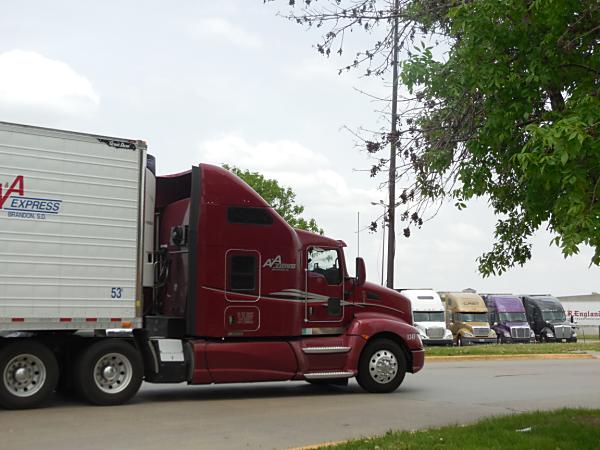 Here is a look a new season shipments for New York and California apples, plus some other loading opportunities in both of these states.
New York Apple Shipments
New York state’s apple harvest is scheduled to begin August 15th, with shipments getting underway shortly thereafter. The Empire State expects to ship about 30 million bushels of fruit this season, down only slightly from the 32 million bushels shipped during the 2013-14 season. However, total volume is still expected to stay above the state’s five-year averages of 29.5 million bushels. Although the apple harvest should end in November, loading opportunities will continue well into next spring, if not summer. The Hudson Valley is New York’s leading area for apple shipments, although several other areas of the state also have the fruit in significant volume.
New York vegetable shipments are moving in steady volume, especially from western and central areas of the state.
Western New York vegetables – grossing about $1600 to New York City.
California Apple Shipments
Apple shipments out of California’ San Joaquin Valley got underway a couple of weeks ago, but are only entering volume loadings now. This is one of the earliest maturing crops on record. Overall, California expects to ship about 2.4 million boxes of apples this season, which is fairly normal.
While gala shipments started in mid July, granny smiths should get underway the week of August 11th, followed by fujis around August 18th. followed by Pink Lady apples in the middle of October.
California’s San Joaquin Valley produce shipments are in good volume with everything ranging from grapes to tomatoes, stone fruit and vegetables.
San Joaquin Valley vegetables and melons – grossing about $7500 to New York City.
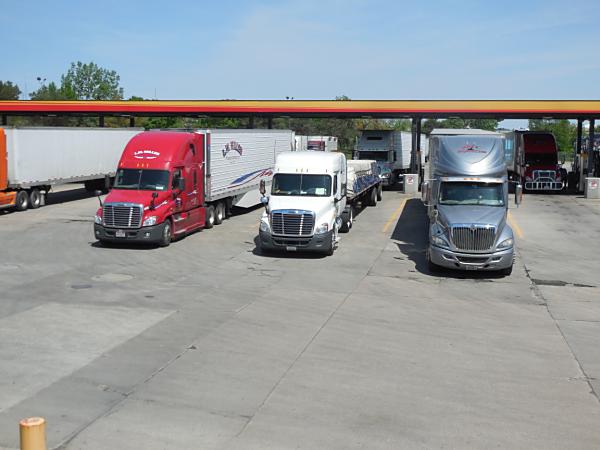 Here’s a quick glimpse at some produce loading opportunities from 11 different states ranging from coast-to-coast.
Washington Produce Shipments
Washington state continues to ship its 2013-14 season crop of apples, averaging about 1,500 truck load equivalents per week. Also coming out of the Yakima and Wenachee vallies are fresh cherries. Volume remains strong, but is still only about one-third the volume of apple shipments.
Washington fruit – grossing about $7500 to New York City.
Michigan Produce Shipments
Peach shipments from the Benton Harbor area and other areas of Southwest Michigan have started. Loadings for the stone fruit are generally a relatively short haul – within a 500 mile radius for the most part. Chicago is one of the more popular destinations…..Apples from the area are expected to get underway the third week of August. Meanwhile, Michigan blueberry shipments are moving into good volume, while summer mixed veggies continue.
Michigan blueberries – grossing about $2700 to Atlanta; Michigan vegetables grossing 15 to 20 percent less.
New Jersey Produce Shipments
Garden State peach shipments started a couple of weeks ago and are now moving into good volume. Jersey blueberry loadings are still occurring, butare now past peak volume. The southern part of the state also is shipping a mixture of vegetables.
Watermelon Shipments
Watermelon loadings continue from a number of states. While eastern Texas watermelon shipments, as well as Georgia watermelon shipments are declining, volume is steady out of South Carolina, but cranking up in North Carolina, followed closely by the Eastern Shore states of Delaware, Maryland and Virginia…..Look for increasing volume of Missouri watermelons out of the boot heal area…..The watermelon season has recently started out of Southwest Indiana and Southeast Illinois.
 While peak summer California produce shipments continue, few record shipments are taking place, with the possible exception of table grapes.
Most commodities and are having normal volume, or being slightly off of average shipments. Record California grape shipments occurred last year, totaling 116.2 million boxes of grapes (19-pound equivalent). This year, shipments are estimated to bet over 116.5 million boxes. The San Joaquin Valley is California’s largest grape shipping region, and loadings started earlier than usual. As of the week ending July 4, shipments were well ahead of the prior year, amounting to six million boxes out of the Coachella Valley and the San Joaquin Valley. This year, during the same period, 9.2 million boxes were shipped. The vast majority California grape shipments will take place after September 1st, when as much as 65 or 70 percent the volume will take place during the fall an into the winter.
The Central San Joaquin Valley also has good, steady volume with peaches (averaging about 425 loads per week) as well as plums and nectarines. There also are tomatoes, sweet corn and dozens of other vegetables loadings taking place, plus Westside district melons.
Further south in the valley in the Bakersfield area are avocados, with truckloads averaging over 1,000 per week, plus steady movement with carrots.
Moving to the Salinas area, strawberry shipments from Watsonville continue. Lettuce, broccoli, cauliflower and celery lead a wide contingent of other veggies being shipped from the Salinas Valley. A similar situation exists just to the south in the Santa Maria shipping district, although on a smaller scale.
Salinas Valley vegetables – grossing about $8300 to New York City.
Central San Joaquin Valley stone fruit and grapes – grossing about $5200 to Chicago.
 U.S. potato shipments from the old crop are still on going as the new season rapidly approaches. Plus, Rocky Ford cantaloupe shipments in Colorado are now underway..
Idaho and a number of other potato shipping states are scrambling to unload their old crop in order to get going on shipments for the 2014-15 season. The old crop of potato shipments is expected to continue well into August. At the same time, depending on the growing and shipping area, the new crop of spuds became available last week. Both Washington and Oregon are expected to have their first potatoes for the new season by early August, while Wisconsin potato shipments will soon follow. Then you have Idaho russet potatoes being shipped by the week of August 10th. Some red potatoes and other varieties have already started out of Washington state.
Colorado Cantaloupe Shipments
A spring freeze and two major hailstorms will have a significant effect on Colorado’s Rocky Ford cantaloupe shipments, leaving farmers uncertain over how big their crops will be this year. One grower is reported to have lost an estimated 60 acres of the 360 acres of cantaloupes that he planted this spring. Just how much yields will off set the weather damaged melons, remains to been seen. Loadings of cantaloupe started last week and will continue into September. Overall, it is estimated anywhere for 15 to 25 percent of the cantaloupe were lost. The area also ships honeydew and watermelon, but no reports on these items were available.
Arkansas Valley growers banded together in 2011 to trademark the Rocky Ford cantaloupe name and define its boundaries after melons from Jensen Farms in Holly, 90 miles east of Rocky Ford, were implicated in a listeria outbreale that killed at least 32 people.
Over the past decade, Colorado growers have planted an annual average of 2,000 acres of cantaloupes.
Idaho potatoes – grossing about $5500 to New York City.
 While most upstate New York state vegetable shipments are getting underway as much as two weeks late this year due to weather factors, things are finally starting to pick up.
First of all, vegetables are grown and shipped from a number of different areas of the state. Here are just a few cities and towns located near some of the larger vegetable operations: Marion, Florida, Goshen, Holley, King Ferry, Pine Island, Marion and Stanley.
Mid July Starts
Just getting underway are items ranging from green beans to cucumbers, and cabbage. Just a note, there will be some slow starts. For example green bean shipments are expected to be off 20 percent until about about the first of August, with normal volume coming on by the middle of August. Cabbage is one of New York’s bigger items, but shipments will be down as much as 50 percent unil mid August, when normal volume should arrive.
Late July Starts
Vegetable loadings should start by late July or early August with sweet corn, which will continue until early October. Other similar starting dates apply to squash and red round tomatoes. Labor Day Starts
Both potato shipments and onion shipments should be starting in early September around Labor Day.
New York state continues to be one of the leading shippers of fresh produce, consistently ranking in the top ten among states.
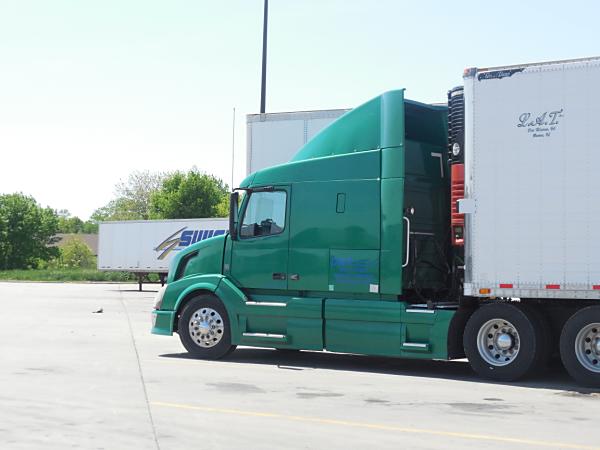 When produce haulers think of loading storage onions, the Northwest often comes to mind first, since it leads the nation in volume in this category.
The new season for Northwest onions is upon us and shipments are expected to be about normal.
Oregon was the nation’s second-largest producer of storage onions in 2012. The Beaver State shipped 24 percent of national supplies. Storage onions ranked 10th on the state’s Top 40 Commodities list for 2012.
Malheur County onions are part of the Idaho-Eastern Oregon Onion growing region and represent significant volume for the state. A total of 10,600 acres of onions were harvested in Malheur County. About 8,700 acres were harvested for the fresh market, of which around 5,133 thousand hundredweight (cwt) were produced.
Meanwhile, Washington state ranked 11th nationally for all onion shipments in 2012.
Washington ranked second nationally for summer onion shipments, providing the nation with 23.1 percent of its supplies. In 2012, Washington producers harvested 3,100 acres of summer non-storage onions with production set at 1,147 cwt.
During the same crop year, producers harvested 23,500 acres of summer storage onions with production set at 13,865 cwt.
Onions are grossing about $3500 to Chicago.
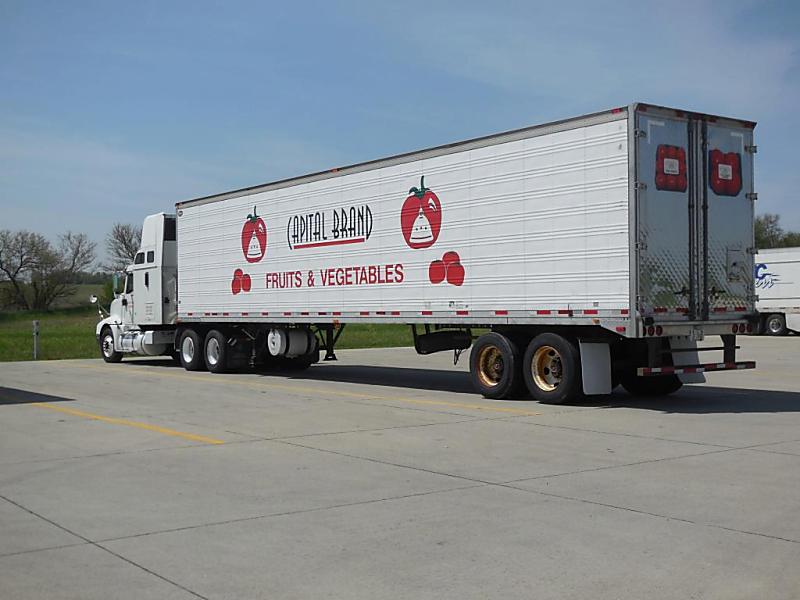
From New York state, to Washington state, with Idaho, Texas and New Mexico thrown in, here’s a glimpse at some produce loading opportunities.
New York Onion Shipments
Harvest of Orange County, NY onions got underway last week, but it will be another five or six weeks before everyone is digging. The initial focus will be moving onions into storage. Good quality and normal sized crop are seen.
Orange County onions are typically shipped to markets in the Eastern half of the United States. Once the harvest is complete loadings will start building in volume.
Stone Fruit Shipments
Washington state shippers are saying this is one of their best apricot crops in years. The fruit will be having peak shipments for the next two weeks or so from the Yakima and Wenatchee valleys. The state also is shipping heavy volumes of peaches, nectarines and cherries. Washington is averaging nearly 1,500 truck loads of cherries per week.
Washington state cherries and other fruit – grossing about $7400 to New York City.
Idaho Potato Shipments
Even though Idaho has entered the final leg of the 2013-14 shipping season for potatoes, it is still loading around 1600 truckload equivalents per week, primarily out of the upper valley, Twin Fallsl-Burley area.
Idaho potatoes – grossing about $3000 to Chicago.
Texas Produce Shipments
Watermelon shipments, primarily from Eastern parts of the Lone Star State are averaging about 750 truckloads per week. Meanwhile, potato volume is increasing from the Hereford High Plains area in West Texas, as well as from Eastern New Mexico. Southern New Mexico onion shipments are increasing and averaging over 875 truckloads per week.
Texas watermelons – grossing about $2400 to Atlanta.
New Mexico onions – about $3600 to Chicago.
 There has been a tremendous increase in Washington state blueberry shipments in recent years. We’ll also look at some potato loading opportunities in the Western half of the United States.
Washington Blueberry Shipments
Blueberry shipments have increased nearly five-fold over the past eight years. Check out these numbers.
2006 18.4 million pounds
2007 28.5 million pounds
2010 60 million pounds
2013 80 million pounds
2014 projected at 90 million pounds
Washington is fourth in U.S. blueberry production with 10,000 acres of berries from 175 growers The state’s blueberry season runs from June through August while processed ‘blues’ are available year round. Washington blueberries are grown in Skagit, Clark, Lewis, Snohomish, Thurston, Whatcom, Chelan, Yakima and Benton, Franklin, Walla Walla, and Grant Counties.
Washington/Oregon potatoes
The majority of Washington potato shipments are now underway with a similar time frame as last year.
Oregon potato shipments will suffer due to an expected a decline of about 700 acres this season, but water concerns will likely affect even more shipments. Water availability is a concern in both Malheur County and the Klamath Basin, and yields most likely will be affected.
Colorado Potato Shipments
In southeastern Colorado, San Luis Valley potato acreage is up 8.5 percent this season. Total acreage is 54,200, compared to 49,700 last season. The harvest and shipments will start in earnest around September 10th.
Colorado potatoes – grossing about $1650 to Dallas.
Washington produce – grossing bout $1050 to Los Angeles.
 Here’s a national round up of items ranging from sweet corn shipments and peach shipments in several states, plus a summary of Michigan blueberry loading opportunities.
Sweet Corn Shipments
Sweet corn shipments out of Delaware got underway last week, New York sweet corn gets underway at the end of July.
Initial Michigan sweet corn loadings should get underway by the end of this week.
Georgia sweet corn loadings should finish for the season this week.
Look for Colorado to get going around July 25th.
Because of California’s water crisis, volume is down by as much as 20 percent out of the San Joaquin Valley.
Peach Shipments
There were no South Carolina peach shipments the first six weeks of what is normally the shipping season due to a late-spring freeze. However, loadings in high volume will occur during July and August.
South Carolina, despite being a small state (it ranks 41 in size among the 50 states), ranks high in produce shipments. It is the nation’s second-largest shipper of peaches, behind California and ahead of The Peach State, Georgia. The state places in the top 10 for leafy greens, cantaloupe, peanuts, watermelons, tomatoes, mixed vegetables and sweet potatoes Its Southeast location allows overnight shipments to reach most of the U.S. population.
South Carolina peaches and vegetables – grossing bout $4000 to Boston
Michigan Blueberry Shipments
Michigan blueberry shipments are finally underway following a slow start due to weather factors.
Because of the extra cold winter, spring estimates for total shipments have been more erractic than in most years. Blueberry shippers are predicting anywhere from 60 to 90 million pounds this season, which will be off from the 120 million pounds a year ago. About 70 percent of Michigan’s “blues” are shipped out of state – and all over the U.S. Loadings should continue into September.
Michigan blueberries and vegetables – grossing about $2000 to Atlanta.
 Tennessee Produce Shipments, Kentucky Produce Shipments
Looking around the nation, here are a number of active produce shipping areas ranging from Kentucky and Tennessee to Georgia, South Carolina, and California’s San Joaquin Valley.
Although they are a couple of weeks late, shipments of vegetables from Kentucky and Tennessee are underway.
Just want you to know though, most of these loadings are only to regional, if not local markets. Items range from beans to cucumbers, lettuce, tomatoes, and a few peaches.
Loadings occur at shipping operations in such Tennessee towns as Lebanon (near Nashville), Crossville (about halfway between Nashville and Knoxville and Rutledge in Northeastern Tennessee.
California Produce Shipments
California pear shipments from the Sacramento River District are just getting underway this week. Shipments from Mendocino County will get started around August 4th, followed by Lake County about August 11th.
Total Bartlett pear volume should hit about 2.6 million cartons, down from 2.9 million a year ago. About 500,000 cartons of other pear varieties also will be shipped led by the boscs variety.
California Grape Shipments
Table grapes from the Arvin District in the Bakersfield are picking up in volume as the new season for the San Joaquin Valley heads towards good volume.
Peach Shipments
California’s San Joaquin Valley has been shipping moderate amounts of peaches for a few weeks and is averaging about 425 truckloads per week.
Meanwhile, in the Southeast, peach shipments are building and will hit a peak very soon in Georgia (Fort Valley area), as well as South Carolina (primarily from shippers in an area south of Columbia).
San Joaquin Valley fruit – grossing about $6900 to Atlanta.