
Archive For The “Trucking Reports” Category
 Sweet potatoes lead North Carolina produce shipments….We also take a look at the upcoming U.S. cranberry shipping season.
North Carolina Produce Shipments
North Carolina produce shipments were worth $608 million last year, including fruits, vegetables, nuts and berries. However, it was sweet potatoes that led the way.
The Tar Heel state ranks number one in the nation for shipping sweet potatoes, which are not only used as fresh, but in making vodka, butter and chips, as well as microwave-ready yams and even recipes for gourmet meals with sweet potato French fries.
Because of its location in the Southeast, North Carolina’s fresh produce can be shipped to 65 percent of the U.S. population within 24 hours.
North Carolina sweet potatoes from the old season are virtually finished, while the new crop is being harvested and cured. Significant volume is a few weeks away.
Watermelons loadings are on the decline.
North Carolina watermelons – grossing about $1000 to Atlanta.
Cranberry Shipments
U.S. cranberry shipments are predicted to fall 4 perecent in 2014, because of lower production in industry leader Wisconsin. About 8.6 million barrels are expected this year.
Growers in Wisconsin are reporting lower yields than last year.
Cool weather in Wisconsin has resulted in smaller berries, plus there were some losses due to hail damage in late July.
In Massachusetts, reports are mixed. Some growers expect above-average yields due to good pollination, excellent weather and very little rot. Others report lower production due to heat stress.
Oregon and Washington growers are expecting higher yields due to good weather. Shipments are expected to be up in all major-producing states except Wisconsin.
Wisconsin should produce about 5.39 million barrels, Massachusetts 2.07 million barrels, New Jersey 558,000 barrels, Oregon 395,000 barrels and Washington 162,000 barrels. 90 percent of all cranberries are generally for the processing with the balance going to the fresh market. New Jersey has little if any cranberry shipments for the fresh market.
 Mexican avocados joining other produce from south of the border being imported to the U.S. Peruvian onions are set for arrivals at U.S. Ports.
Mexican Produce Shipments
Avocado shipments should stay steady as California and Peru wind down in early September, although location of loading opportunities will shift. In September shipments out of Mexico ramp up. California avocado shipments were lighter than normal this season, and shipments will be 95 percent completed after Labor Day. Shipments also will be wrapping up earlier than usual.
While imports of Mexican avocados get started in September, it will be the middle of October before there is good volume.
Mexican avocados crossing the U.S. border into the Lower Rio Grande Valley of Texas are averaging around about 500 truck loads a week – but as mentioned, are gradually increasing in volume.
Peruvian Onions
Exports of Peruvian sweet onions to the U.S. may grow by as much as 10 percent during the 2014-15 season. The United States buys 57 percent of the Peruvian exports of onions. The current export season starting ramping up in late July and should continue into late January. The Peruvian onions arrive a various U.S. ports, before being trucked to markets across the U.S. and Canada.
Mexican avocados, mangos, citrus, tomatoes, and vegetables crossing at McAllen, TX – grossing about $4200 to New York City.
 Heat and drought the Northwest raises question about how potato and onion shipments may be affected this season.
Oregon potato shippers, as well as those in Washington are in wait-and-see mode following a heat wave that hit the Pacific Northwest in July. It may reduce potential fall harvest yield – and ultimately shipments. Some temperatures hit 108 degress F.
The plants just shut down during the day and stop growing. It’s still too early to tell how this heat will impact the fall crop.
Oregon has a total of 38,000 acres planted in potatoes. Of this total, 17 percent is planted to fresh potatoes. The 2014 fresh volume should be comparable to last year. However, the Klamath area may be down slightly.
Far eastern Oregon/Malheur County is extremely short on water. Acres were reduced and moved to locations closer to irrigation water sources. Most of the region was out out or extremely reduced of water by the end of July.
While onion production continues in the area, Brewer said there will be no fresh potatoes moving into the pipeline. “Some land was left idle this spring to lengthen season,” he commented.
Eighty percent of Oregon’s potatoes are shipped outside the Beaver State, heavy volume going to Canada, Mexico and Korea.
Washington Potato Shipments
In Washington state, it is estimated 165,000 acres have been planted. Abouty 13-15 percent of that would go to the fresh market.
Washington state. Washington state potato growers have the highest yields in the world and historically have averaged around 60,000 pounds per acre.
Treasure Valley Onion Shipments
Treasure Valley onions in Eastern Oregon and Western Idaho started shipping about two weeks ago and now are providing some volume for produce haulers.
While acreage is up around two to three percent this season, whether that translates into more loading opportunities remains up in the air. Some shippers are facing more problems with drought than others.
 Central Wisconsin potato shipments got underway in light volume nearly two weeks ago, while Texas citrus shipments get underway next month.
Wisconsin typically ships up to 30 million cwt. with roughly 45 percent of the crop going to the fresh market. Excellent growing conditions in the Badger State is expected to result in good quality potatoes coming out of storages during the season. That should translate into good arrivals at destination for potato haulers.
There should be good, steady volume for Labor Day deliveries. Steady shipments are expected to continue through Memorial Day next year and possibly through the Fourth of July — unless, of course, something weatherwise or disease wise happens between now and the completion of the current harvest.
Potatoes from the Stevens Point, WI area – grossing about $1100 to Chicago.
Texas Citrus Shipments
We are still at least six weeks away from shipments of South Texas citrus shipments for the 2014-15 season. The season typically kicks off in late September and continues into the following May.
Last season, the Lower Rio Grande Valley had about 5 million cartons of grapefruit and about 3 million cartons of oranges shipped.
One change this seaon is the USDA has a new rule allowing smaller sizes of Texas grapefruit and oranges shipped. The size decreased from 2 6/16 inches (which is size 138 fruit per carton) to 2 3/16 inches in diameter (163 fruits per carton).
Mexican citrus, fruit and vegetables crossing through McAllen, Tx – grossing about $2600 to Chicago.
 Nogales Port Authority statistics show commercial border crossings at the Mariposa Port of Entry have been increasing and likely will continue to do so.
Both the dollar amount of cargo and the number of trucks hauling it have increased “substantially” since 2010, according to a recent news release. Truck traffic increased 13 percent, growing from 276,877 trucks in 2009 to 311,669 trucks in 2013.
The value of cargo going through the Mariposa crossing is rose from 50 percent to 75 percent. In 2011 an estimated $20 billion to $25 billion in trade goods went through the crossing. The port authority estimates for 2014 it will be $30 billion to $35 billion. Mariposa is particularly popular with produce shippers and produce truckers, according to the Fresh Produce Association of the Americas
.
For September 2013 through April this year, FPAA officials said 37 percent of all Mexican produce came to the U.S. via Mariposa. For the same period in 2013 Mariposa was the entry port for 34 percent of Mexican produce, according to a news release.
“Enhanced staffing of the port, along with current investments in Mexican infrastructure, will complement the U.S. investment in our port and expedite trade. Trade opportunities are both northbound and southbound. We will continue to see increases in export trade southbound into Mexico,” Nils Urman, representing Nogales Community Development, said in the release from the port authority.
 There should be significantly more produce loading opportunities from the Rocky Mountain State, primarily due to a great snowpack and a lot of favorable growing conditions.
Depending on location, snow packs in the Rocky Mountains have been anywhere from 130 to 150 percent of normal, filling up reservoirs, and easing concerns over drought conditions.
Colorado Peach Shipments
Peach shipments from Colorado’s western slope have been underway since the last week of July. Loadings should continue until after Labor Day, and a few limited loadings could be available into the third week of September. Last year, peach volume was off 25 percent because of weather factors. This season loadings are expected to only be down 10 to 15 percent from what is considered a full crop. There also are some loadings available with apple and pears, although its is much smaller than with peaches.
Rocky Ford Melon Shipments
Cantaloupe shipments, as well as honeydew are now coming out of Colorado’s Rocky Ford area. Loadings should be available for another month.
Colorado Vegetable Shipments
San Luis Valley potato shipments could be up as much as eight percent this season. A combination of 54,200 acres of potatoes planted, combined with plentiful water supplies have helped. While limited potato shipments started from Northeastern Colorado a week ago, most volume comes out of the San Luis Valley. SLV harvesting generally gets underway after Labor Day and wraps up in October, with shipments continuing into following the summer.
The Northeastern part of the state also is shipping items ranging from onions to sweet corn and squash.
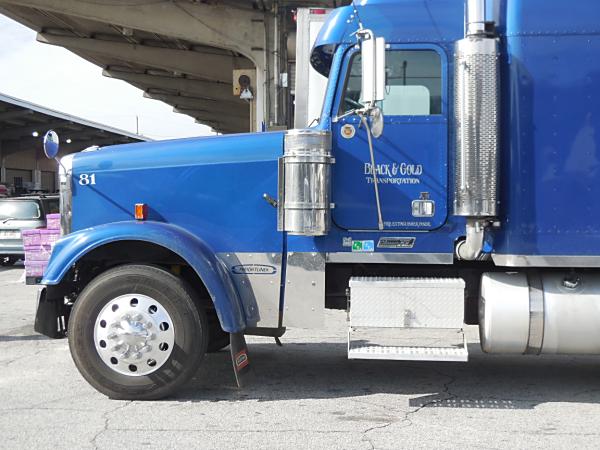 South Carolina produce peaches and vegetable loadings continue. We also take a look a upcoming Wisconsin cranberry shipments.
South Carolina Produce Shipments
There is good volume peach shipments from South Carolina that finally got going in July and will continue with nice volume through August, although a seasonal decline will begin soon. Loadings, however will continue into September.
South Carolina, despite being a small state (41st in size among the 50 states), ranks high in produce shipments. It is the nation’s second-largest shipper of peaches, behind California, and ahead of Georgia. South Carolina places in the top 10 for truck loadings of leafy greens, cantaloupe, peanuts, watermelons, tomatoes, mixed vegetables and sweet potatoes.
South Carolina peaches and vegetables – grossing about $3400 to New York City.
Wisconsin Cranberry Shipments
Cranberrries have experienced a 57 percent increase in shipments nationwide from 2002 to 2013. As a result, poor prices are resulting from too much fruit for the amount of demand. Many U.S. growers are struggling to create new markets to absorb a growing oversupply of the tiny tart berries grown in marshes. Wisconsin is at the center of the glut. Between 2012 and 2013, Wisconsin had a 25 percent boost in production, a record-breaking harvest of 6 million barrels of cranberries. The state produced 67 percent of all cranberries harvested in the United States in 2013, marking the 19th consecutive year as the country’s leader in cranberry shipper.
Central Wisconsin cranberry shipments will be starting in mid September in light volume. Heaviest volume occurs as we enter November leading up to Thanksgiving (Nov. 27th).
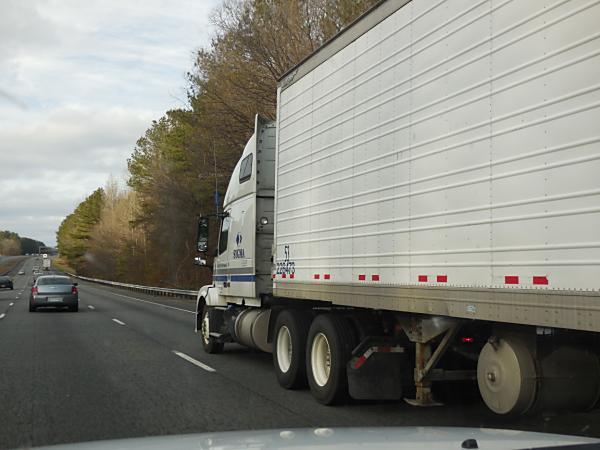 There should be excellent hauling opportunities for apples and pears from Washington this season.
Similar to most crops along the West Coast this year, Washington apple shipments got underway unusually early with the Gingergold variety in late July. It may have been the first time fruit was picked before August.
As the season is off and running it appears there will be record shipments this year, mostly by truck. Washington apple shipments are expected to be around 140 million cartons, which would easily surpass the previous record of just under 130 million cartons during the 2012-13 season.
Washington Pear Shipments
The green colored Bartlett pears started being shipped from Washington state in early August. As the Bartletts lead off pear loadings, other varieties are nearing being shipped as well.
Red Anjous and Starkrimson are getting underway this week. Soon to follow will be the Bosc, Forelle, Comice, Seckel, Asian and Red Sensation pears. Shipments of Bartletts, Starkrimsons and Red Sensations will continue through December. Seckels, Comice and Asian pears ship during the winter months, and Red and Green Anjous typically ship from late summer or early fall into the next summer.
Washington apples, pears and cherries – grossing about $4300 to Chicago.
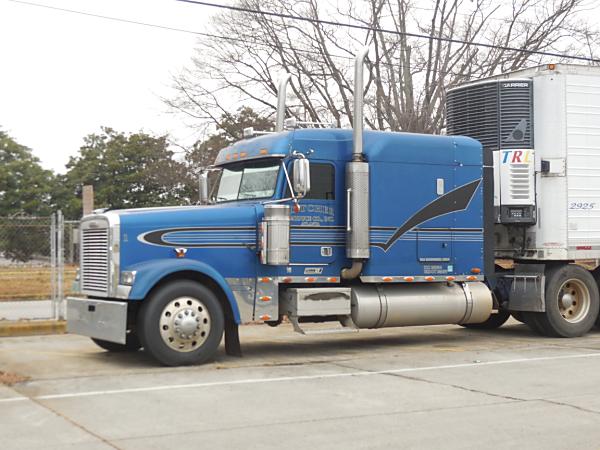 This is an update on produce shipments from Washington, Oregon and California.
Northwest Onion Shipments
Potato shipments for the new season have recently got underway from the Columbia Basin in Oregon and Washington state. They are now moving into good volume.
In Walla Walla, WA, shipping of Walla Walla sweet onions have been ongoing for serval weeks and will continue until around Labor Day.
Northwest potato shipments from the old crop are still happening, but declining in volume as the season concludes.
California Produce Shipments
Strawberry shipments have been on a steady keel for a while now out of the Watsonville area averaging about 900 truck loads per week. Volume also is steady from the Santa Maria district, although volume is only about 25 percent of that from Watsonville.
Meanwhile moderate loadings of broccoli, cauliflower and celery continues. Lettuce, not surprisingly, leads Salinas Valley vegetable shipments. Head lettuce and romaine alone, are averaging over 1800 truckloads per week. There also are other types of lettuce and a few dozen different other veggie items being shipped.
Tomato loadings are available from the Central San Joaquin Valley, as well as the Oceanside area, and from Baja crossing the Mexican/US border at Otay Mesa.
Pear shipments are now ongoing from the Sacramento area and the northern San Joaquin Valley.
California pears – grossing about $4900 to Dallas.
Salinas Valley produce – grossing about $5600 to Cleveland.

Labor Day (September 1st) is less than a month away and here is a quick view of some items that should be available for hauling between now and then.
Michigan sweet corn shipments are currently at a peak, and there is decent volume coming out of the Goshen, IN area…..Michigan also continues with good volume blueberry shipments and summer vegetables.
.
Sweet Corn Shipments
Western North Carolina sweet corn shipments should still have good volume by Labor Day, along with tomatoes.
California sweet corn should have good volume out of the San Joaquin Valley for Labor Day, although shipments will be ligher than Memorital Day or the Fourth of July. Melons out of the Westside District will continue in steady volume, as will as grape shipments, whose volume has been excellent, but the majority of the loadings will take place after Labor Day through the end of the year.
Sweet Potato Shipments
With a short sweet potato crop nationally for the 2013-14 season, limited loading opportunities are available as the seasons comes to an end. However, the 2014-15 sweet shipments should improve, particular since leading producer North Carolina has increased its plantings from 54,000 acres a year ago to 66,000 acres this year.
Here’s hoping sweet potato shippers don’t get in such a hurry to ship product in the new season that they don’t take time to cure first. Curing sweet potatoes, which doesn’t take that long, are much better. North Carolina shipments should get underway after Labor Day, while Mississippi may start the last week of August.
Eastern North Carolina sweet potatoes – grossing about $2500 to New York City.
Mississippi sweet potatoes – grossing about $2100 to Chicago.