
Posts Tagged “feature”
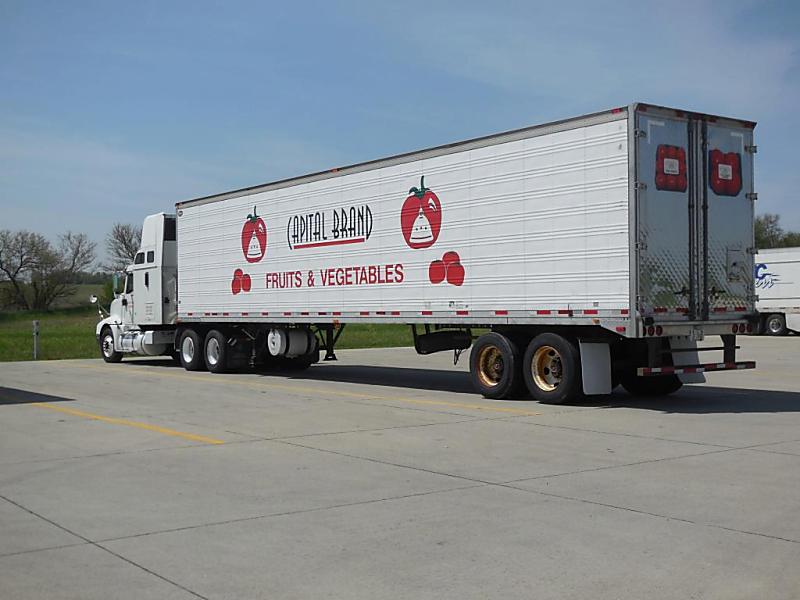
From New York state, to Washington state, with Idaho, Texas and New Mexico thrown in, here’s a glimpse at some produce loading opportunities.
New York Onion Shipments
Harvest of Orange County, NY onions got underway last week, but it will be another five or six weeks before everyone is digging. The initial focus will be moving onions into storage. Good quality and normal sized crop are seen.
Orange County onions are typically shipped to markets in the Eastern half of the United States. Once the harvest is complete loadings will start building in volume.
Stone Fruit Shipments
Washington state shippers are saying this is one of their best apricot crops in years. The fruit will be having peak shipments for the next two weeks or so from the Yakima and Wenatchee valleys. The state also is shipping heavy volumes of peaches, nectarines and cherries. Washington is averaging nearly 1,500 truck loads of cherries per week.
Washington state cherries and other fruit – grossing about $7400 to New York City.
Idaho Potato Shipments
Even though Idaho has entered the final leg of the 2013-14 shipping season for potatoes, it is still loading around 1600 truckload equivalents per week, primarily out of the upper valley, Twin Fallsl-Burley area.
Idaho potatoes – grossing about $3000 to Chicago.
Texas Produce Shipments
Watermelon shipments, primarily from Eastern parts of the Lone Star State are averaging about 750 truckloads per week. Meanwhile, potato volume is increasing from the Hereford High Plains area in West Texas, as well as from Eastern New Mexico. Southern New Mexico onion shipments are increasing and averaging over 875 truckloads per week.
Texas watermelons – grossing about $2400 to Atlanta.
New Mexico onions – about $3600 to Chicago.
 California’s ongoing drought continues to hit price tags in grocery stores across the country including fresh fruits and vegetable prices, which will go up an estimated 6 percent in the coming months, the federal government said recently.
“You’re probably going to see the biggest produce price increases on avocados, berries, broccoli, grapes, lettuce, melons, peppers, tomatoes and packaged salads,” said Timothy Richards, a chair at the Morrison School of Agribusiness at Arizona State University.
In its monthly report on the food price outlook, the U.S. Department of Agriculture said the price of fruit and vegetables will continue to rise.
The USDA’s Economic Research Service reported that the California drought has the potential to increase food price inflation above the historical average in coming years as farmers continue to battle for water in the summer months.
Although the department is sticking with its overall forecast that U.S. food prices will increase by up to 3.5% this year over last, it cautioned that the cost of meat, dairy, fruit and vegetables will jump.
California farmers produce about half of the nation’s fruits and vegetables, and most of its high-value crops such as broccoli, tomatoes and artichokes.
But the rising cost of water has forced farmers to idle about 500,000 acres of land and produce less, making certain foods more expensive.
Fresh produce has increased the most and that’s a direct result of the California drought,” said Annemarie Kuhns, an economist with the USDA. Almost 70 percent of the nation’s lettuce is grown in California.
The department now expects 2014 U.S. fresh fruit prices to jump by up to 6 percent, up from its May projection of about 4 percent. A devastating citrus disease in Florida also sent citrus prices up 22.5 percent this year.
Consumers will also see a bump in dairy prices due to increased demand.
 New USDA estimates say U.S. per capita use of fresh vegetables dipped 5 percent in 2013 and imports claimed a record share of the total supply.
Preliminary numbers show per-capita use of fresh vegetables (excluding potatoes and melons) in the U.S. totaled 138.8 pounds in 2013, down 5 percent from 145.5 pounds in 2012 and off 5 percent from 146.8 pounds in 2000, according to the USDA’s Economic Research Service. That preliminary number is the lowest per-capita use of fresh vegetables since 1998’s tally of 136.1 pounds.
Imports accounted for a record 27.3 percent of fresh vegetable use in the U.S. in 2013, up from 25.1 percent in 2012 and double the import share of 13.2 percent in 2000. U.S. vegetable exports accounted for 7.1 percent of the domestic supply, up from 7 percent in 2012, but down from 7.8 percent in 2000.
The report reflects a decline in most of the major fresh vegetables tracked in 2013 compared with the previous year, including tomatoes (-3 percent to 19.6 pounds), head lettuce (-12 percent to 12.5 pounds), carrots (-4 percent to 7.6 pounds), bell peppers (-10 percent to 10.3 pounds) and sweet corn (-4 percent to 7.4 pounds). Other less consumed vegetables also showed declines, including asparagus (-5 percent to 1.6 pounds) and snap/green beans (-5 percent to 1.7 pounds).
Fresh vegetables that showed stable per-capita use included cabbage (7.1 pounds) and cauliflower (1.2 pounds).
Fresh potato and broccoli per-capita use was higher in 2013, according to the USDA.
Broccoli rose 8 percent from 6.3 pounds in 2012 to 6.8 pounds in 2013, while potato per-capita use in 2013 rose 5 percent to 36.1 pounds.
The change in per-capita use doesn’t mean that much for a single year, said Desmond O’Rourke, president of Belrose Inc., Pullman, Wash. Weather events and yield differences can create swings, he said. O’Rourke said USDA Agricultural Marketing Service shipment data shows 2013 vegetable volume was flat compared with 2012, though the USDA includes pumpkins in their total volume numbers for vegetables.
 Changes in federal hours of service regulations, along with stricter rules by the California Air Resources Board (CARB) are two primary reason refrigerated produce loads have increased this year by as much as 10 percent, according to DAT Solutions, a load board network based in Beaverton, OR.
Over 99 million transactions annually and bases rate estimates on $24 billion of freight bills, according the DAT website, and bases rate estimates on $24 billion of freight bills.
The hours-of-service changes require drivers to stop for rest breaks more often, meaning it takes longer to reach destinations such as distribution centers, many of which were located years ago based on drive times allowed under the old regulations.
Some (truckers) have gone to a relay system where the first one drives so far, then another driver picks up the trailer and takes it on. The downside, particularly with temperature-sensitive loads like produce, is that you don’t have the continuity of one driver taking care of the load for the whole trip,” Montague said.
Higher rates also are attributed to the tightening rates emissions regulations by CARB, which apply not only to trucks picking up and delivering produce in the state, but those merely driving through California.
Montague said as of early June, many of the highest rates in the nation were for trucks going into California. The DAT data for the week ending May 31 showed per mile rates of $2.44 in California for reefers. “At least 90% of the fleets that haul fresh produce have 10 trucks or less,” Montague said, adding that many produce haulers are individual owner-operators with only one truck. “The changes in regulations really make it hard for the smaller operators because of the costs for upgrades. The overall message is a lot of smaller truckers are having trouble.”
 There has been a tremendous increase in Washington state blueberry shipments in recent years. We’ll also look at some potato loading opportunities in the Western half of the United States.
Washington Blueberry Shipments
Blueberry shipments have increased nearly five-fold over the past eight years. Check out these numbers.
2006 18.4 million pounds
2007 28.5 million pounds
2010 60 million pounds
2013 80 million pounds
2014 projected at 90 million pounds
Washington is fourth in U.S. blueberry production with 10,000 acres of berries from 175 growers The state’s blueberry season runs from June through August while processed ‘blues’ are available year round. Washington blueberries are grown in Skagit, Clark, Lewis, Snohomish, Thurston, Whatcom, Chelan, Yakima and Benton, Franklin, Walla Walla, and Grant Counties.
Washington/Oregon potatoes
The majority of Washington potato shipments are now underway with a similar time frame as last year.
Oregon potato shipments will suffer due to an expected a decline of about 700 acres this season, but water concerns will likely affect even more shipments. Water availability is a concern in both Malheur County and the Klamath Basin, and yields most likely will be affected.
Colorado Potato Shipments
In southeastern Colorado, San Luis Valley potato acreage is up 8.5 percent this season. Total acreage is 54,200, compared to 49,700 last season. The harvest and shipments will start in earnest around September 10th.
Colorado potatoes – grossing about $1650 to Dallas.
Washington produce – grossing bout $1050 to Los Angeles.
 Here’s a national round up of items ranging from sweet corn shipments and peach shipments in several states, plus a summary of Michigan blueberry loading opportunities.
Sweet Corn Shipments
Sweet corn shipments out of Delaware got underway last week, New York sweet corn gets underway at the end of July.
Initial Michigan sweet corn loadings should get underway by the end of this week.
Georgia sweet corn loadings should finish for the season this week.
Look for Colorado to get going around July 25th.
Because of California’s water crisis, volume is down by as much as 20 percent out of the San Joaquin Valley.
Peach Shipments
There were no South Carolina peach shipments the first six weeks of what is normally the shipping season due to a late-spring freeze. However, loadings in high volume will occur during July and August.
South Carolina, despite being a small state (it ranks 41 in size among the 50 states), ranks high in produce shipments. It is the nation’s second-largest shipper of peaches, behind California and ahead of The Peach State, Georgia. The state places in the top 10 for leafy greens, cantaloupe, peanuts, watermelons, tomatoes, mixed vegetables and sweet potatoes Its Southeast location allows overnight shipments to reach most of the U.S. population.
South Carolina peaches and vegetables – grossing bout $4000 to Boston
Michigan Blueberry Shipments
Michigan blueberry shipments are finally underway following a slow start due to weather factors.
Because of the extra cold winter, spring estimates for total shipments have been more erractic than in most years. Blueberry shippers are predicting anywhere from 60 to 90 million pounds this season, which will be off from the 120 million pounds a year ago. About 70 percent of Michigan’s “blues” are shipped out of state – and all over the U.S. Loadings should continue into September.
Michigan blueberries and vegetables – grossing about $2000 to Atlanta.
 Tennessee Produce Shipments, Kentucky Produce Shipments
Looking around the nation, here are a number of active produce shipping areas ranging from Kentucky and Tennessee to Georgia, South Carolina, and California’s San Joaquin Valley.
Although they are a couple of weeks late, shipments of vegetables from Kentucky and Tennessee are underway.
Just want you to know though, most of these loadings are only to regional, if not local markets. Items range from beans to cucumbers, lettuce, tomatoes, and a few peaches.
Loadings occur at shipping operations in such Tennessee towns as Lebanon (near Nashville), Crossville (about halfway between Nashville and Knoxville and Rutledge in Northeastern Tennessee.
California Produce Shipments
California pear shipments from the Sacramento River District are just getting underway this week. Shipments from Mendocino County will get started around August 4th, followed by Lake County about August 11th.
Total Bartlett pear volume should hit about 2.6 million cartons, down from 2.9 million a year ago. About 500,000 cartons of other pear varieties also will be shipped led by the boscs variety.
California Grape Shipments
Table grapes from the Arvin District in the Bakersfield are picking up in volume as the new season for the San Joaquin Valley heads towards good volume.
Peach Shipments
California’s San Joaquin Valley has been shipping moderate amounts of peaches for a few weeks and is averaging about 425 truckloads per week.
Meanwhile, in the Southeast, peach shipments are building and will hit a peak very soon in Georgia (Fort Valley area), as well as South Carolina (primarily from shippers in an area south of Columbia).
San Joaquin Valley fruit – grossing about $6900 to Atlanta.
 The U.S. organic market has hit new heights of $35.1 billion in sales last year, according to a survey from the Organic Trade Association (OTA).
The survey shows the organic industry recorded 11.5 percent year-on-year growth in 2013, which was the fastest growth rate in five years.
“The U.S. organic market is experiencing strong expansion, with organic food and farming continuing to gain in popularity. Consumers are making the correlation between what we eat and our health, and that knowledge is spurring heightened consumer interest in organic products,” OTA CEO Laura Batcha said in a news release.
The Organic Industry Survey, conducted and produced by the Nutrition Business Journal, showed the fruit and vegetable category continued to lead the sector with $11.6 billion in sales, up 15%.
The OTA highlighted that with organics now making up more than 10 percent of the fruits and vegetables sold in the U.S., the US$1.5 billion in new produce sales represented 46% of the organic sector’s $3.3 billion in new dollars.
The relatively small organic condiments category posted the strongest growth at 17 percent, reaching $830 million.
“The entire organic industry needs to rally around helping consumers better understand and appreciate all the values that certified organic brings to the table,” Batcha said.
“Consumer education is critical to grow the organic industry.”
 FOLSOM, CA — Customer interest in healthy dining options is pushing colorful fruits onto restaurant menus, according to Technomic, which surveyed more than 300 foodservice professionals.
Though they are normally found in breakfast items, blueberries are showing up in dished served all throughout the day. They are reported as the third most-purchased fruit, trailing only strawberries and apples, according to a press release.
“We learned from a top 500 chain menu survey earlier this year that blueberry mentions on menus boomed 97 percent between 2007 and 2013,” says Mark Villata, executive director for the U.S. Highbush Blueberry Council (USHBC). “Now, this usage and attitude study gives us insight into why. That is, what are the drivers influencing decision makers to increase their use of blueberries?”
When asked why they like using blueberries, the survey reports that chefs and operators say:
*Blueberries are a healthy option for customers (82 percent)
*Blueberries are low-labor and easy to use (82 percent)
*Blueberries give the entire operation a health halo (58 percent)
*Menu prices can be higher for items that include blueberries (42 percent)
“Blueberries are delicious, healthy and versatile, and add to our menu,” says David Goldstein, executive chef at Los Angeles-based Sharky’s Woodfired Mexican Grill. “Our menu is loaded with fresh, healthy foods so when we put together our Harvest Quinoa Superfood Salad, we added dried blueberries. These days, I think customers expect to find blueberries in the healthiest options.” In addition, Sharky’s offers handmade, freshly prepared lemonades; one of their newest is Blueberry Mint made with fresh blueberries.
A survey conducted by Hebert Research in 2013 showed that 99% of Americans believe blueberries are healthy, according to a press release. With demand for healthy menu items increasing, it will be interesting to see what dishes start showing up on menus.
 Here’s a shipping update from various areas across the country, where there should be some loading opportunities. Here’s also a cautionary note about some splitting of Oregon cherries due to recent rains.
California Tomato Shipments
Vine ripe tomato shipments from the Oceanside, CA area have started, with romas to get underway in August. Both types of tomato shipments will continue through November.
Arkansas Tomato Shipments
A lot of tomato shipping areas around the country claim to ship home grown quality tomatoes, but consumers certainly know the difference. This season, there’s certainly an exception. Haul Produce is referring to vine ripe tomatoes from Arkansas. This beautiful, tasty product is currently being shipped from the Hermitage area and will continue through July.
Peach Shipments
New Jersey peach shipments get underway within the next week or so and should yield 30,000 tons to 35,000 tons of fruit from the state’s 5,500 acres of trees. Peach loadings will remain available through most of September.
Northwest Cherry Shipments
A monthly record of 10.3 million boxes of cherries were shipped from the region in June. The volume was more than double the June 2012 tally of 4.7 million boxes — part of that year’s record crop….Rainfall in the last week of June has resulted in some splitting of Oregon cherries, but damage varied by grower. So use caution and pay attention to what is being loaded on your truck. It could save you a claim or rejected load. The amount of damage to cherries is estimated a about 10 percent of the fruit being lost.