
Archive For The “Trucking Reports” Category
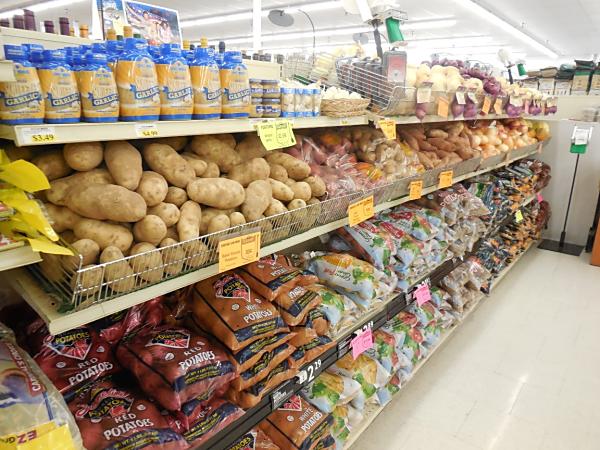 Michigan potato shipments will soon be underway, although fresh spud volume is much smaller than those for processing.
Approximately 70 percent of Michigan’s produce is for chip production. During the 1980s, the industry underwent a transition away from potatoes slated for french fry processors toward providing long-term storage for the potato chip industry.
Michigan supplies almost every potato chip manufacturer east of the Mississippi River 10 months out of the year.
Approximately 20 percent of the state’s potato crop is shipped to the fresh market.
The remainder of the crop is split between processed potato products and seeds for the following year’s crop.
When it comes to the fresh market, Michigan growers tend to tout quality over quantity. Farmers find it difficult to compete with the higher volumes of potatoes coming from states like Idaho. For example, Idaho potato shipments increased by an additional 40,000 acres in 2012. The amount of land Idaho farmers added that year nearly matched the total acreage dedicated to Michigan’s potato crop.
Statewide, Michigan potato shipments have increased 17 percent over the last eight years, up from 1.4 billion pounds in 2004 to approximately 1.6 billion pounds in 2012. Michigan potato production is spread across more than 47,000 acres. About 21 growers are active in West Michigan and more than half of them (12) are located in Montcalm County, northeast of Grand Rapids.
Michigan vegetables – grossing about $2500 to Oklahoma City.
 While California’s overall fruit shipments in the fall may not match those of summertime, there are some exception when looking at individual commodities. Here is a round up on leading California fruit shipments this fall.
Grape Shipments
At least 60 percent of California grape shipments occur after Labor Day and continue into January. Since California is easy the biggest table grape shipping state, we are talking about a lot of fruit. The shipping season actually started last May from the desert and the total season forecast calls for 116.5 million, 19-pound cartons to be shipped. That is less than one million cartons away from last season record setting shipments.
Citrus Shipments
Larger volumes of tangerinees (which includes mandarins) are forecast this fall. Numbers are not yet available, but last season there were 26 million, 40-pound cartons of tangerines shipped….Navel orange loadings should become available sometime in October, with full volume coming in November — and in time for Thanksgiving shipments.
Kiwi Shipments
Kiwifruit loadings are predicted to be about 7 million tray equivalents, similar to last season.
Pomegranate Shipments
Loadings of pomegranates have been increasing 20 percent annually in recent years, and volume once again should be bigger – estimated at 6 million 25-pound box equivalents.
Apple Shipments
California apple shipments pale in comparison to that of Washington state. Shipments have been underway since late July and will last into November.
Strawberry Shipments
Peak shipments from the Watsonville area occurred during July and August. There still good volume, but seasonally lower amounts are still occurring there. In October, strawberry shipments will shift to Oxnard and the Baja California peninsula of Mexico.
Watsonville strawberries, Salinas Valley vegetables – grossing about $5600 to Cleveland.
Central San Joaquin Valley table grapes, stone fruit, vegetables – grossing about $6,600 to Orlando.
 Today, we’re going to bounce around the U.S. a little bit. First, we’ll give a glimpse at loading opportunities as the volume increases for Eastern apple shipments. We’ll also go to Colorado and the new onion shipping season, before finishing up with a look at the annual growing volume with sweet onions from Peru at various American ports.
Average shipments of apples from the three leading Eastern states are expected this season, and loadings have started in recent weeks.
New York Apple Shipments
The Empire State had a big crop last season and will be down only slightly this season at 30 million bushels. Loadings originate out of the Hudson and Champlain Valleys, as well as from central and western areas of the state.
Hudson Valley apples – grossing about $3400 to Atlanta.
Pennsylvania Apple Shipments
Pennsylvania also is expecting normal apple shipments, with a forecast of 11.8 million bushels for the season. Initial light volume started in mid August with early varieties of fruit from towns such as Gardners and Fairfield.
Virginia Apple Shipments
Some weather issues should result in Virginia apple shipments being about 75 t0 80 percent of a full crop. Shipments originate from communities ranging from Charlottesville to Timberville. Virginia expects to ship about 4,285 bushels this season.
Colorado Onion Shipments
Colorado onions shipments have moved into good volume from the Northeastern part of the state. Loadings should remain fairly steady into January.
Peruvian Onion Imports
Imports of sweet onions from Peru are now arriving at various U.S. Ports. Good, steady volume of Peruvian onion shipments should be available from ports well into the first quarter of 2015. Over the past decade or so, Peru has come to fill a void with sweet onions, because domestic sweet onion supplies are pretty much depleted by this time of the year.
 Weather related issues will cut into potato hauling opportunities this season in Idaho, Colorado, Wisconsin and the Red River Valley, but there will still be ample hauls available for produce truckers.
The effects of summer rain and hail will likely put a dent in potato loadings this season, but growers are optimistic at the beginning of harvests. A few Colorado growers started digging during the past week, but the harvest is just ready to get into full swing. Around 20 percent of Colorado acreage received hail damage this summer, but most of it was minor. It only means a bumper crop has turned into a more normal crop.
Late rains in Wisconsin were complicating the start of the 2014 harvest. Some diggings in Wisconsin started about three weeks ago, and rains are expected to lower yields, but more normal potato shipments are still expected this season.
Central Wisconsin potatoes – grossing about $1100 to Chicago.
Similar circumstance are being heard from Idaho potato shippers. While its still not known how much, yields, volume and loadings will be affected, in most years it’s a darned good thing for everyone, if fewer, not more potatoes are coming out of Idaho. The state is just now entering volume shipments.
Idaho potatoes – grossing about $5600 to New York City.
In the Red River Valley of North Dakota and Minnesota, the nation’s largest shipper of dry land red potatoes should provide decent loading opportunities this season, but no one is predicting any records for volume. Most Red River Valley potato shippers see an average sized crop, if not somewhat below average. It will probably be October before good volume is available for hauling out of the valley. In the meantime, there are some loading opportunities for red potatoes out of Long Prairie, MN, although some of those spuds are delivered to the valley for washing, packing and shipping.
Long Prairie potatoes – grossing about $2800 to Dallas.
 Here’s a look at two very different hauling opportunities — red potatoes from North Dakota and Minnesota, plus the amazing growth of avocado shipments.
It used to be produce truckers rarely had avocados very high on their list of items to haul, but that has changed over the past decade or so. This year about 1.8 billion pounds (450,000 truck load equvialents) will be shipped to U.S. markets. which includes both domestic production and imports. This compares to 500 million pounds in 2000. Last June set a record for monthly shipments with 180 million pounds of avocado shipped. In 2015, loadings should hit the 2-billion-pound mark.
While California U.S. avocado shipments (which should end up at about 315 million pounds this year) are winding down with only about 20 percent of its crop left, Mexico is ramping up, with volume loadings headed to the U.S. starting this month. During Mexico’s 2013-14 season it shipped 1.1 billion pounds, with the U.S. being its biggest market. This season Mexican avocado shipments are expected to increase 20 percent over the previous season.
Mexican avocados and other produce crossing through South Texas – grossing about $4400 to New York City.
North Dakota/Minnesota Potatoes
Big Lake, MN red potato shipments are pretty much finished, while loadings out of Long Prairie, MN should continue for another two weeks….Both of these areas annually serve as a prelude to the largest growing and shipping area in the country. That would be just to the west in the Red River Valley of North Dakota and Minnesota. This marks the 20th year since this writer first visited these northern plains, which has the most beautiful, black soil for growing non-irrigated red potatoes anywhere. The only thing better than the soil in the Red River Valley are the people – they are great, hard working, honest and friendly!
The Red River Valley is expecting normal, or at least fairly close to normal shipments this season. The harvest has just started and will continue through October, if not going into November, depending upon the first heavy frost. This is when volume shipments pick up.
Big Lake, MN red potatoes – grossing about $3000 to Dallas.
 Produce truckers will once again have plenty of opportunities to haul another large apple crop this season…Also, here’s a brief roundup of what appears will be a record cherry shipping season coming to an end.
The third largest shipments of U.S. apples on record is expected for the 2014-15 season, which recently started.
The U.S. Apple Association is is predicting total U.S. apple shipments will be 263.8 million 42-pound cartons, which is very close to the U.S. Department of Agriculture’s estimate, also released in August, which was 259.2 million.
Estimates from individual regions are: 174.3 million 42-pound units from the west (compared to 174.5 million from the USDA estimate) 55.9 million in the east (54.4 from the USDA) and 33.6 million in the Midwest (30.3 million from the USDA). Washington, the largest producing state, has an estimated production of 162 million 42-pound units for overall production. The industry has cited 140.2 million units as an anticipated fresh pack this year.
Cherry Shipments
Northwest cherry shipments, which are nearing the end of the season, could have record loadings . As of August 18, shippers were on pace to ship 23.4 million boxes of fruit, which would break the 2012 record of 23.1 million cartons. The revised estimate is up from pre-season estimates of more than 22 million boxes.
Washington state fruit – grossing about $4500 to Chicago.
 Produce trucking of Florida citrus has been significantly affected due to what is known as citrus greening. This disease has now shown up in the Lower Rio Grande Valley of Texas, but citrus should not be adversely affected — at least for this season.
While citrus greening is spreading in Texas, but it is not expected to hurt the 2014 orange and grapefruit crops and the loading opportunities for produce haulers. Luckily, the greening hasn’t been in Texas long enough to likely harm fruit this season, or its quality or volume.
So far this season, growers haven’t reported fruit drop or unusually small fruit — two signs of greening.
The orange harvest should begin in late September and grapefruit harvest in mid-October, with both fruits likely to start shipping in volume by late October or early November.
The disease is spread by a mottled brown bug no bigger than a pencil eraser. It arrived in the U.S. via an invasive bug called the Asian Citrus Psyllid, which carries bacteria that are left behind when the psyllid feeds on a citrus tree’s leaves. The tree continues to produce usable fruit, but eventually disease clogs the vascular system. Fruit falls, and the tree slowly dies.
The presence of greening also isn’t expected to limit shipments of Texas citrus to California, other U.S. states or even foreign markets. As long as fruit is shipped without stems or leaves, it is not at risk for spreading greening,
Citrus greening has spread in three Texas counties where oranges and red grapefruit are grown, establishing a “stronghold” in commercial groves and residential trees. There were 430 infected trees in commercial groves – including more than 50 in one block alone – and 207 infected trees in residential areas. Hidalgo, Cameron and Harris counties are under quarantine because of citrus greening, also known as huanglongbing or HLB.
The Texas Department of Agriculture is requiring all citrus trees in a 10-county area to be produced in an enclosed certified structure, to help keep the disease from infecting nurseries,
“The question weighing heavily on the minds of growers and many others in South Texas is whether Texas can avoid a catastrophic situation for our citrus industry, which wasn’t the case for our eastern neighbors in Florida,” said Ray Prewett, president of Texas Citrus Mutual, in a press release.
Mexican fruits and vegetables crossing into South Texas – grossing about $2800 Chicago.
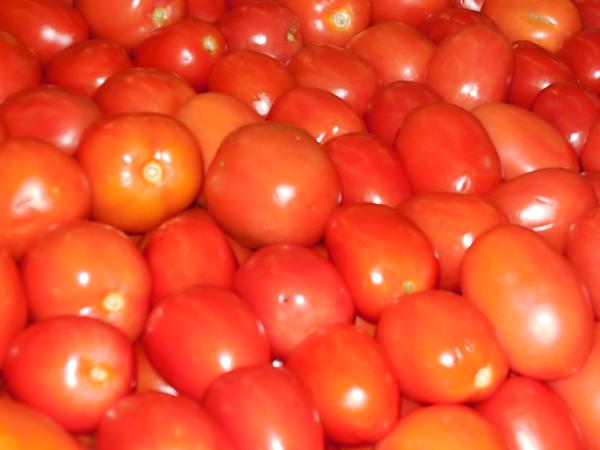 A disease called “late blight” is killing Michigan tomato shipments, while other veggies continue to be loaded. But tomatoes are taking a big hit.
It is the same disease is a fungus-like organism responsible for the Irish potato famine.
The disease has been reported in 10 Michigan counties, and is spreading fast. Late blight will infect the plants of tomatoes and potatoes, and is loving this summer’s weather. Cool nights, very heavy dew and numerous rainy stretches help the disease flourish. The spores easily travel great distances in this summer’s cool breezes.
Once tomato plants are infected with late blight, it is too late to do anything. Fungicide could be applied to plants not yet infected, but in most cases it is too late now. If you see the damage starting, it’s too late.
The infected plants need to be destroyed immediately so the spores don’t travel to other tomatoes that are not infected. Plants can either be thrown away in a tightly sealed black garbage bags, or the diseased plants can be burned.
Michigan vegetables – grossing about $2200 to Atlanta; Michigan blueberries – about $2700 to Atlanta.
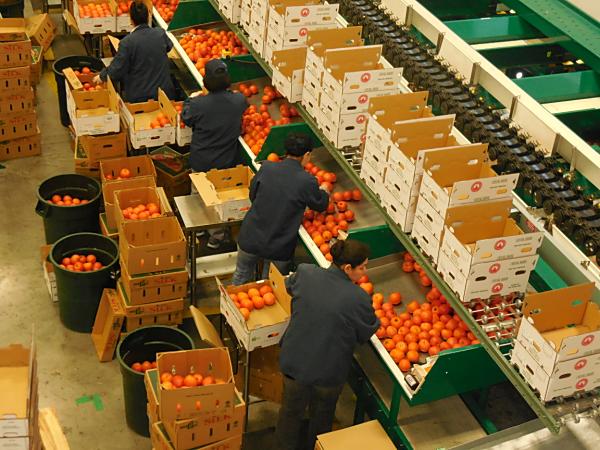 Here is a glimpse at shipments on Northwest pears, as well as California melon loadings, and finally tomato shipments out of Southern California and Mexico. Finally, are produce rates too high as one shipper claims?
Pear Shipments
The Northwest pear shipping forecast has been revised for the upcoming 2014 harvest, with 20.2 million, 44-pound cartons now expected to be packed by season’s end. This estimate is two per cent larger than the five-year average but six per cent smaller than last year’s record shipments. This year’s initial spring projection showed a crop of 18.7 million cartons.
Shipments have been underway about a month, and with no significant weather issues so far, and harvest is expected to extend into mid-October. Green Anjou pears are expected to make up 53 per cent of the total 2014 crop, with the Bartlett and Bosc varieties likely to yield 22 per cent and 15 per cent respectively. The organic portion of the Northwest crop has increased by around three per cent, with around 976,700 cartons.
Melon Shipments
In California, Westside district melon shipments from the San Joaquin Valley should continue into mid October, although volume will be much smaller that last month of the season. Quality is reported excellent, however, shippers are complaining about movement not being as good as it should. A big crop is reported, so could it be the market is a little high and consumers are resisting?
California Tomato Shipments
Further south in California, tomato shipments are in full swing with another large crop moving from the San Diego area and Mexico’s Baja California. One tomato shipper recently described freight rates on tomatoes as “ridiculous.” He said it was costing $4 to $5 per box to ship his tomatoes.
 The states of Michigan and New York at various times claim to be the second largest shipper of apples (Washington state is the easy first), but both states will have large, and similar sized crops this season.
Michigan apple shipments should hit about 28.7 million bushels of apples this year, which isn’t that far off of their record setting 2013 crop, which was 30 million bushels. The estimate is showing what many Michigan apple shippers been predicting for several years. The average Michigan apple crop size will continue to increase. Because of the high-density plantings (approximately 1,000 trees per acre) and advancements in technology, Michigan is going to continue to produce a larger quantity of apples.
Michigan blueberry shipments – grossing about $2700 to Atlanta; Michigan vegetable shipments grossing about 20 percent less. Too few apples yet, to quote.
New York Apple Shipments
Unlike Michigan, which has most of its apple operations in the Western part of the state, New York grows and ships apples were several different areas, although the heaviest volume originates out of the Hudson Valley. Still, New York state also ships apples from the Champlain Valley, as well as from areas in the central and western part of the state. Excellent growing conditions, including a late spring with warm weather, good rainfall, and cool nights have cultivated a harvest which is so far was exceeding the 30 million bushels forecast made this past July.
Western New York vegetable shipments – grossing about $1500 to Baltimore.